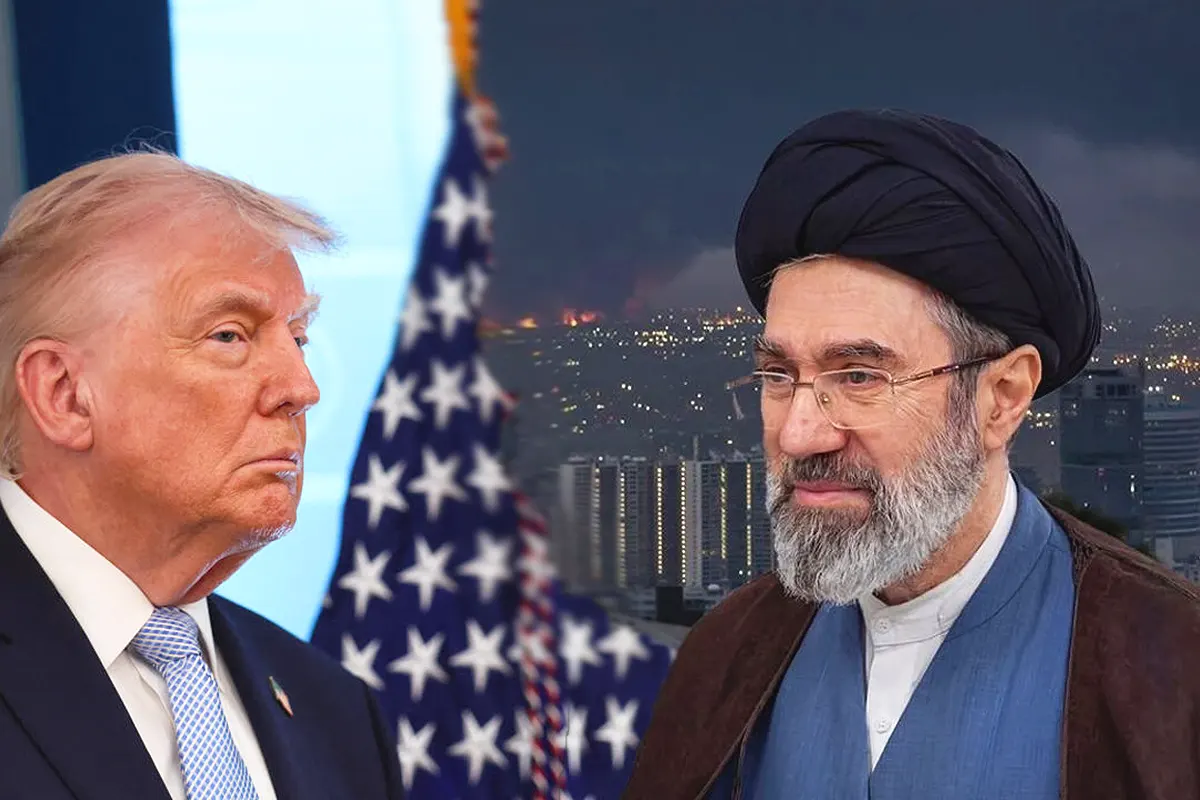
Turkey has welcomed the temporary ceasefire reached between the U.S. and Iran, urging both sides to fully implement it on the ground and to remain committed to the agreement — reached shortly before the expiration of Trump’s ultimatum — to prevent a further escalation in the Middle East. Washington and Tehran have agreed in principle to observe a provisional two-week truce, while bilateral talks for a permanent peace are expected to continue in Pakistan.
In a written statement, the Turkish Ministry of Foreign Affairs welcomed the truce declared in the conflict, though it emphasized the need for “full implementation of the temporary ceasefire on the ground.” “We express our expectation that all parties will adhere to the agreement reached,” the official statement emphasized.
“The path to lasting peace can only be achieved through dialogue, diplomacy, and mutual trust. We will continue to extend all necessary support for the successful conclusion of the negotiations to be held in Islamabad” added the official statement, which also congratulated “brotherly Pakistan for its role throughout this process and express our wish for the continuation of all initiatives that contribute to peace.”
Washington and Tehran claim victory after the truce
The United States and Iran agreed to adhere to the ceasefire just one hour before the expiration of President Donald Trump’s ultimatum, who had threatened to destroy the country’s major civilian infrastructure, including power plants and bridges — an act constituting a violation of international law and the laws of war. As part of the agreement and in exchange for the cessation of hostilities, Tehran will temporarily reopen the strategic Strait of Hormuz to all ships. Both countries claimed victory following a conflict that has lasted more than a month and shaken global financial markets, sending oil prices soaring.
While Trump has declared that the agreement represents “a total and complete victory” for the United States, Iran has also presented the truce as a triumph, confirming its willingness to begin talks with Washington in Pakistan to end the conflict. “The enemy has suffered an undeniable, historic, and crushing defeat in its cowardly, illegal, and criminal war against the Iranian nation,” stated Iran’s Supreme National Security Council, which asserted that “Iran achieved a great victory.”
Trump had set a deadline for Iran to reopen the Strait of Hormuz or face an unprecedented attack at 8:00 p.m. U.S. Eastern Time (2:00 a.m. CET, or 3:30 a.m. Iranian time), which coincided with the early morning in Tehran. Hours before the ultimatum expired, Trump went so far as to issue shocking threats — even by his usual standards — writing on his Truth Social platform: “A whole civilization will die tonight, never to be brought back again. I don’t want that to happen, but it probably will.”
Following the announcement of the agreement, oil prices have plummeted, crashing by more than 17%, after having risen by up to 60% during the conflict due to the blockade of the Strait of Hormuz (through which 20% of the world’s crude oil passes), which had unleashed intense internal political pressure on the U.S. president, who had come to the White House promising to lower prices for his citizens and curb inflation.
Is a peace agreement between Trump and the Iranian regime possible?
It remains to be seen what role Israel and the government of Netanyahu will play, as Netanyahu has a key interest in maintaining the conflict with Iran despite having failed to achieve any of the proposed objectives after launching the attacks against Iran on February 28 — and having now opened a new front in Lebanon; another unknown is to what extent Trump — who wants to present himself at all costs as a winner to his domestic electorate — is willing to compromise in peace negotiations, and also an Iranian regime that — far from having fallen — emerges strengthened and demands, among other things, war reparations for an aggression it denounces as illegal and unjustified.
The U.S. president has insisted that the enriched uranium produced by Iran — estimated at just over 400 kilograms — must be included in any peace agreement, so that the U.S. can take control of it to eliminate the possibility that Iran will possess nuclear weapons. The Iranian regime, on the other hand, has reiterated that its conditions require Washington to accept its nuclear uranium enrichment program, and has indicated that it will begin charging tolls on ships passing through the Strait of Hormuz. In any case, thousands of people in Iran took to the streets early this morning to celebrate the “victory” over the United States after occupying bridges and power plants last night to act as “human shields” in defiance of Trump’s threats.
VOTE

EDITORIAL TEAM
🧿 About us
.
Edited and reviewed by:

Pablo Gómez is a specialist in Turkey and has been editor-in-chief of Hispanatolia since 2011. He has been analysing current affairs and geopolitics in Turkey and the surrounding region since 2006.
…
📣 Your ADVERTISING on Hispanatolia
.
🤗 HELP US WITH A DONATION:
💗 Paypal