From the historic cathedrals of Istanbul to the stone shrines of Mardin or the oldest rock-hewn churches in Antakya (Antioch), Christians in Turkey gathered to celebrate Christmas with a wide variety of liturgical events and festive celebrations across the country.
In Istanbul, under the imposing nave of the church of St. Anthony of Padua – the largest Catholic church in the city, located on the famous İstiklal Avenue – faithful from Turkey and other nationalities participated in a mass marked by hymns, candles and ancient Latin chants, creating a solemn and communal atmosphere.
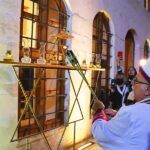
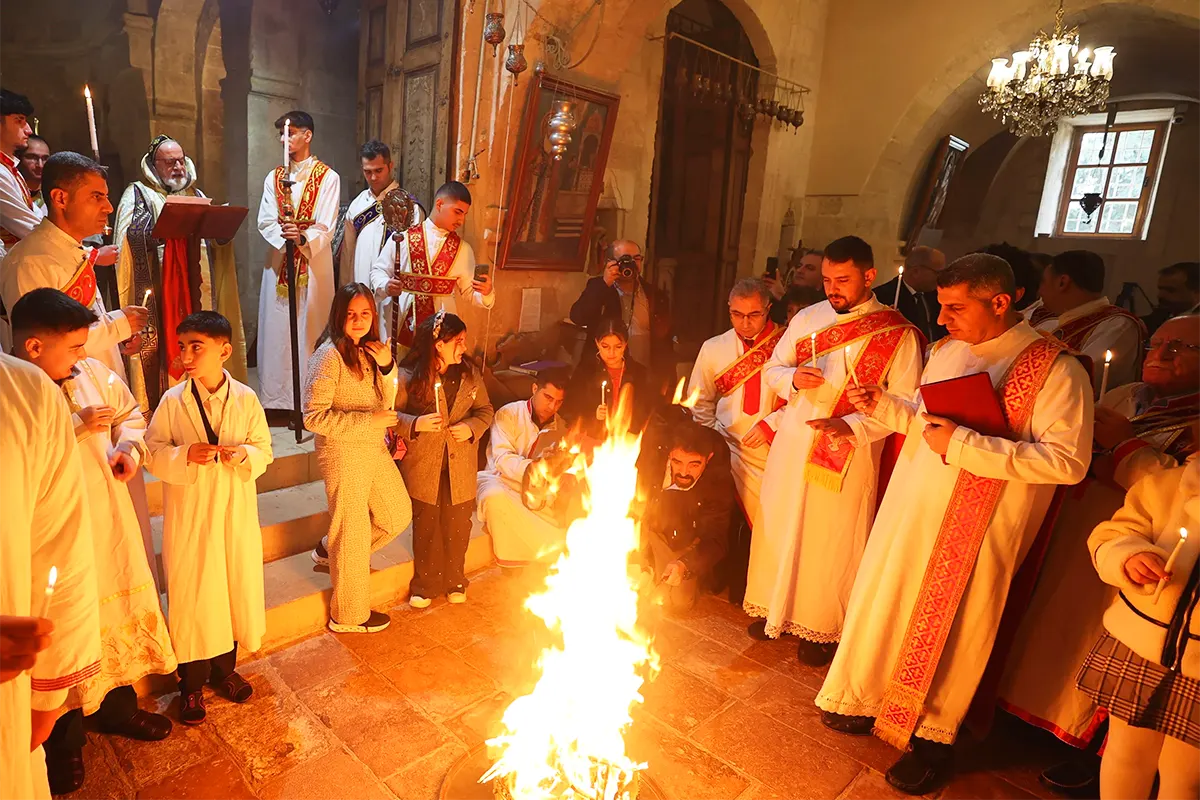
Meanwhile, in southeastern Anatolia, in the multi-religious city of Mardin (home to more than 5,000 Christians and 69 Christian churches), the Syriac Christian community gathered in the historic Cathedral of the Forty Martyrs (Kırklar Kilisesi, in Turkish) to celebrate the feast of the Nativity. The ceremony was presided over by Metropolitan Archbishop Saliba Özmen of the Syriac Orthodox Church of Mardin and Diyarbakır, together with Archpriest Gabriel Akyüz, who is in charge of the church. During the service, male and female choirs performed hymns, and prayers were recited in Syriac and Turkish, according to the IHA news agency.
As part of the ritual, the birth of Jesus in the cave and his protection from the cold were symbolically represented by lighting a fire in the church. The faithful also lit candles to make wishes in keeping with tradition, while choirs continued with chanting and prayers. After the mass, the governor of Mardin and acting metropolitan mayor of the city, Tuncay Akkoyun, visited the cathedral to congratulate Syrian citizens on Christmas.
“People of all religions, languages and cultures live here“
Speaking during the visit to the site, Akkoyun stressed that Mardin is a very special city where people of different religions and ethnic backgrounds have lived together in peace and brotherhood for centuries. Father Gabriel Akyüz meanwhile explained the meaning of Christmas saying: “In Kurmanji (a variant of Kurdish) Christ is called ‘Radiant Jesus’. Our hope in the Radiant Jesus is that this celebration of his birth will bring an end to the wars in the world. May it also bring peace and well-being for Türkiye”.
Speaking to Turkish media, Christian citizen Lora Ozaltun stressed that for her Mardin is a symbol of religious coexistence in Turkey: “Another Christmas is over in Mardin. The scene you see here is really a summary of who we are. People of all religions, languages and cultures live here, and this is a place of absolute peace. Because where there is love and respect, there is happiness. For me, this holiday is also happiness”. Another Turkish Christian from the city, Seval Özberk, explained that as part of the tradition “we prepare sweets for Christmas and visit the homes of our elders. We also receive guests. We celebrate Christmas for three days, and we come to church every day”.
The first Christian church: this is where St. Peter delivered his first sermon
One of the most symbolic Christmas celebrations in Turkey, however, took place in the district of Antakya in the Mediterranean province of Hatay, where a Christmas mass was celebrated in the historic church of St. Peter, considered to be the first cave church in the world. The Antakya Greek Orthodox Church Foundation, whose churches were destroyed in the earthquakes that struck Hatay and all of southeastern Turkey on 6 February 2023, held the traditional service at this symbolic site, which included prayers, hymns, and messages of peace and good wishes for the New Year. After the ceremony, a commemorative cake was cut, local media reported.
St. Peter’s Church, located near Mount Habib-i Neccar next to ancient Antioch, has deep significance for Christianity. Originally a natural cave, it was transformed into a temple over the centuries; Christians believe that it was here that St. Peter, one of Jesus’ twelve apostles, delivered his first sermon and that it was here, according to the Acts of the Apostles, that the followers of the new religion were first called ‘Christians’. Archaeological studies date the construction of this church to around 38-40 AD, making it most likely the first Christian church in history.
VOTE

EDITORIAL TEAM
🧿 About us
.
Edited and reviewed by:

Pablo Gómez is a specialist in Turkey and has been editor-in-chief of Hispanatolia since 2011. He has been analysing current affairs and geopolitics in Turkey and the surrounding region since 2006.
…
📣 Your ADVERTISING on Hispanatolia
.
🤗 HELP US WITH A DONATION:
💗 Paypal