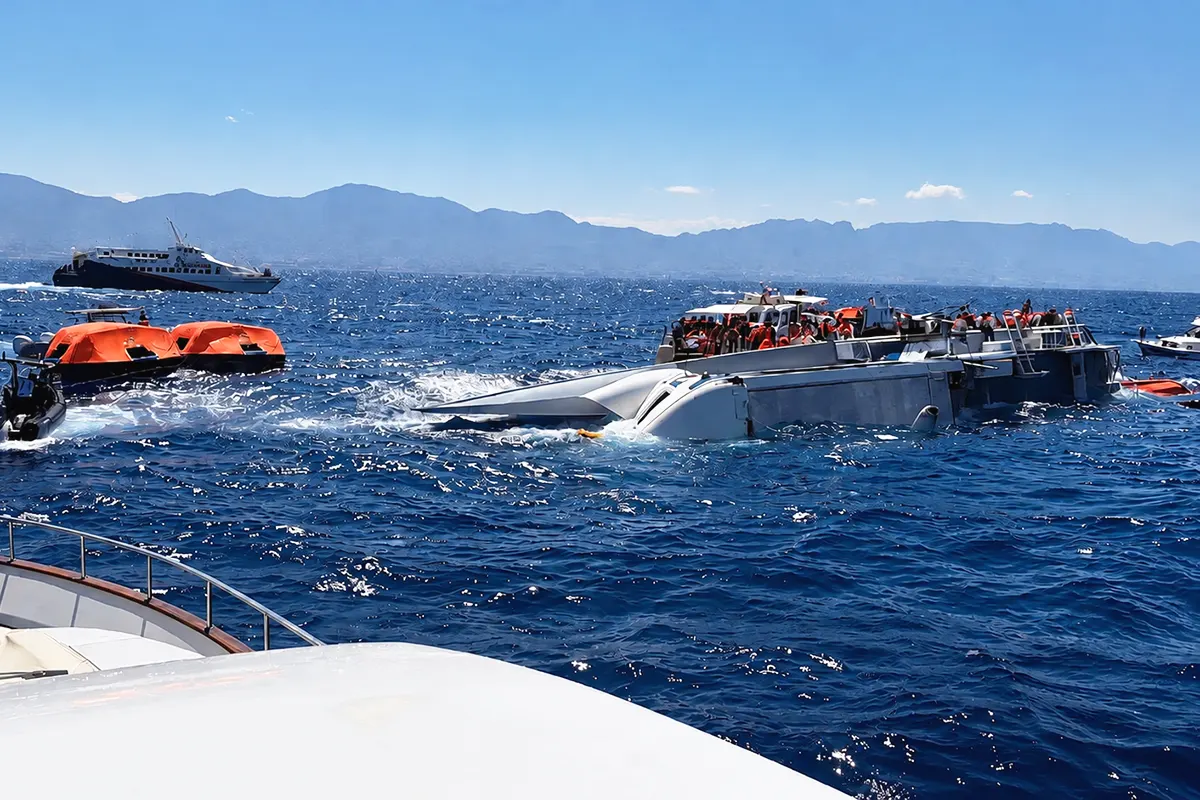
Turkish Cyprus awoke today in a state of grief and outrage as rescue teams continue to search for survivors a day after a ferry capsized off the northern coast of the island: a tragedy that has left eight people dead and 18 missing, and, above all, many questions for which answers are now being sought.
The vessel, which was carrying 267 people, sank shortly after leaving the Turkish Cypriot port of Girne (Kyrenia in Greek) bound for Taşucu on the southern coast of Turkey, and now lies on the seabed, at a depth of 514 metres. The Turkish Cypriot authorities have declared a three-day period of national mourning, whilst the captain and seven crew members have been taken into custody as part of the investigation into the incident.
Water began to pour into the ferry shortly after it set sail
Eight deaths have so far been confirmed after the “Filo Jet” ferry capsized whilst travelling between the port of Girne, in northern Cyprus, and the port of Taşucu, in the Turkish province of Mersin, whilst search and rescue operations continue to locate the 18 missing people, according to reports in the Turkish media.
The high-speed passenger ferry sprang a leak at the bow shortly after leaving Girne on Sunday afternoon. According to reports published by the Turkish Cypriot newspaper Kibris Postasi, the captain realised that water was entering the vessel at the front and attempted to return to port, but was unable to complete the manoeuvre and the vessel eventually capsized whilst trying to return to Girne.
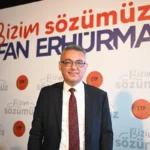
There were 267 people on board the vessel: 259 passengers and eight crew members. Following the accident, the President of Northern Cyprus, Tufan Erhürman, announced that 241 people had been rescued from the sunken vessel, whilst eight were found dead. Search and rescue operations are still under way to locate those who remain missing, which is likely to increase the final death toll.
Teams from the Security Forces Command of the Turkish Republic of Northern Cyprus (KKTC, as it is known in Turkish), the Coastguard Command, the Civil Defence Organisation and the Turkish Cypriot General Directorate of Police are taking part in the rescue efforts. Türkiye has also sent teams from the Coastguard Command, the Naval Forces Command and AFAD, the Disaster and Emergency Management Agency, including vessels, helicopters and specialist personnel.
Passengers claim the captain and crew left them to fend for themselves
The Minister for Public Works and Transport of the Turkish Republic of Northern Cyprus, Erhan Arıklı, has announced that an investigation is underway into the allegations made by the passengers following the accident. These include claims that the ferry’s doors were locked to the passengers or that the captain abandoned the ship without offering them any assistance. Arıklı assured that all these allegations would be examined in great detail.
The minister explained in this regard that his ministry is conducting an independent investigation separate from that initiated by the General Directorate of Police. The ship’s documents, the crew’s qualifications, port permits and safety measures will also be examined to determine whether there was any negligence, as suggested by some witness statements. Several of the rescued passengers have claimed that water began to enter the ship shortly after leaving the port and that their warnings were ignored by the crew.
Arıklı also confirmed that the captain and the seven crew members remain in custody. The ship’s crew, including the captain and the first officer, have already given evidence before a Turkish Cypriot court, charged with causing deaths through negligence and lack of due diligence. In his initial statement, the captain claimed that the ship capsized due to dead waves, and that as a result “the bow of the ship broke off”. Of the 14 suspects who appeared in court, nine were remanded in custody for a further three days.
Survivors recount moments of panic
One of the passengers who survived the sinking of the ferry recounted that they realised water was entering the vessel and that they alerted both the crew and the captain. However, according to reports in the Turkish press, their warnings were met with the response: “You’re not used to this, it’s not a problem”, and the incident was played down.
Another passenger stated that, when the bow of the ship – which was flooding rapidly – broke off, the crew members left the passengers behind and were the first to abandon ship. According to this survivor, children and elderly people were trapped under the broken seats whilst the windows shattered, and many people were forced to jump into the sea without any equipment due to the insufficient number of life jackets.
“They fled immediately, leaving people inside. The ticket clerk first ran towards the stern and then told people: ‘Run, it’s going to sink soon’. They didn’t care about anyone’s life. No one was warned. There weren’t enough life jackets; those who managed to find one jumped with it, and those who didn’t get one jumped into the water with nothing,” said the passenger.
Why did the captain insist on sailing in bad weather?
One of the main questions being asked at the moment is how the passenger ship obtained permission to sail in such poor weather conditions, with big waves following a storm. Speaking also to the Turkish news channel NTV, Minister Arıklı noted in this regard that “He was an experienced captain; he could have cancelled that voyage. He also knew that there was a heavy swell”.
In fact, Arıklı confirmed that the port authority had warned him about the rough sea conditions, to which the captain nevertheless replied: “I’m going this time”. Another issue under investigation is why the captain insisted on continuing the journey despite several passengers informing him that the boat was taking on water.
Following the sinking of the ferry, the authorities in Turkish Cyprus have declared a three-day period of national mourning, whilst in Turkey some events have also been cancelled as a sign of respect and solidarity. Meanwhile, the search for the missing continues, both in the area near the wreck and across a wide swathe of the sea, with several vessels supported by aerial units.
VOTE

EDITORIAL TEAM
🧿 About us
.
Edited and reviewed by:

Pablo Gómez is a specialist in Turkey and has been editor-in-chief of Hispanatolia since 2011. He has been analysing current affairs and geopolitics in Turkey and the surrounding region since 2006.
…
📣 Your ADVERTISING on Hispanatolia
.
🤗 HELP US WITH A DONATION:
💗 Paypal