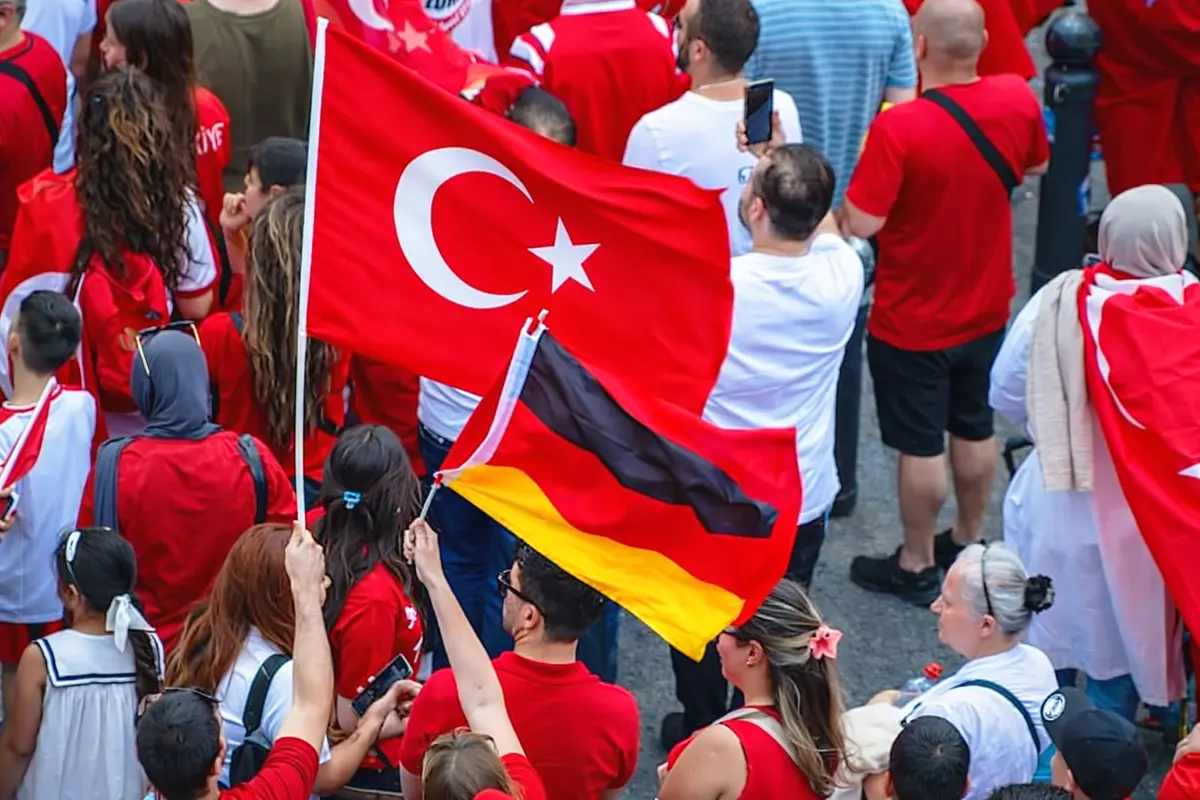
Turkish has become the most widely used language in Germany after German itself, reflecting the country’s long history of migration and its growing linguistic diversity: more than 15 million people in Germany speak a language other than German at home, according to official data from a recent study.
Data from the 2024 Microcensus recently released by the German Federal Statistical Office (Destatis) on the occasion of International Mother Language Day provide a snapshot of language use in the European country today. According to these results, Turkish is the most widely spoken language in German households apart from German, according to media reports in Turkey.
The study indicates that 77% of the population living in Germany say that they speak only German at home. 17% said they use at least one other language in addition to German, while 6% said they do not speak German at home. These data confirm that German remains by far the predominant language in everyday family life in Germany, despite heavy immigration.
More than 15 million residents in Germany use a language other than German
However, some 15.5 million people confirmed that they mostly or exclusively use a language other than German at home. Within this group, Turkish speakers accounted for 14%, making Turkish the second most widely used language in Germany after German itself. This is followed by Russian – spoken by 12% of this group – and Arabic – spoken by 9% -, while other languages appear with lower percentages of use.
The analysis also reflects the situation of multilingual households, which include 17% of the German population as we saw earlier. Thus, 26% of those who said that they speak a language other than German nevertheless indicated that they mainly use German at home, while 74% said that they predominantly use a language other than German at home.
21.4 million residents in Germany identify themselves as having a migrant background. Germany is home to more than 3 million people of Turkish origin, making it one of the largest diaspora communities of Turkey. Many of them have their roots in labour migration agreements signed in the 1960s, when the then West Germany recruited thousands of Turkish workers to boost its post-war economy.
VOTE

EDITORIAL TEAM
🧿 About us
.
Edited and reviewed by:

Pablo Gómez is a specialist in Turkey and has been editor-in-chief of Hispanatolia since 2011. He has been analysing current affairs and geopolitics in Turkey and the surrounding region since 2006.
…
📣 Your ADVERTISING on Hispanatolia
.
🤗 HELP US WITH A DONATION:
💗 Paypal