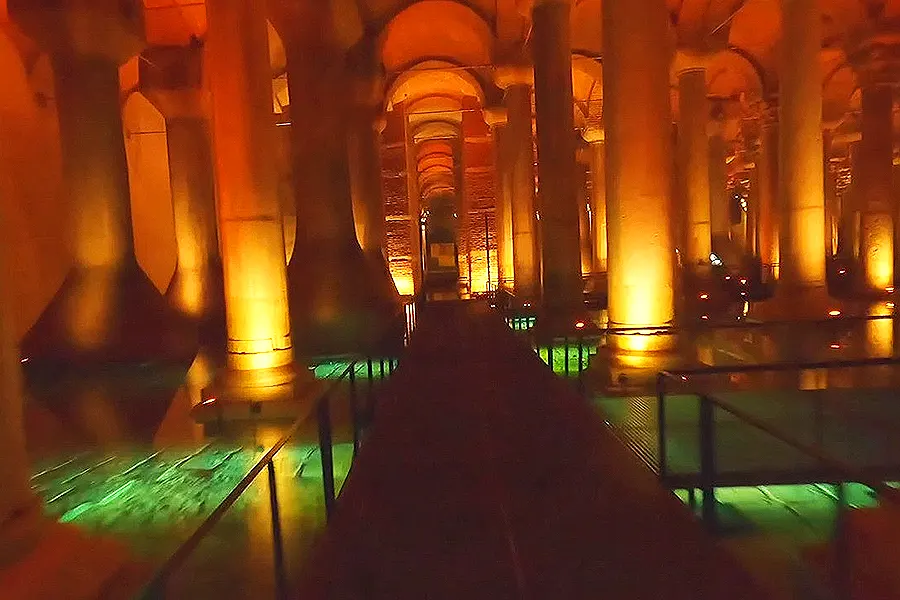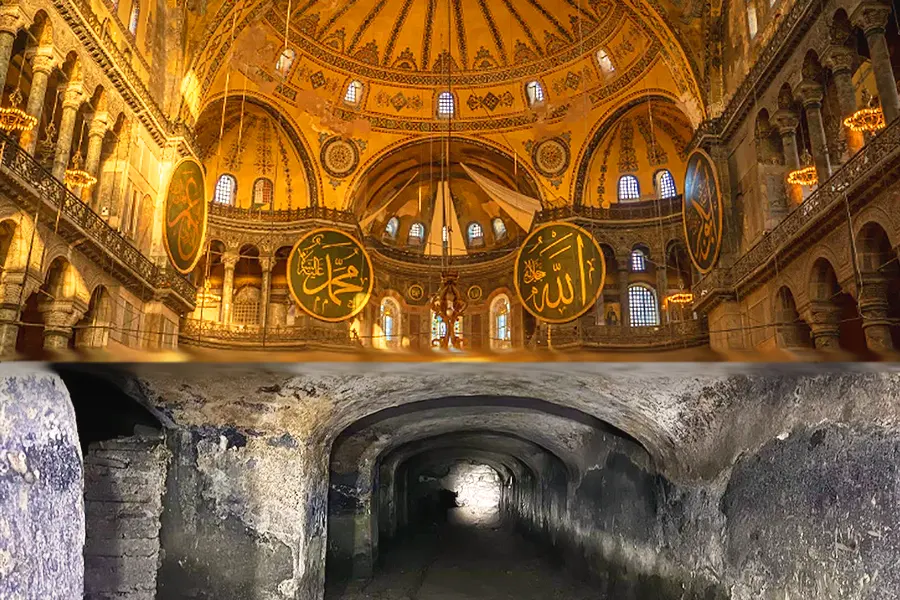
The Hagia Sophia‘s underground structures, including tunnels, vaults, passages and tombs, will be able to be visited by tourists after the completion of the works to clean and adapt these constructions, which have been studied over the past few years and which extend for more than a kilometre around the Great Mosque.
Professor Hasan Fırat Diker, a member of the Hagia Sophia Scientific Committee, told Anatolia News Agency that architectural studies of the building’s underground structures began five years ago, adding that the cleaning work is about to begin with the support of the Ministry of Culture and Tourism and the General Directorate of Foundations: ‘This will make it possible for the public to see all the archaeological findings and the centuries-old beauty of the underground Hagia Sophia.”
According to the professor, the underground structures of Hagia Sophia are more than a kilometre long, so the cleaning work is expected to take a year. ‘This work is important not only to make parts of the underground areas accessible to visitors, but also to reveal discoveries that could bring Istanbul‘s history to light, after a thorough examination supervised by the archaeological team of the Hagia Sophia Museum,’ he stressed.
The sections under the colonnaded courtyard are believed to have been built at the same time as Hagia Sophia, and would therefore be about 1,500 years old; however, experts believe that the underground area with the tombs predates the current structure and would be even older, Diker said.
‘The cleaning of these underground structures is essential to improve the climate and ventilation… This project is much more comprehensive compared to previous work. Cleaning the underground structures of such an important monument as Hagia Sophia will provide Istanbul with new cultural assets. The renewed attention for this cultural heritage will further increase the interest and admiration of tourists for Hagia Sophia,’ said the professor.
🧿 TOP TOURS IN ISTANBUL
VOTE

EDITORIAL TEAM
🧿 About us
.
Edited and reviewed by:

Pablo Gómez is a specialist in Turkey and has been editor-in-chief of Hispanatolia since 2011. He has been analysing current affairs and geopolitics in Turkey and the surrounding region since 2006.
…
📣 Your ADVERTISING on Hispanatolia
.
🤗 HELP US WITH A DONATION:
💗 Paypal