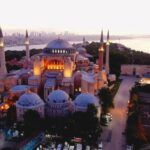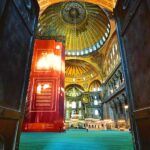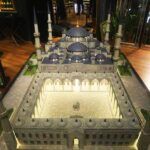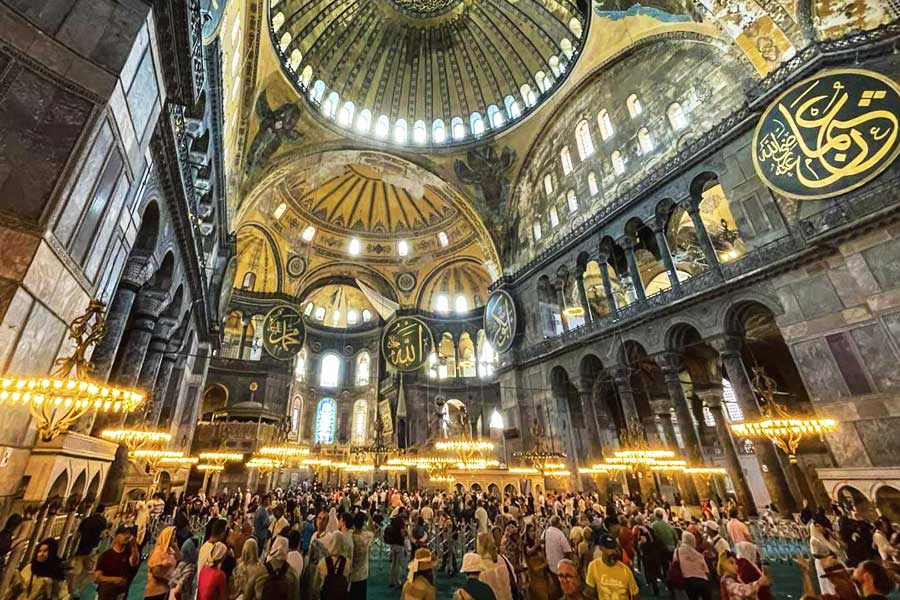
This 24 July marks four years since, for the first time after 86 years working as a museum, Hagia Sophia reopened its doors again as a mosque: a time in which the now Grand Mosque of Hagia Sophia has not only not seen its UNESCO World Heritage status endangered – as pessimists predicted four years ago – but has remained one of the most emblematic and attractive places for those who travel to Turkey and Istanbul, receiving some 25 million tourists.
Hagia Sophia was a Byzantine basilica – built under the reign of Emperor Justinian I – for 916 years, until the conquest of Constantinople by the Ottomans in 1453, when Sultan Mehmet II transformed it into a mosque. In 1934, when Atatürk became the first president of the new Turkish Republic, the temple was closed and reopened by government decree as a museum, a function it retained for the next 86 years.
It remained so until 10 July 2020, when the State Council of Turkey (Danıştay, in Turkish), the highest administrative body in the country, unanimously decided – following a lawsuit filed by the Association for the Service of Historical Monuments and the Environment – that the government decree of 24 November 1934 to convert Hagia Sophia into a museum had been illegal, leaving the legal door open for the temple to regain its former function.
And so it was: on the same day, Turkish President Tayyip Erdoğan gave in to the growing pressure that various groups and associations had exerted in the previous years to stop Hagia Sophia from being a museum, and signed the presidential decree authorising prayers in the building and its reopening as a mosque. It was not until 24 July 2020, however, when, coinciding with Friday Muslim prayer and following a series of renovations to the interior of the building, the first prayers were held in Hagia Sophia as a mosque, in a historic event attended by Erdoğan himself.
According to Turkish media, in these four years of functioning again as a mosque, Hagia Sophia has continued to be one of the main attractions for tourists visiting Istanbul, receiving an average of 50,000 visitors a day, and between 6 and 7 million tourists a year.
VOTE

As a history lover, Pablo Gómez was captivated by Turkey from the first day he visited it in 2006: he got married there, has a house there… and has since become an expert on Turkey’s current affairs. With a long experience in media, he has been at the helm of hispanatolia.com since 2011.