Istanbul is a city that bewitches, that breathes history in every alley and corner, and that possesses a unique blend of cultures. While many are familiar with the majesty of Hagia Sophia, Istanbul has much more to offer and there are a plethora of other monuments and sites worth discovering. Let’s find out!
The majestic Blue Mosque
Directly opposite Hagia Sophia, the Blue Mosque or Sultanahmet Camii is an architectural masterpiece that captivates at first sight. Its six slender minarets, a rarity in mosque architecture, dominate the Istanbul skyline. But it is inside that it really shines: more than 20,000 blue tiles adorn the walls, depicting various patterns and flowers. Although it is an important place of worship, visitors are welcome outside prayer times. Upon entering, it is impossible not to feel enveloped by the peace and spirituality that emanates from the place.

Topkapi Palace: residence of the Sultans
Once the epicentre of Ottoman power, the Topkapi Palace stretches majestically over the Golden Horn, offering panoramic views of the Bosphorus. More than just a palace, it is a complex that housed courtiers, servants and the sultan’s harem. Within its walls, you can explore luxurious chambers, ornate courtyards and rooms filled with treasures, including the Topkapi dagger and some of Islam’s most sacred relics. The Harem, a series of rooms and courtyards, was home to the sultan’s wives, concubines and children, and is a testament to the opulent and sometimes intriguing life of the Ottoman court.
The Basilica Cistern: underground and between columns
This underground marvel, built during the reign of Emperor Justinian in the 6th century, is the largest of Istanbul’s ancient cisterns. As you descend into this vast space, you will be immersed in a world where dim light reflects off the shallow waters and the columns rise majestically. The Medusa’s heads, which serve as the bases of two columns, are an enigma: some theories suggest that they were reused from an earlier Roman building. The atmosphere in the Basilica Cistern is ethereal, and the sound of trickling water adds a meditative and almost mysterious feeling.

The Grand Bazaar: a labyrinth of treasures
One of the oldest and largest bazaars in the world, the Grand Bazaar is a feast for the senses. Opened in 1461, it is a maze of vaulted streets filled with shops offering everything from jewellery and ceramics to spices and textiles. As you wander the aisles, merchants will call out to you to show you their wares, a tradition that has endured for centuries. But the Grand Bazaar is more than just shopping; it’s a place to immerse yourself in the local culture, sample Turkish delicacies and sip tea while negotiating the price.

The Bosphorus: a walk between two continents
The Bosphorus Strait, which separates Europe from Asia, is much more than just a body of water in Istanbul. It is the lifeblood of the city, a silent witness to its rich history and a spectacle in itself. Bosphorus cruises are popular with tourists, and for good reason: they offer unrivalled views of Ottoman palaces, ancient fortresses and luxurious mansions. As the sea wind caresses your face, you’ll witness the constant movement of the city, with ferries, fishing boats, cargo ships and yachts crossing its waters.

The Church of Holy Saviour of Chora: a treasure of mosaics
Located off the beaten tourist track, the Church of Holy Saviour of Chora is a hidden treasure. Originally built in the 4th century, its walls house some of the most impressive Byzantine mosaics and frescoes in the world. Dating back to the 14th century, these works of art portray scenes from the Old and New Testaments in astonishing detail and vividness. Although the church became a mosque after the Ottoman conquest and later a museum, the mosaics and frescoes have been perfectly preserved, giving visitors a glimpse of the glory of the Byzantine art.
Sultanahmet: the Constantinople’s ancient hippodrome
The Sultanahmet area, named after the famous mosque, was once the social and political heart of Constantinople. The Roman Hippodrome, though largely gone, still leaves traces of its grandeur. Monuments such as the Obelisk of Theodosius or the Serpentine Obelisk bear witness to the power and influence of an empire that once ruled vast territories. Today, Sultanahmet is a meeting place, where locals and tourists mingle, enjoy a drink, or simply sit and watch the rhythm of the city.

The Galata Tower: the best views of Istanbul
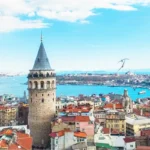
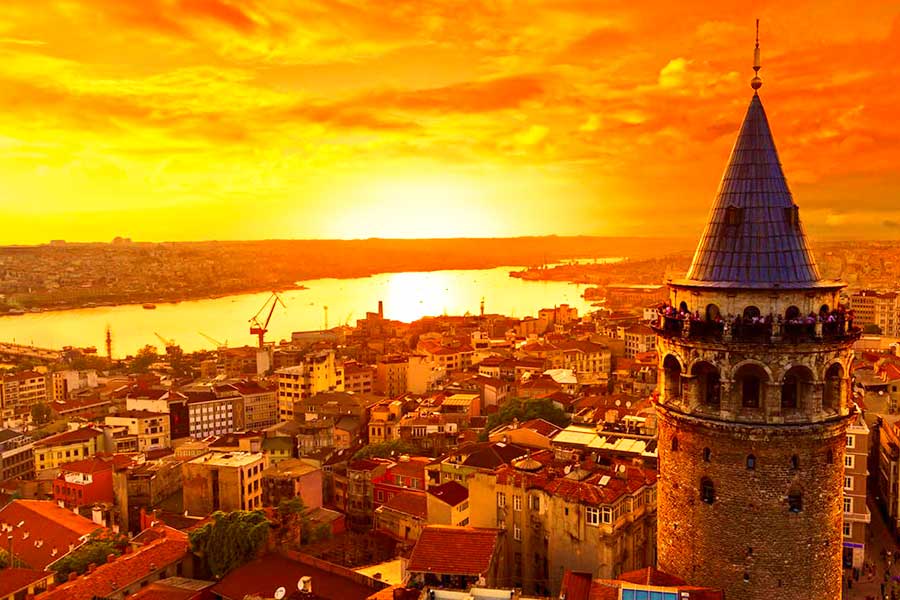
Towering over the Beyoğlu district, the Galata Tower has been a landmark since medieval times. Built by the Genoese in 1348, the tower has served as a prison, an observatory and now a museum, and is a place to see spectacular panoramic views of Istanbul. After climbing its narrow stairs or taking the elevator, you’ll be rewarded with a 360° panoramic view of Istanbul, from the Golden Horn to the Bosphorus and beyond. At dusk, the illuminated tower is a spectacle in itself, and the nearby restaurants and cafes offer perfect places to enjoy the site while sampling the local cuisine.

Istanbul Archaeological Museum: a glimpse into the past
Located near the Topkapi Palace, the Istanbul Archaeological Museum is a treasure of artefacts spanning millennia. From Sumerian cuneiform tablets to elaborately carved sarcophagi full of history, the museum offers a journey through the ancient civilisations that left their mark on this region. One of the most famous pieces is the Treaty of Kadesh, the oldest known peace agreement. With over a million objects to see, it’s easy to get lost in the rich history, but the well-organised exhibits and clear signage make it easy to visit.

The spectacular Suleymaniye Mosque
Dedicated to Suleiman the Magnificent, this mosque is a testament to the heyday of the Ottoman Empire. Designed by the master architect Sinan in the 16th century, it combines architectural splendour with spiritual serenity. The gardens, fountains and outbuildings surrounding the main mosque offer a respite from the hustle and bustle of the city. Its interior, with majestic domes and elaborated İznik tiles, is a feast for the eyes. The Suleymaniye Mosque is not just a place of prayer, but a complex that includes schools, hospitals and public kitchens, reflecting the Ottoman vision of an integrated society and the splendour of an entire empire.

The Spice Bazaar: a trip to the exoticism of the Orient
Much more intimate than the Grand Bazaar, the Spice Bazaar, also known as the Egyptian Bazaar, is a delight to the sense of smell. Built in the 17th century, its corridors are lined with stalls offering spices, herbs, dried fruits and traditional Turkish sweets. Inhaling the aromas is like travelling along the Silk Road, with exotic notes of saffron and cardamom. In addition to spices, you can find teas, essential oils and other local products. The Spice Bazaar is a perfect place to pick up souvenirs and gifts, or simply to enjoy its vibrant and colourful atmosphere and get caught up in it.
Dolmabahçe Palace: a jewel on the shores of the Bosphorus
Combining European architectural styles with Ottoman embellishments, the Dolmabahçe Palace is a marvel on the shores of the Bosphorus. Built in the 19th century during the reign of Sultan Abdülmecid I, the palace was an attempt to modernise and westernise the Ottoman Empire. With 285 rooms, 44 halls and a main hall with the world’s largest crystal chandelier, it is a testament to opulence and power. It was here that Mustafa Kemal Atatürk, the founder of modern Turkey, spent his last days. The palace is a bridge between the Ottoman past and the Turkish present, and a visit here offers a clear insight into the evolution of this nation.
Ortaköy: Istanbul’s trendiest district
Halfway between the Bosphorus and the hills of Istanbul, Ortaköy is a vibrant neighbourhood known for its cosmopolitan atmosphere. The cobbled streets are lined with art galleries, boutiques, cafés and restaurants. From here, you can get the iconic view of the Ortaköy Mosque with the Bosphorus Bridge in the background. During the day, it’s a perfect place to stroll, shop and enjoy a meal by the water. After dark, it transforms into a nightlife hub, with bars and clubs attracting locals and tourists alike. Whether you’re looking for history, culture, or just a place to relax, Ortaköy has it all.

As you have seen Istanbul, with its rich amalgam of cultures and impressive heritage, offers visitors an experience that goes beyond the visual. It is a city that immerses you in the very essence of history and diversity, leaving an indelible impression on the hearts of those who explore it. Of course, Hagia Sophia is definitely worth a visit and is a wonderful place, but there are many more places to see in Istanbul – and these are just a few, there are many more! Enjoy your trip to Istanbul, and discover all the treasures this city has to offer!
✈️ If you are travelling to Turkey, we recommend:
We include affiliate links: if you buy through them, you don’t pay extra money and you help this website.
🧿 TOP TOURS IN ISTANBUL
VOTE

EDITORIAL TEAM
🧿 About us
.
Edited and reviewed by:

Pablo Gómez is a specialist in Turkey and has been editor-in-chief of Hispanatolia since 2011. He has been analysing current affairs and geopolitics in Turkey and the surrounding region since 2006.
…
📣 Your ADVERTISING on Hispanatolia
.
🤗 HELP US WITH A DONATION:
💗 Paypal