Turkey’s announcement that it will build a giant 300-metres-long aircraft carrier has immediately sparked huge interest at home and abroad. The project for what will be the Turkish navy’s second aircraft carrier after the TCG Anadolu will be built in the Istanbul shipyards, but with the collaboration of the Spanish shipping company Navantia, and will become one of NATO’s largest aircraft carriers, multiplying Turkey’s naval military capabilities.
Specialised Turkish media such as Airline Haber reported that the director of the Presidency of Defence Industries (SSB), Haluk Görgün, has already officially announced that what will be the largest ship ever built by Turkey will finally have a total length of 300 metres, compared to the 285 metres initially planned, and that for its development a strategic agreement has been established with Navantia, a Spanish company that already collaborated in the development of the first Turkish aircraft carrier, the latter inspired by the Spanish ship Juan Carlos I.
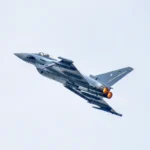
The project will thus take advantage of the engineering capabilities developed by Spain to design an aircraft carrier that enhances the operational capabilities of the Turkish navy and is in line with modern naval warfare. Many experts in fact consider the second Turkish aircraft carrier as the perfect naval platform to operate Turkey’s 5th generation fighter jet developed by Turkey, the KAAN, although it is also expected to use lighter aircraft for naval reconnaissance tasks, such as the Hürjet fighter, recently acquired by Spain.
According to Turkish press reports, Turkey’s new state-of-the-art aircraft carrier will be equipped not only with fixed-wing aircraft (since the new vessel will use catapult or STOBAR launch systems), but also with attack helicopters and unmanned aerial vehicles (drones/UAS), such as the Bayraktar Kızılelma or the Anka-3, thus greatly increasing Turkey’s capacity to conduct maritime air operations in the Mediterranean and beyond. Some Turkish media reports suggest that, with its enormous size, Turkey’s new vessel could carry up to 246 Bayraktar TB2 combat drones on its deck.
One of NATO’s largest aircraft carriers
Once completed, Turkey’s second aircraft carrier will surpass in size the French Charles de Gaulle aircraft carrier (which is 261 metres long) and the two British Queen Elizabeth-class aircraft carriers, which reach 280 metres. To put the big size of the Turkish navy’s new ship into context, the USS Gerald R. Ford aircraft carrier – the largest in the US Navy – is 337 metres long. This will make Turkey the country with one of NATO’s largest aircraft carriers, second only to the US.
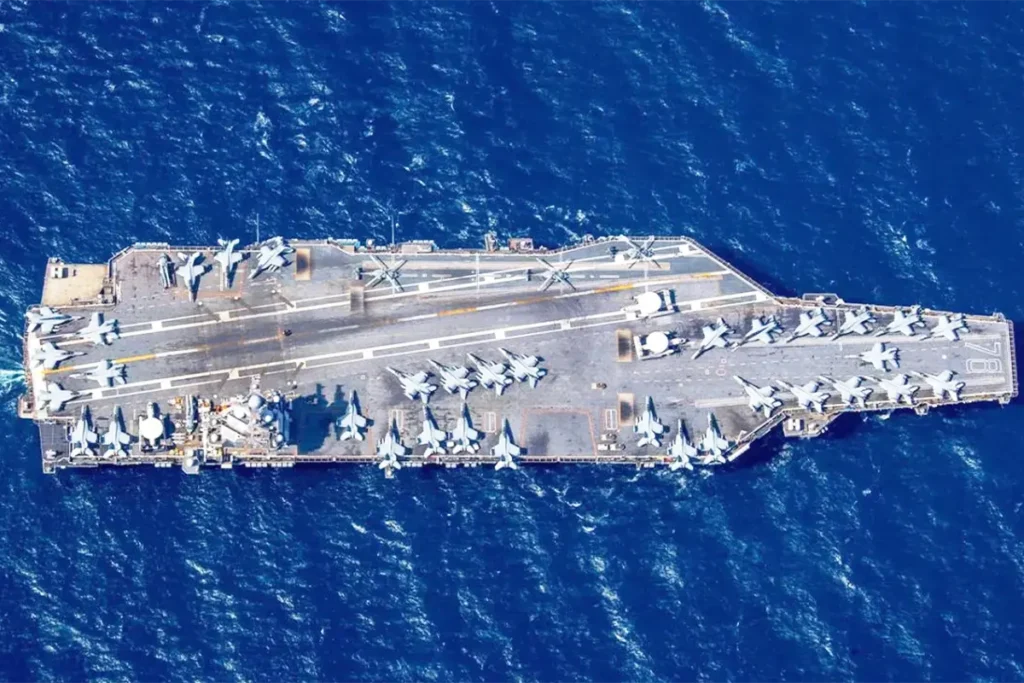
The technical details of the new Turkish aircraft carrier project, which is still in the design and development phase, have not yet been made public, and Görgün has limited himself to underlining the “collaborative approach” between Spain and Turkey following the positive results achieved with the development of the first aircraft carrier, the TCG Anadolu. The project also represents a very important opportunity for the Turkish companies that will participate in the development and construction of the new vessel, due to the transfer of know-how and technology that involves this new collaboration with Spain.
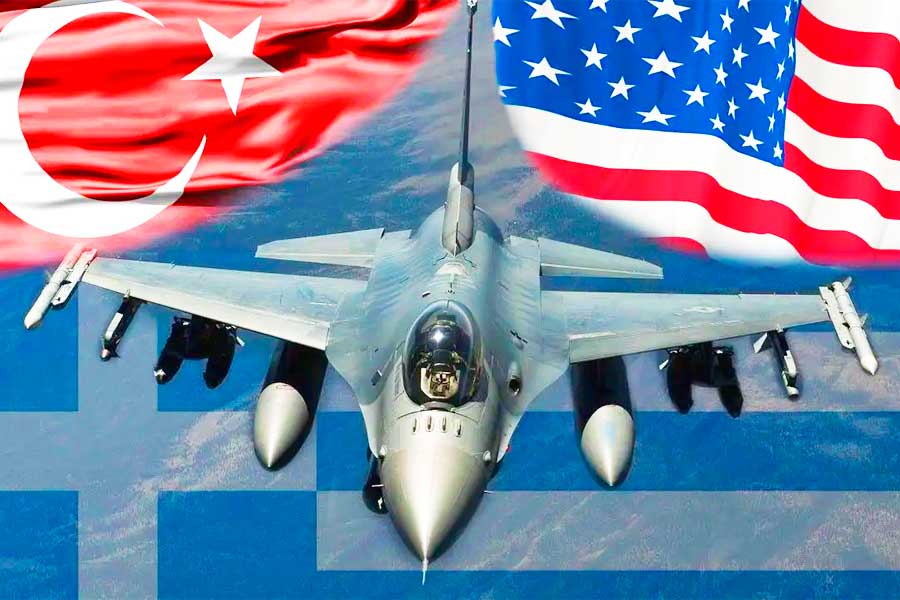
In the absence of more details, anyway, with this project Turkey is taking a key step towards strengthening its national security and interests in the Eastern Mediterranean and the Black Sea, and marks a transition from its traditional offensive/defensive capacity in coastal areas to a high seas and even oceanic projection, which is why this giant aircraft carrier project has also aroused enormous interest among Turkey’s old rivals in the region, such as Greece.
VOTE

EDITORIAL TEAM
🧿 About us
.
Edited and reviewed by:

Pablo Gómez is a specialist in Turkey and has been editor-in-chief of Hispanatolia since 2011. He has been analysing current affairs and geopolitics in Turkey and the surrounding region since 2006.
…
📣 Your ADVERTISING on Hispanatolia
.
🤗 HELP US WITH A DONATION:
💗 Paypal