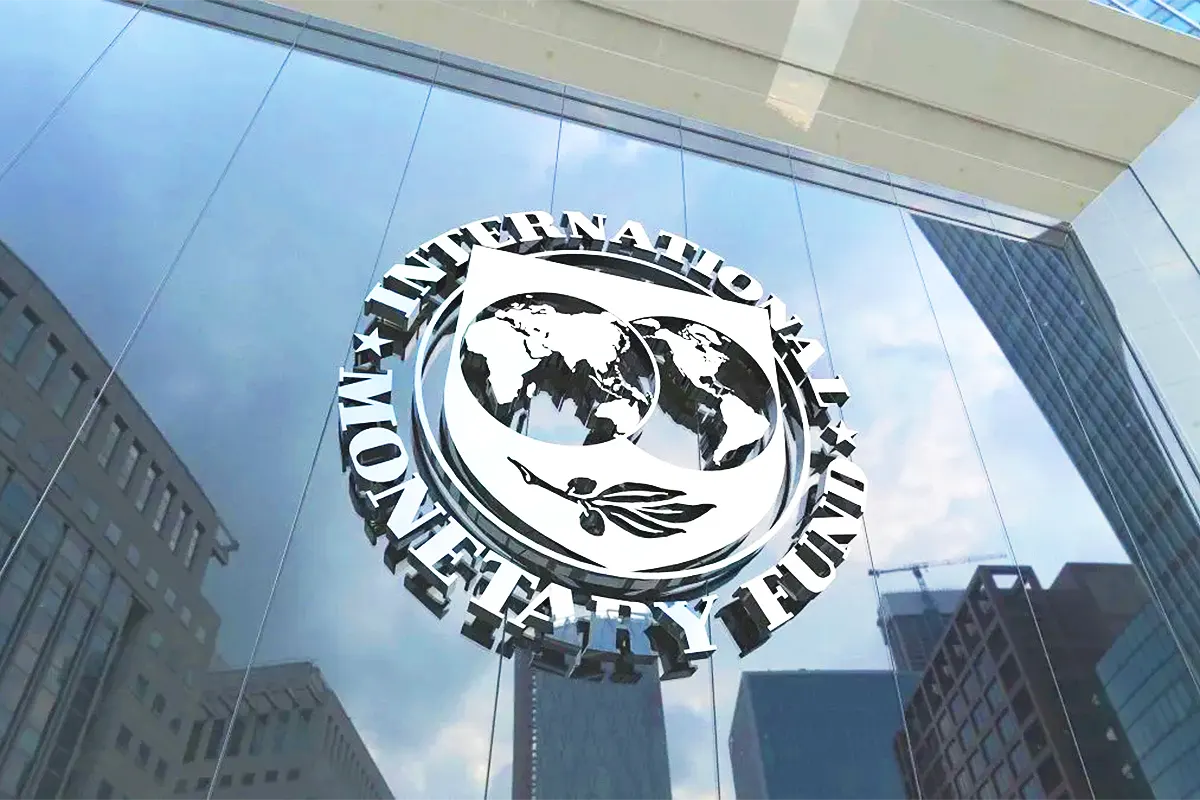
The International Monetary Fund (IMF) announced yesterday its growth forecasts for the global economy; forecasts that reflect a negative outlook for global GDP due to the impact caused by the historic tariffs announced by Trump but which, nevertheless, maintain a positive outlook for the Turkish economy, which seems to be emerging unscathed from the crisis for the time being.
In its World Economic Outlook report published just days after Trump shook the global economy by unleashing the biggest tariff war in a century, the IMF estimates that global economic growth will be reduced to just 2.8% this year, half a point less than its previous estimate in January of 3.3%, and also reduces its forecast for 2026 from 3.3% to just 3%.
The outlook for inflation is also bad, with the economic impact of tariffs expected to push global inflation to 4.3% in 2025 and 3.6% in 2026, with a notable increase in the United States, where the forecast for this year has been raised from 2% in January’s report to 3%.
The International Monetary Fund points out that trade tensions and ‘alarmingly high levels’ of uncertainty about future economic policy will have a severe impact on global economic activity, affecting all regions and causing a slowdown in economic growth in major powers such as the United States, the Eurozone and China.
Optimistic outlook for the Turkish economy
In the case of Turkey, however, it seems that the IMF is more optimistic about its evolution during 2025 and 2026, with the Eurasian country being one of the few to escape the downward revision in the report. Thus, according to Turkish media reports, the international organisation estimates that Turkey’s GDP will grow by 2.7% in 2025, a slight increase on the 2.6% estimate made in January, while maintaining its growth forecast of 3.2% for 2026.
In its report, the IMF also points out that inflation in Turkey will end 2025 at 35.9% (the Turkish Central Bank maintains a forecast of 24% for the end of 2025), falling to 22.8% in 2026. The International Monetary Fund also maintains that, despite the tariff war, Turkey’s current account deficit will remain at 1.2% of GDP this year and next.
VOTE

EDITORIAL TEAM
🧿 About us
.
Edited and reviewed by:

Pablo Gómez is a specialist in Turkey and has been editor-in-chief of Hispanatolia since 2011. He has been analysing current affairs and geopolitics in Turkey and the surrounding region since 2006.
…
📣 Your ADVERTISING on Hispanatolia
.
🤗 HELP US WITH A DONATION:
💗 Paypal