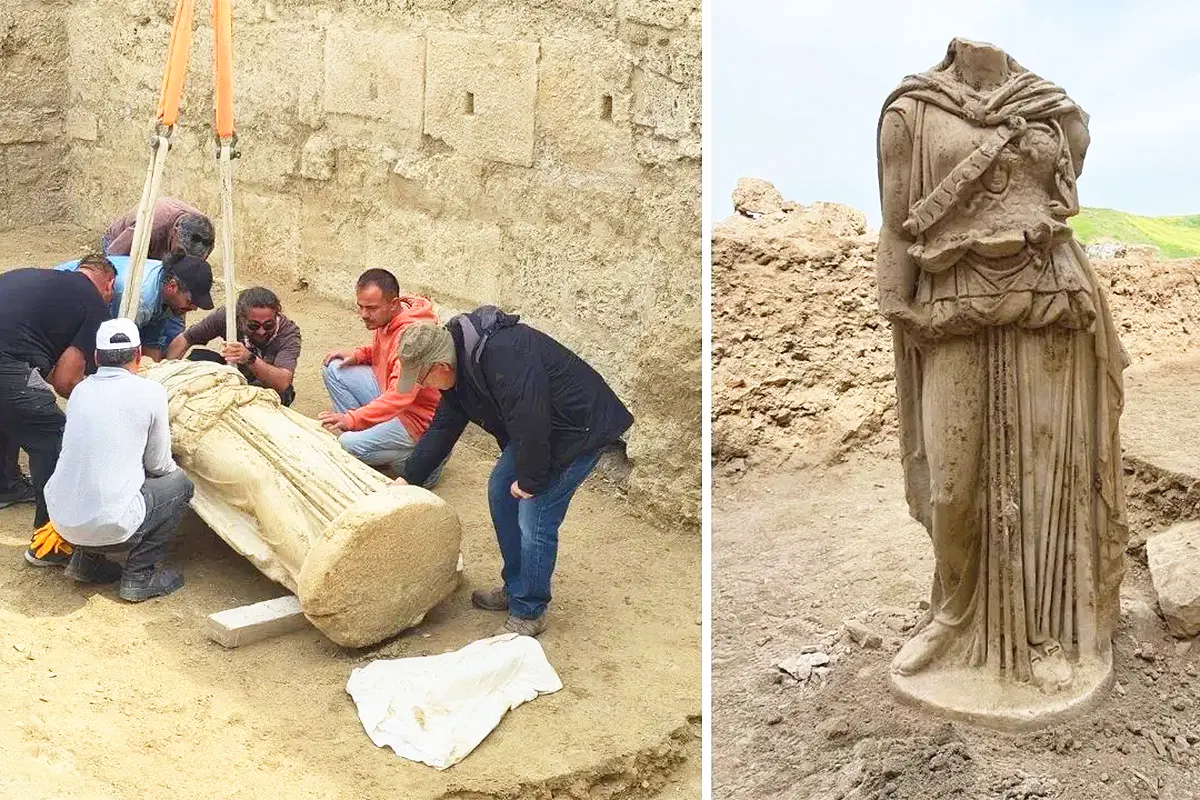
A statue of Athena carved from white marble, standing around two metres tall, has been discovered in the ruins of the ancient city of Laodicea, located not far from Pamukkale, as part of excavation and restoration work in the area, according to an announcement by Turkey’s Minister of Culture and Tourism, Mehmet Nuri Ersoy.
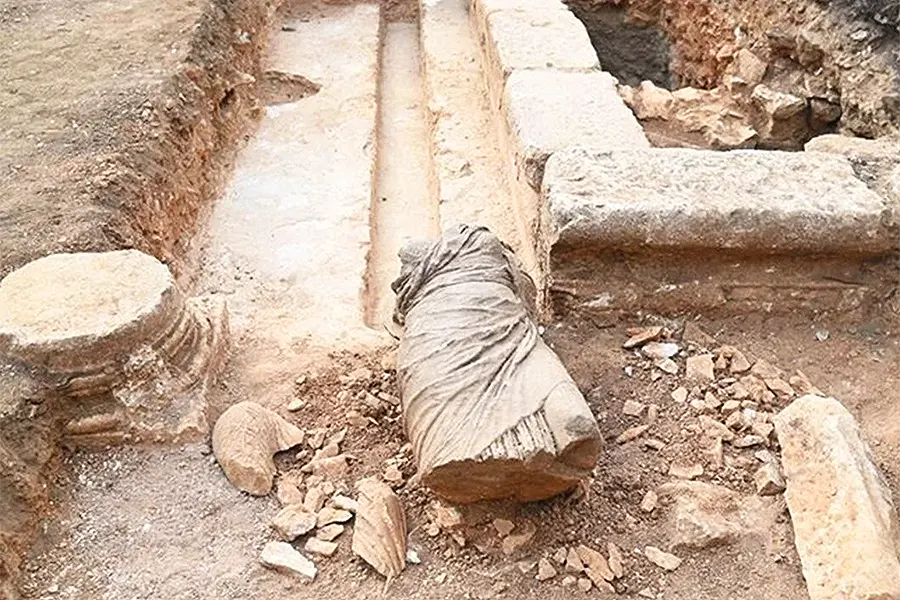
Excavations at the western theatre of Laodicea are yielding new finds of great significance for archaeology. The Minister of Culture and Tourism reported a few days ago via his social media accounts on this new discovery made in this area of the archaeological site. According to an official ministerial statement, the sculpture was found face down amongst rubble, next to the outer wall of the theatre, known as the “Ppostskene”. Although the head of the statue, which is approximately two metres tall, has not yet been identified, it stands out for being carved from white marble.
“We have made another significant discovery in Laodicea. A new artefact has come to light in the ancient city. The work we are carrying out in the western theatre continues to reveal traces of the past. In the stage building, we have unearthed a statue of Athena measuring around two metres, made of white marble. This structure, which served as a stage for Homer’s epics, demonstrates that it was also a centre of cultural expression in antiquity, and the work, which reflects the classical style of the Augustan period, stands out for its high artistic quality”, announced the minister, as quoted by Turkish media.
The stage building of the western theatre, dating from the 2nd century BC, features a three-tiered structure with 16 columns on each level. Among them were sculptures of gods, rulers and scenes from Homer’s epics. Sculptural groups depicting scenes such as the Land of the Laestrygonians (which Odysseus encountered on his return to Ithaca), the cave of the giant Polyphemus or the sea monster Scylla, demonstrate that this space served not only a theatrical function, but also a narrative and cultural one. The excavations carried out between 2024 and 2025 have unearthed numerous artefacts linked to these tales.
A city of legendary wealth mentioned in the Book of Revelation
From an artistic perspective, the sculpture of Athena discovered reflects the early classical style of the Augustan period (27 BC – 14 AD). In the city of Laodicea, known in antiquity as a major textile centre, the aspect linking the goddess to the loom and the art of weaving wool was more significant than her warrior nature, and various inscriptions found in its ruins document that festivals were held in the city in her honour.
Founded in the 3rd century BC by the Seleucid Empire, Laodicea was one of the most prosperous cities of the ancient world, standing out as a strategic hub for trade and banking. It was famous for its wealth and economic self-sufficiency — it even went so far as to reject aid from Rome following an earthquake —, its prestigious school of ophthalmology and its luxury black wool industry. Furthermore, it is celebrated in Christian legends as the last of the Seven Churches of Revelation. Its ruins, situated in what is now the province of Denizli in western Turkey, are seeking recognition as a World Heritage Site and continue to yield all manner of historical finds, from statues to monumental temples.
📚 If you want to learn more about the history of Turkey, we recommend:
🧿 Discover here more recommended products about Turkey
As an Amazon Associate, we earn from qualifying purchases. This comes at no extra cost to you and helps support this website.
VOTE

EDITORIAL TEAM
🧿 About us
.
Edited and reviewed by:

Pablo Gómez is a specialist in Turkey and has been editor-in-chief of Hispanatolia since 2011. He has been analysing current affairs and geopolitics in Turkey and the surrounding region since 2006.
…
📣 Your ADVERTISING on Hispanatolia
.
🤗 HELP US WITH A DONATION:
💗 Paypal