A powerful earthquake measuring 5.4 on the Richter scale struck the Simav district in Turkey’s Kütahya province on Sunday, according to Turkey’s Disaster and Emergency Management Agency (AFAD), as seismologists warn that earthquakes in the western Anatolian region will continue.
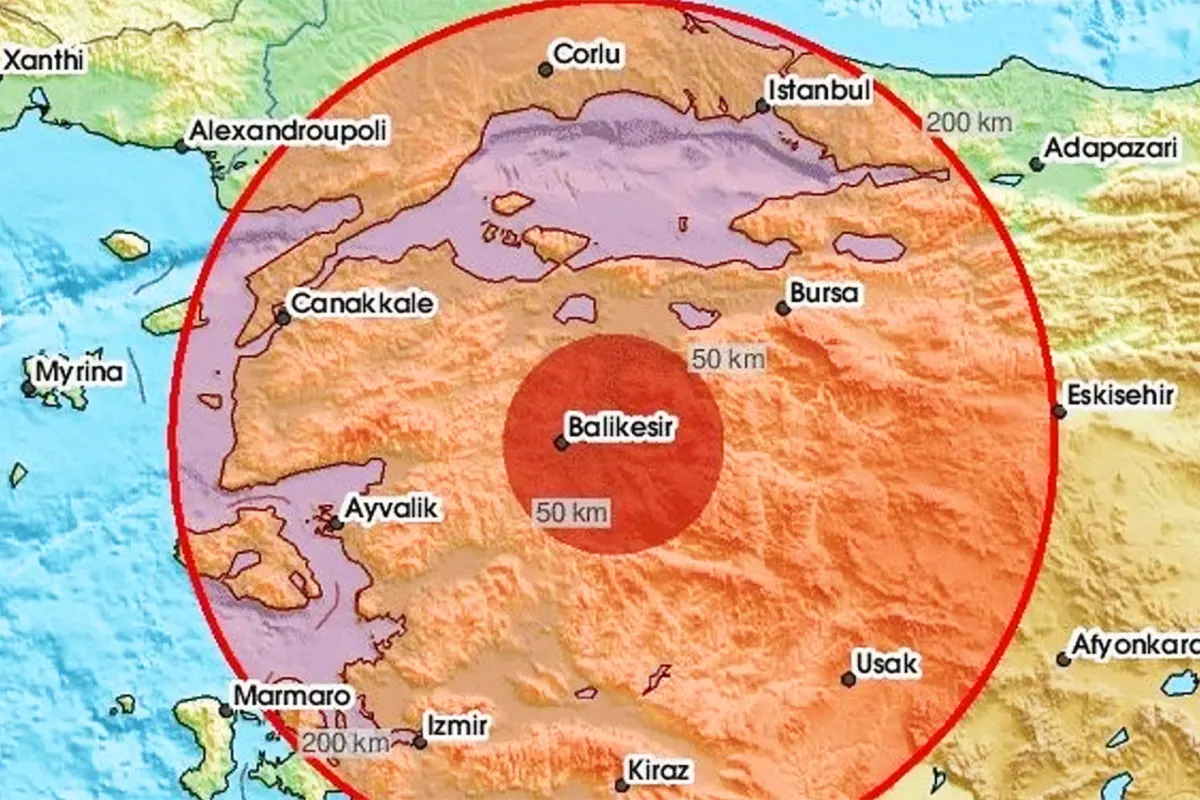
Turkish media reported that the quake struck at 12:59 local time (11:59 CET) at a depth of just 8.46 kilometres and could be felt widely across the west of the country, reaching major cities such as Istanbul, Bursa and İzmir. Turkish Interior Minister Ali Yerlikaya confirmed that teams from AFAD and other relevant agencies have been deployed to the region to carry out inspections in the areas affected by the quake.
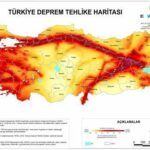
Seismologists warn that aftershocks of up to magnitude 5 could be recorded due to the accumulated stress in the region. Speaking to the Turkish daily Hürriyet, Professor Süleyman Pampal recalled that western Turkey is a region with high seismic activity, citing as an example the 6.1 magnitude earthquake in the Sındırgı district of Balıkesir on 10 August, which has since caused thousands of tremors. In this regard, Pampal said that the fault line that runs through Sındırgı extends eastwards, precisely in the direction of Simav.
“There have been thousands of aftershocks after the 6.1 magnitude earthquake. The Sındırgı fault ruptured, and aftershocks of up to magnitude 5 have been recorded. It seems that the faults extend over a wide area to the south. Earthquakes in the Aegean region are similar to seismic storms. The Sındırgı fault fractured in the west and has now shifted eastwards to Simav. In 1995 there was a magnitude 6 earthquake in the south. This fault behaves like this,” the seismologist explained.
According to Pampal, the fault that runs through this region of western Turkey can produce several earthquakes of magnitude 5-6, although they rarely reach magnitude 7. “There was an earthquake in Simav in 2011 and another one of magnitude 6.1 in Sındırgı. The region is very fragile. This area produces magnitude 5-6 earthquakes. The North Anatolian Fault is a very important fault; however, Western Anatolian faults generally produce earthquakes of magnitude 5 or 6, and rarely magnitude 7. But a major earthquake above 7 would have devastating consequences in our country,” he warned.
VOTE

EDITORIAL TEAM
🧿 About us
.
Edited and reviewed by:

Pablo Gómez is a specialist in Turkey and has been editor-in-chief of Hispanatolia since 2011. He has been analysing current affairs and geopolitics in Turkey and the surrounding region since 2006.
…
📣 Your ADVERTISING on Hispanatolia
.
🤗 HELP US WITH A DONATION:
💗 Paypal