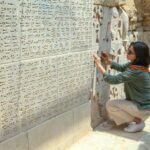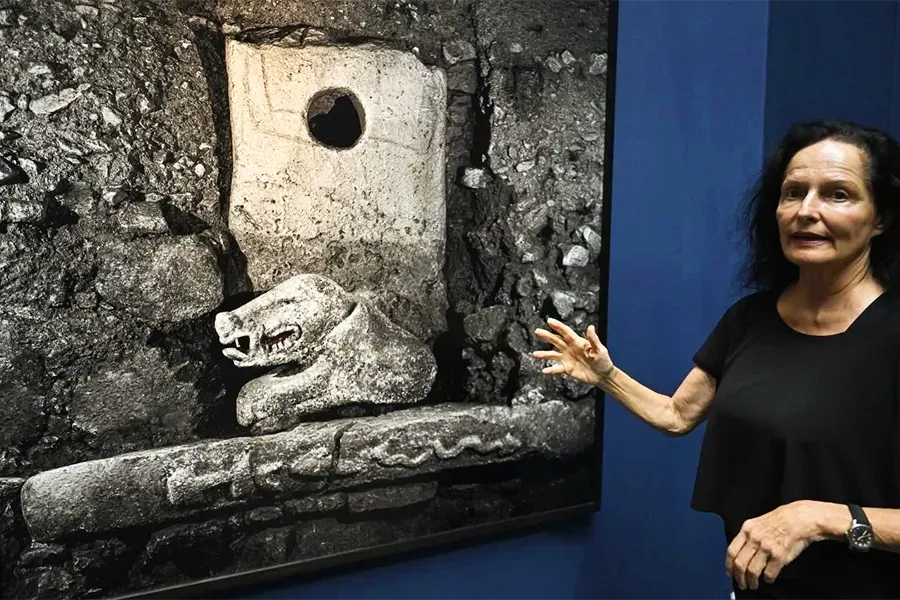
The Spanish photographer Isabel Muñoz is the author of an impressive photographic exhibition that offers a special look at the magnificent and enigmatic structures of archaeological and millenary sites such as Göbekli Tepe, considered to be the oldest sanctuary of mankind.
With the support of the Turkish Embassy in Spain and the Turkish Ministry of Culture and Tourism, the exhibition entitled ‘A New History’ opened on 12 October at the National Museum of Anthropology in Madrid. It is a look into the past in which, through photographs of four archaeological sites in Anatolia – Göbekli Tepe, Karahan Tepe, Nevali Çori and Sayburç – explores what human societies were like in the Neolithic, a key period for humanity in which human beings were transitioning from nomadism to sedentarisation and grouping themselves into more complex and organised structures, which in turn led to an evolution of the concept of the ‘sacred’.
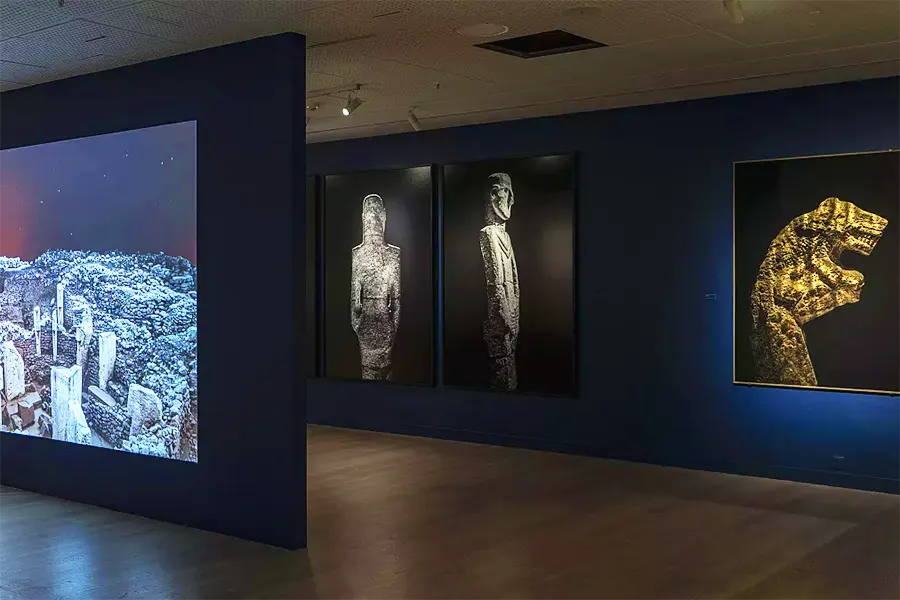
Speaking to the Turkish news agency Anatolia, Muñoz stressed that Göbeklitepe is the cradle of civilisation and an extremely important discovery for humanity. ‘That’s why I refer to it as the ‘Year Zero of Civilisation’. We may not yet be fully aware of its importance, but it is extraordinary. It is the place where all human designs were originated,’ she said.
The Spanish artist says, however, that there was one place that struck her even more deeply than Göbeklitepe: Karahantepe, another even older Neolithic sanctuary where, she said, she experienced very special and intense emotions. ‘We are talking about 9,600 years BC. It’s the beginning. The feelings I had while photographing these places, the emotion I experienced to transmit my sensations through my photographs, were extraordinary,’ he declared.
An ancestral link between Spain and Turkey
Muñoz also stresses that, with the discovery of the structures at Göbeklitepe, certain previously taken-for-granted knowledge about the history of mankind has changed completely. ‘Spain and Turkey have many common features, and one of them is bullfighting. But the figures of the bull and the shaman in Göbeklitepe are evidence that the first bullfighting took place there… As Spaniards, we have always thought that bullfighting came from Greek times because of our culture; but thanks to Göbeklitepe and Karahantepe, we have seen that it existed in Turkey 5,000 years ago,’ the photographer explained.
‘I think that Göbekli Tepe and its surroundings are the greatest discovery in the world of archaeology’, concluded Muñoz, who travelled up to seven times to Turkey to be able to take all the photographs that are now on display at the National Museum of Anthropology in Madrid, on the occasion of the 150th anniversary of its foundation. The photographic exhibition, which is on display in the Central Hall, the Hall of Oriental Religions and the temporary exhibition rooms of the museum, will be open until 19 January 2025 and admission is free.
VOTE

EDITORIAL TEAM
🧿 About us
.
Edited and reviewed by:

Pablo Gómez is a specialist in Turkey and has been editor-in-chief of Hispanatolia since 2011. He has been analysing current affairs and geopolitics in Turkey and the surrounding region since 2006.
…
📣 Your ADVERTISING on Hispanatolia
.
🤗 HELP US WITH A DONATION:
💗 Paypal