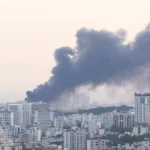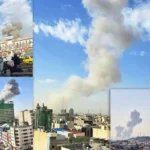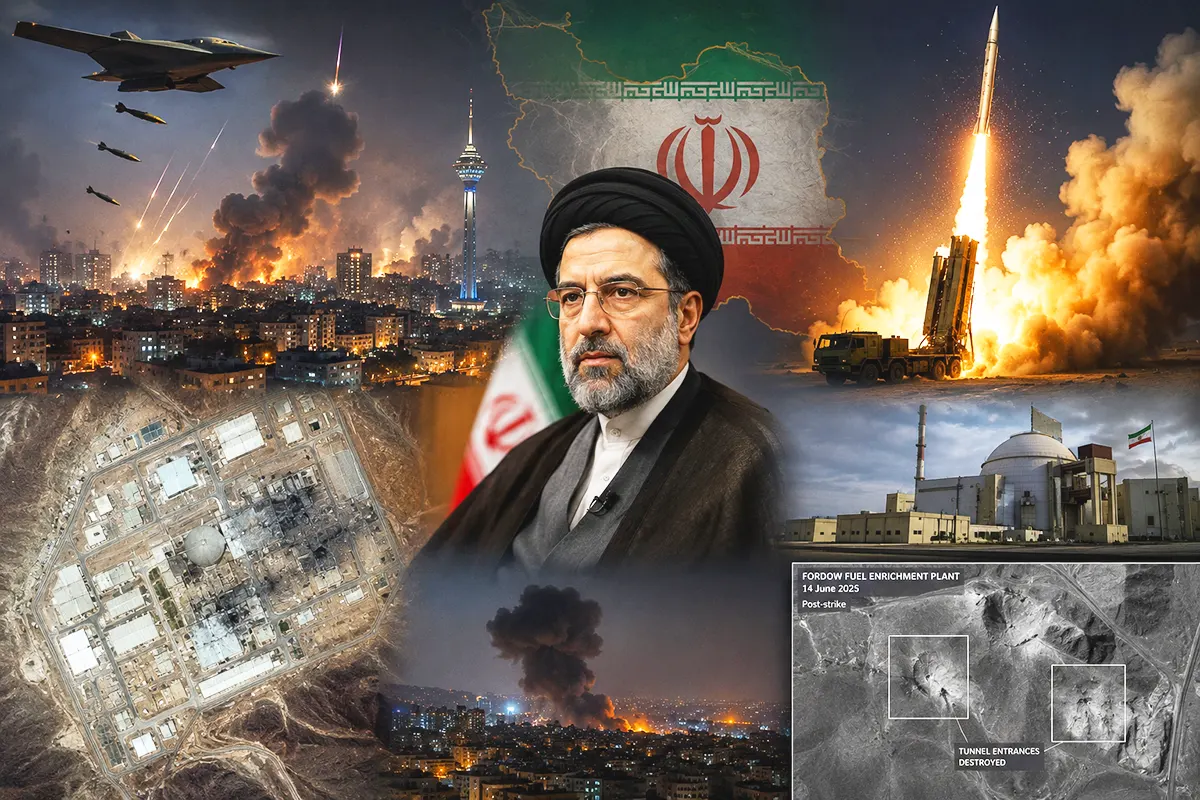
Around 80% of the sites damaged in Tehran by the war have already been repaired, according to recent reports released by the Islamic Republic of Iran Broadcasting (IRIB), whilst US intelligence reports suggest that Iran still retains much of its ballistic capability, suggesting that the Ayatollahs’ regime could be prepared to defy Washington in the face of possible new attacks should Donald Trump decide to resume hostilities.
“More than 60,000 residential and commercial units in Tehran province were hit by American-Zionist attacks during the third imposed war,” stated Tehran’s deputy governor, Seyyed Kamaleddin Mirjafarian, in a report cited by the Qatari broadcaster Al-Jazeera.
Estimates suggest that Iran has suffered around $270 billion in direct and indirect damage since the start of the war initiated by the US and Israel on 28 February. The infrastructure damaged or destroyed includes bridges, ports, rail networks, universities, research centres, power stations and desalination plants, as well as hospitals, schools and civilian homes.
The cost of the war to the United States
US President Donald Trump stated on Monday that the current ceasefire between the United States and Israel is “on life support” and “unbelievably weak” after rejecting the latest Iranian proposal, which he described as “garbage”. The fact is that the war between the United States and Iran is becoming increasingly costly and uncertain, whilst peace in the Middle East hangs in the balance: it is estimated that the cost of the conflict to the United States currently stands at $29 billion, whilst fuel prices and inflation continue to rise.
Both are factors that significantly undermine the popularity of a Trump who is considering tougher military measures to bring Iran to heel and normalise traffic in the Strait of Hormuz, the partial blockade of which threatens global food production and could cause millions of deaths from starvation in the coming months, the United Nations has warned.
The estimate of $29 billion already exceeds the cost of $25 billion that the Pentagon reported to Congress just two weeks ago, whilst in the United States many citizens are already feeling the impact of the conflict due to rising fuel costs and soaring prices. Trump has also sparked fresh controversy after stating in recent hours, “I don’t think about Americans’ financial situation”, whilst speaking to journalists about efforts to reach an agreement with Iran.
The US Department of Energy has already revised its forecast for petrol prices upwards, and now estimates that fuel will reach an average of $3.88 per gallon – approximately €0.85 per litre – this year.
Iran threatens to enrich uranium to 90% if attacked again
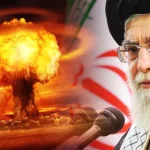
Official sources in the United States have stated that they have “a plan to escalate, if necessary” in the face of the prospect of renewed war with an Iran that remains defiant and appears to retain most of its ballistic offensive capability and to have regained access to numerous launch and storage sites, according to CIA reports.
Tehran is seeking a deal that involves maintaining some control over the Strait of Hormuz and includes the lifting of sanctions, as well as being able to continue its nuclear programme under certain restrictions: something Trump seems unwilling to accept despite pressure to make concessions due to the rising cost of the conflict, not only for the belligerents but also for the Gulf states. Iranian officials, meanwhile, have warned that the regime not only retains its capacity to process uranium, but could even enrich it to a purity of 90% – which would theoretically enable Iran to manufacture nuclear weapons – if the country is attacked again.
VOTE

EDITORIAL TEAM
🧿 About us
.
Edited and reviewed by:

Pablo Gómez is a specialist in Turkey and has been editor-in-chief of Hispanatolia since 2011. He has been analysing current affairs and geopolitics in Turkey and the surrounding region since 2006.
…
📣 Your ADVERTISING on Hispanatolia
.
🤗 HELP US WITH A DONATION:
💗 Paypal