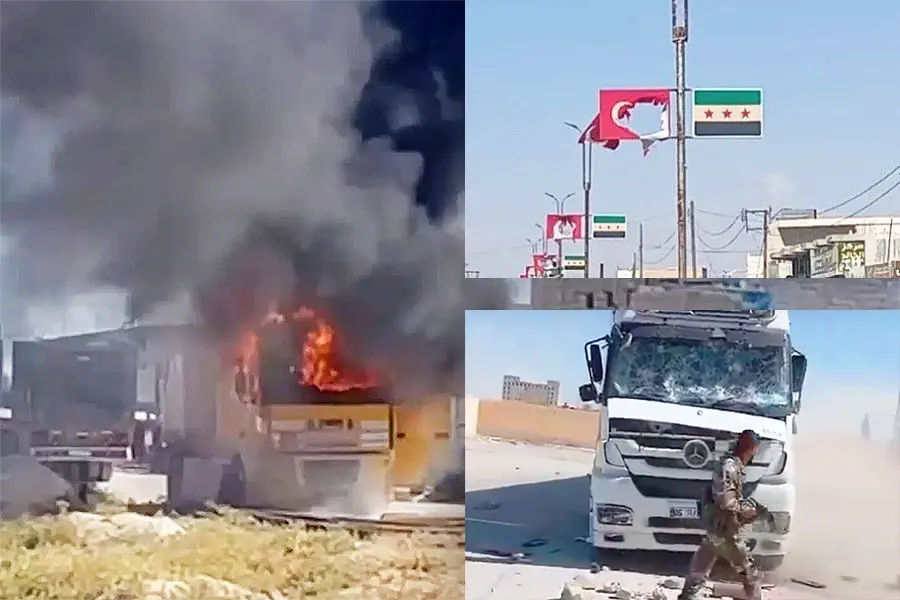
Ankara has condemned protests and demonstrations in Turkish-controlled areas of northern Syria that have left several people dead, following earlier unrest in the Turkish city of Kayseri, where Turkish nationalist groups burned shops and raided homes and property allegedly belonging to Syrians after a Syrian man was accused of abusing a seven-year-old girl.
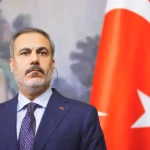
In a statement issued on 1 July, the Turkish foreign ministry accused “provocative” groups of being behind the incidents in Kayseri – which resulted in at least 474 arrests, according to Turkish media – and stressed that Turkey’s defence of “the welfare of the Syrian people is above any provocation”.
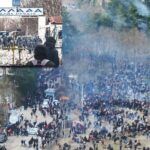
Following the incidents in Kayseri, which also spread to other Anatolian cities with a significant presence of Syrian immigrants although with much less virulence, several areas in northern Syria controlled by Ankara-backed Syrian opposition groups saw violent protests in which hundreds of Syrians, some of them members of the formerly Turkish-armed and trained Free Syrian Army, attacked private vehicles and trucks with Turkish number plates, removed Turkish flags and even attempted to storm Turkish military posts in the region.
In the Afrin region at least 7 Syrians were killed when they tried to remove the Turkish flag from the local governor’s building, according to some sources, although the Syrian Observatory for Human Rights lowered the death toll in Afrin to 3. There were also armed incidents at the Yarabulus border crossing, where border guards opened fire on a group of Syrian protesters who tried to storm the crossing after removing and tearing up several Turkish flags.
The difficult coexistence between Turks and Syrians on both sides of the border
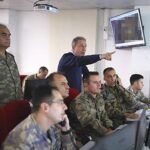
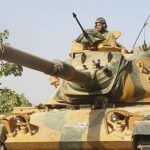
“These acts against the Turkish Republic will not be tolerated in any way,” assured Turkish security sources quoted by local media. Turkish Justice Minister Yılmaz Tunç announced the opening of an investigation into the incidents in northern Syria, which prompted Turkey to send military reinforcements to the region. For its part, the Syrian interim government condemned the attacks on Turkish national symbols in a statement calling on the population of the “liberated areas” to “not fall to the provocations of those who want to undermine the alliance between the Turkish and Syrian people” by attacking buildings and institutions “built with the sacrifice of the Turkish army and the Syrian National Army (formerly the Free Syrian Army)”.
This chain of events seems however to be evidence of the growing tensions on both sides of the border due to the not always easy coexistence between Turks and Syrians; Turkey hosts more than 3 million Syrian refugees, which in recent years has led to growing tensions with the local population especially in large cities like Istanbul, where Syrians have often been blamed for aggravating problems such as employment and housing, coupled with problems of integration of a population that has tended to create large ‘ghettos‘ in the cities; the Turkish government has responded to these tensions by expelling thousands of Syrians from large cities and resettling them in Anatolian provinces – such as Kayseri – where these social tensions have flared up again, even more virulently due to the strong nationalist sentiment in many of these cities in Turkey’s interior.
But protests against Turkey in the northern parts of Syria, a strategic region for Ankara’s interests – and where support for its powerful northern neighbour and ‘ally’ could easily falter, given the difficult and complex political, social and economic situation in these regions – are also a warning signal for Ankara. It is quite possible in fact that, in addition to the incidents in Kayseri, a trigger for these protests against Turkey has been the recent statements by Erdoğan, who last week seemed to respond positively to Damascus’ proposal for a normalisation of relations with Assad’s Syria, and even assured that a meeting with Assad himself “is not impossible”.
This evident shift in Turkey’s stance towards the Assad regime could have eventually unleashed the wrath of thousands of refugees who fled the Syrian regime and live in the Turkish-controlled border areas of northern Syria (many of them even resettled from Turkey), and who would now feel betrayed by what have hitherto been their main allies. Faced with the difficult task of keeping calm two fires on both sides of the border, Turkey may face major dilemmas in the short term – dilemmas with no clear, let alone simple, solution.
VOTE

EDITORIAL TEAM
🧿 About us
.
Edited and reviewed by:

Pablo Gómez is a specialist in Turkey and has been editor-in-chief of Hispanatolia since 2011. He has been analysing current affairs and geopolitics in Turkey and the surrounding region since 2006.
…
📣 Your ADVERTISING on Hispanatolia
.
🤗 HELP US WITH A DONATION:
💗 Paypal