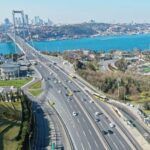
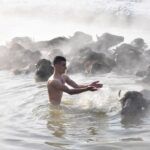
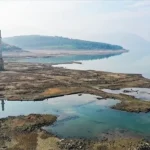
The feared marine mucilage or sea snot, a viscous substance that appeared in 2021 covering the coasts and suffocating all marine life, has reappeared in the Sea of Marmara and is only 5 metres below the surface, triggering alarm among experts, who warn that there is a great risk that it will reappear on the surface with the arrival of spring.
Turkish media reported in recent hours that a group of experts had detected the presence of the substance only 5 metres underwater in the Gulf of Erdek, located in the Bandırma district of the province of Balıkesir (southern coast of Marmara), and claim that if urgent measures are not taken, the mucilage will appear on the surface in a few months, causing great harm to marine flora and fauna, but also to the fishing and tourism industry.
Professor Mustafa Sarı, an academic at the Faculty of Marine Studies of Bandırma’s Onyedi Eylül University, explained that the marine mucilage has concentrated in large clusters at depths of between 5 and 25 metres below sea level and has spread all over the bottom of the Marmara, posing a very serious threat to the region’s ecosystem, as shown by images captured underwater by divers.
The situation has reached such an alarming point that several fishermen in the region have already contacted the Turkish Ministry of Environment reporting the detection of mucilage and that their nets have been rendered unusable by this viscous matter, raising fears of a repeat of what happened in 2021, when this substance covered a large part of the Marmara Sea coastline including Istanbul.
So-called sea snot is a whitish, dense, gelatinous mass made up of living and dead organic matter, mainly phytoplankton but also viruses, bacteria and other micro-organisms, and sticks to all surfaces, smothering all marine life. In 2021 Turkey was forced to launch the largest marine clean-up operation in its history to remove the presence of marine mucilage from the Sea of Marmara; but experts have always warned that the mucilage was never completely eliminated and will persist as long as the causes of the sea snot – pollution, loss of oxygen and rising sea temperatures due to climate change – continue.
VOTE

EDITORIAL TEAM
🧿 About us
.
Edited and reviewed by:

Pablo Gómez is a specialist in Turkey and has been editor-in-chief of Hispanatolia since 2011. He has been analysing current affairs and geopolitics in Turkey and the surrounding region since 2006.
…
📣 Your ADVERTISING on Hispanatolia
.
🤗 HELP US WITH A DONATION:
💗 Paypal