Cat remains found by archaeologists in Istanbul reveal that, unlike in Europe, cats were cared for in the Middle Ages in Byzantium due to the influence of Islamic culture.
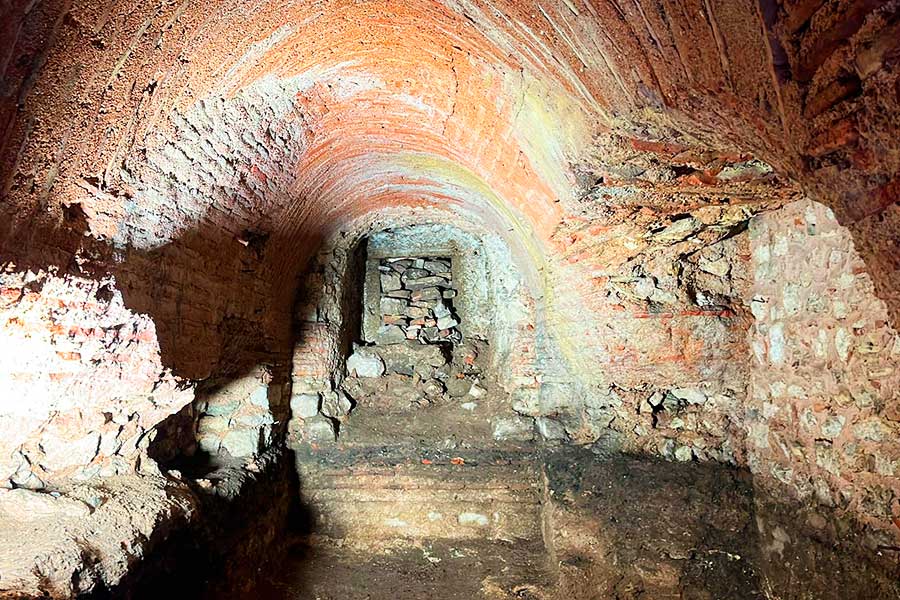
Archaeological excavations carried out between 2004 and 2014 as part of construction projects in Istanbul such as Marmaray or Yenikapı, which allowed to unearth and make new discoveries about the origins of the city, included the discovery of various remains and skeletons of cats dating back to Byzantine and ancient Constantinople times.
Speaking to the media, Turkish bioarchaeologist Vedat Onar stressed that the bone remains of cats found in the excavations, which were donated to the Veterinary Faculty of the Cerrahpaşa University in Istanbul, have allowed them to make further inquiries into the history of the city, adding that the cats that lived in Istanbul during the Byzantium era were in good health and lived much better than in Europe.
For his part Altan Armutak, head of the Department of Veterinary History of the university, explained that during the Byzantine period there were cats that lived and fed on fish around the fishmongers that were in areas such as Kumkapı, Yenikapı or Aksaray, located in the coasts of the ancient city of Constantinople.
Cats were hunted in Europe since year 1000
“From the year 1000 there was at that time an aggressive attitude towards cats in Western Europe. In a sermon given by the Pope, he claimed that cats were harmful animals, and that they were representatives of the devil and helped him. Thousands of cats were burned in Europe at that time. Under accusation of witchcraft, we know that elderly women were burned in sacks in which they were put together with cats,” said Armutak.
“Cats were put into sacks and beaten with sticks; hung on tree branches and burned from below with fire. They believed that the screams of cats scared the devil. In Europe, these animals suffered a humiliating, if not shameful, time. Unfortunately, there were no cats left in Europe, and as a result, rats spread and serious outbreaks of plague broke out between the years 1300 and 1500,” said the expert.
“A cat is a guarantee against plague. Plague is not transmitted unless the mouse touches human food. As a result, mice and plague increased where there were no cats left. The Pope said that it was mandatory to kill cats because ‘the devil looks at the world’ with the light of the Tapetum lucidum (a tissue in cat’s eye). Therefore, there was a massacre of cats in Europe since the year 1000,” he added.
Byzantium, under the influx of Islam, adopted the culture of love for cats
In the Byzantine Empire and Constantinople, however, the situation for these animals was very different. In addition to the fact that the Pope had no influence on the Byzantine territories, Byzantium already lived then under a geographical proximity to the Islamic world, from which it received a great influence.
This influence was what unleashed movements such as, for example, the historic Byzantine Iconoclasm against religious icons in Byzantine territories, clearly influenced by the rejection in Islam of the worship of idols and saints. In fact, in the Islamic world, the cat has always been a symbol of purity, and Muhammad himself is said to have been a great lover of animals but especially of cats; on one occasion, he even cut his clothes so that his beloved cat Müezza could continue sleeping on it while he left.
“This love for cats was embraced by Arab culture, and became even stronger during the period of the four caliphs. The caravans of Arab merchants and soldiers travelling north (to Byzantium) carried with them many cultural habits, behaviours, words and objects related to love for cats,” explained Armutak.
“Unlike in Europe, cats in Constantinople were cared for and fed in houses and shops. Byzantium lived under the influence of Islamic culture, and loved these animals. These cat skeletons are the archaeological evidence for this fact. The Byzantine Empire did not see plagues as great as those that caused the death of much of the population in Europe,” concluded the professor.
📖 If you want to learn more about Turkey, we recommend:
We include affiliate links: if you buy through them, you don’t pay extra money and you help this website.
VOTE

As a history lover, Pablo Gómez was captivated by Turkey from the first day he visited it in 2006: he got married there, has a house there… and has since become an expert on Turkey’s current affairs. With a long experience in media, he has been at the helm of hispanatolia.com since 2011.