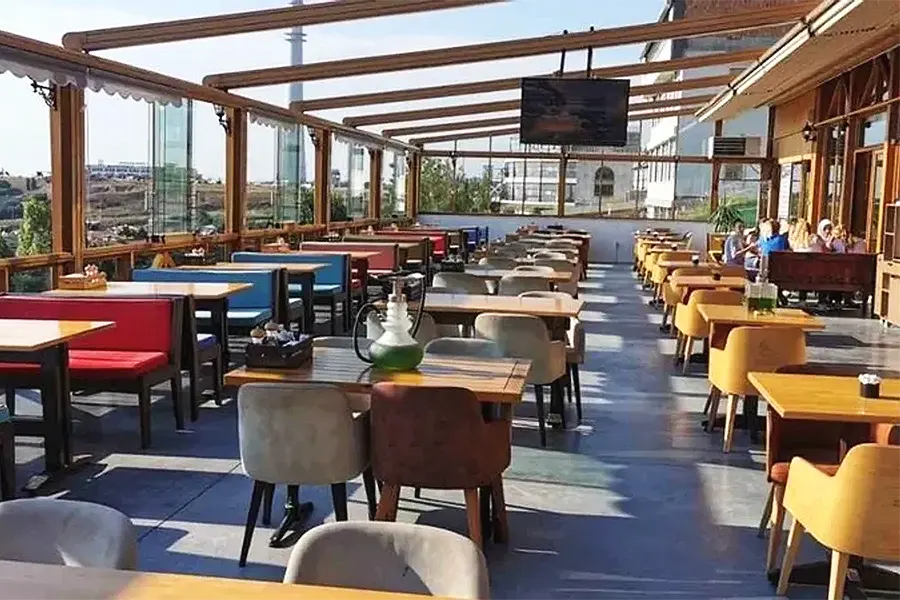
Thousands of Turks have called for a boycott of restaurants and cafes in Turkey over the last few days via social networks amid accusations of abusive prices and exorbitant price hikes, taking advantage of the rising cost of living due to inflation. A boycott called for the weekend (Saturday 20 and Sunday 21) has found numerous supporters among the public and even among prominent public figures, but many have viewed it with scepticism and as only a temporary solution to a sector that is poorly regulated and where this type of abuse is frequent.
Throughout the weekend, all kinds of examples circulated on social media in Turkey with images and videos of abuses by restaurants and cafes: from inflated bills with unjustified cost overruns, to examples of customers finding themselves with smaller portions or lower quality than they were used to.
One customer recorded a video in which the roguery reached such an extent that the owner of a restaurant justified the increase in the price of water because the waiter had not only brought it to the table, but also served it to her in the glass. Some examples sparked particular indignation, such as a bakery charging 110 liras for a single cookie, or prices of up to 300 liras for a single meal. In some restaurants in Istanbul, prices are on a par with those in the most expensive European cities, even though the standard of living and purchasing power of Turks is much lower.
Voices in favour of boycott among hoteliers
Calls for a boycott over the weekend found unexpected support after Ramazan Bingöl, president of TÜRES, one of Turkey’s largest restaurant and tourism sector associations, publicly acknowledged that citizens calling for a boycott of the sector are right, admitting that prices have become expensive even for foreign tourists.
“I know my sector will crucify me, but is the public boycott justified? Yes, it is. I agree, they (the prices) are expensive. Tourists are also very unhappy with this situation. At this point, tourism could suffer. Are there those among us who act badly and are opportunists? Yes. Unfortunately, the service sector is the main driver of inflation,” Bingöl admitted to the daily Hürriyet.
Fines against price hikes
The Turkish government has tried in vain to reverse this situation with new regulations and fines, but many hoteliers find ways to avoid them. In January a new law came into force requiring restaurants and cafes to publicly display the prices of all their products and services to avoid abuses and ‘surprise’ bills at the time of payment; but the problem persists even with heavy fines.
Last March, a cafe in Istanbul was fined 834,000 liras (24,000 euros) for not displaying the prices of some menu items and for charging service fees. But it is a drop in the ocean.
Uneven follow-up to the boycott
The boycott call, however, does not seem to have met unanimously among the public opinion in Turkey. In Istanbul, while some places seemed noticeably empty and without customers over the weekend, others – especially in the busiest areas such as Taksim – seemed to be even more crowded than at other weekends. Several restaurant and cafe owners were sceptical about the boycott follow-up in Turkey; others, however, acknowledged a drop in customers, but attributed it just to bad weather.
“I know about the boycott because of the price hikes, and I support it… OK, we don’t go (to restaurants) for two days, and then what? Maybe it will raise people’s awareness, but it should be something durable,” commented a sceptical customer sitting in a cafe in Beşiktaş.
VOTE

EDITORIAL TEAM
🧿 About us
.
Edited and reviewed by:

Pablo Gómez is a specialist in Turkey and has been editor-in-chief of Hispanatolia since 2011. He has been analysing current affairs and geopolitics in Turkey and the surrounding region since 2006.
…
📣 Your ADVERTISING on Hispanatolia
.
🤗 HELP US WITH A DONATION:
💗 Paypal