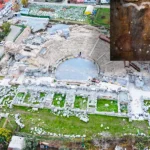
A team of Turkish archaeologists has discovered the ruins of an ancient 5th century church in the archaeological site of Harran, located in the province of Şanlıurfa in southeastern Turkey and a candidate for UNESCO World Heritage Site status.
Professor Mehmet Önal of Harran University’s Department of Archaeology told Turkish media that the remains of the church are located about 200 metres north of the ruins of the Great Mosque of Harran, one of the main monuments of the site. Excavations have also revealed that the church suffered destructions as a result of both natural disasters and Mongol invasions of the region.
“We have observed during our work in the church that the Mongols burned and destroyed the building, but we have also clearly seen the signs of an earthquake, as the entire wall of the north nave of the church is lying on its side in one piece,” said Önal, who explained that there are still several areas of the church to be unearthed, such as the apse and other naves, which “will become visible as we continue excavating”.
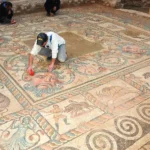
Regarding the dating of the church, the professor said that after examining the remains it has been determined that it was built in the 5th century during the early Eastern Roman Empire: “The floors of the churches built during this period in the area mosaic. We also expect to see mosaics on the floor of this church,” said the archaeologist, who underlined the special characteristics of this Christian temple found in Harran: “It is more than 70 metres long and built with cut stone blocks, it is the largest cathedral-type church in the entire southeastern (Anatolian) region,” he said.
VOTE

EDITORIAL TEAM
🧿 About us
.
Edited and reviewed by:

Pablo Gómez is a specialist in Turkey and has been editor-in-chief of Hispanatolia since 2011. He has been analysing current affairs and geopolitics in Turkey and the surrounding region since 2006.
…
📣 Your ADVERTISING on Hispanatolia
.
🤗 HELP US WITH A DONATION:
💗 Paypal