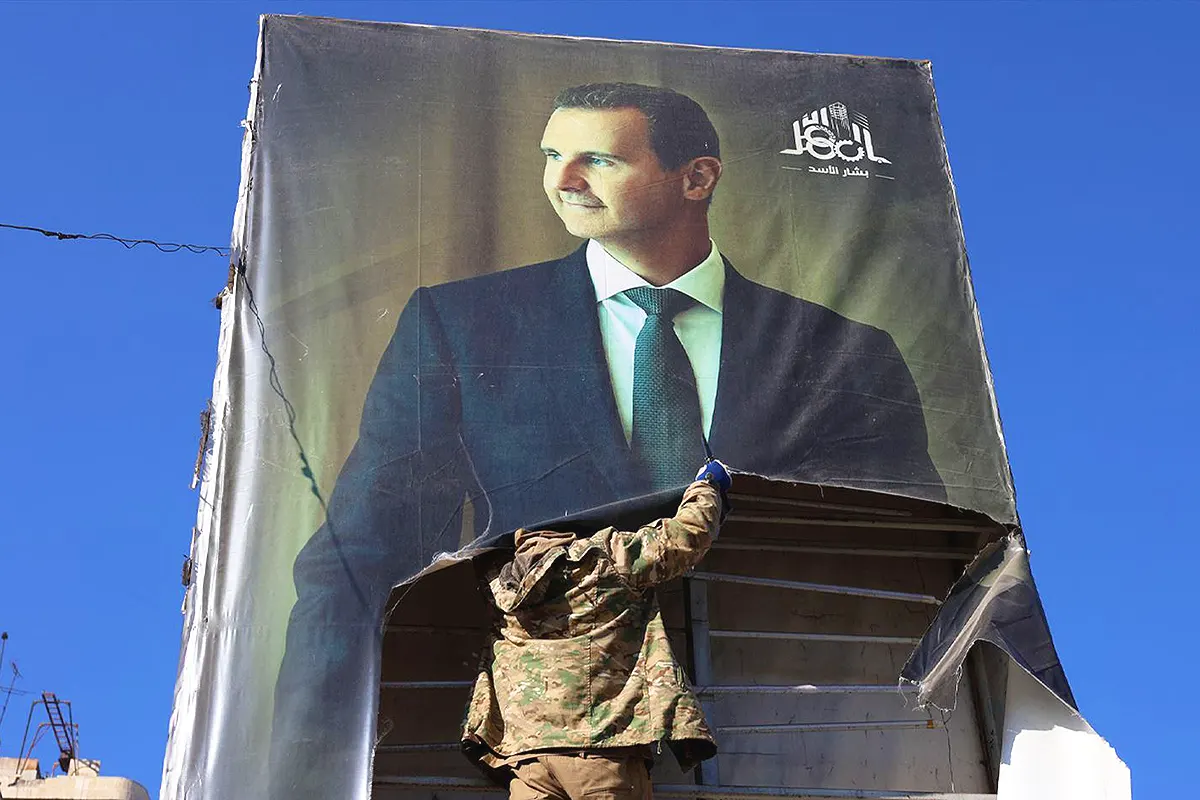
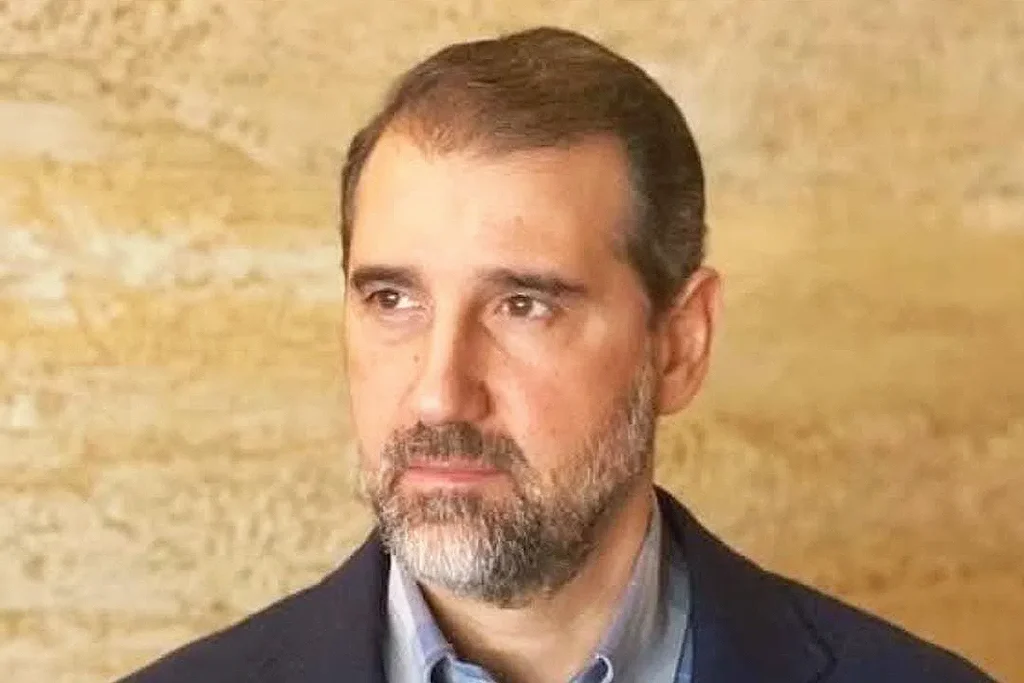
An extensive report published by Reuters reveals that some of the former strongmen of Bashar al-Assad‘s regime, now refugees in Russia, are building a clandestine network with a view to unleashing an armed insurrection in Syria. Among the main drivers of the plan are the regime’s former military intelligence chief, Kamal Hassan, and Assad’s billionaire cousin, Rami Makhlouf, who according to the investigation are allegedly funding and organising militias mainly in Syria‘s Alawite-dominated coastline, as well as among Alawite communities in Lebanon.
According to documents, interviews and evidence analysed by Reuters, Hassan and Makhlouf aim to mobilise “more than 50,000 fighters” and place them under their command, spread across several factions:
- Hassan would claim control of some 12,000 men in Syria and Lebanon, according to some sources.
- Makhlouf claims to have a network of 54,000 fighters, organised in dozens of battalions deployed in areas such as Homs, Hama, Latakia and Tartus, according to other media reports.
To bolster their plans, both would also seek to take control of an infrastructure inherited from the regime: 14 underground command rooms and hidden arsenals, built towards the end of Assad’s rule in the country’s coastal strip. These facilities contain light weapons, ammunition, grenades, communications equipment, maps, and even computers, ready to be activated. According to Al Jazeera sources, the recruited fighters are paid between $20 and $30 a month in exchange for participating in the plan.

A military coordinator involved in the preparations explicitly acknowledged from Lebanon that “fighting is the only way to restore the Alawite dignity“. In his own words: “Perhaps thousands more will die, but the (Alawite) sect must offer sacrificial lambs”.
In addition, sources report that under Makhlouf’s leadership there are active financial channels in countries such as Lebanon, the United Arab Emirates (UAE) and Russia. Through accounts linked to senior military commanders – such as Generals Suhail Hassan and Qahtan Khalil – millions of dollars were allegedly transferred for the operation’s payroll and operational expenses.
Promises and messianic speeches from exile
From his exile in a villa outside Moscow, Hassan has reiterated his ambition in voice messages sent to former Assad regime officials. In one of them he even told them: “Be patient, my people, and don’t surrender your arms. I am the one who will restore your dignity“.
For his part, Assad’s cousin – once a financial pillar of the Syrian regime, thanks to his heavy business investments in telecommunications, construction and tourism – has adopted an almost messianic discourse. According to the investigation, he refers to his “return to power” as part of a religious destiny, evoking prophecies and saying that he will return after a final apocalyptic battle.
In his networks, Makhlouf goes so far as to refer to the new Syrian president, Ahmed al-Sharaa, as “the villain of the prophecy“: a radical twist that contrasts with his past as an economic tycoon and former head of the clientelistic structures that sustained and enabled Bashar al-Assad’s regime to survive. After his fall from grace and years of house arrest, his religious radicalisation – real or fictitious – seems to mark a new strategy to regain power in Syria, supported by his economic capacity and his blood ties to Assad.
Obstacles and internal tensions
Despite these plans, the group faces deep internal tensions, according to Reuters and other sources. Far from working together towards a common goal – toppling the current government and regaining power in Syria – Hassan and Makhlouf, both former allies of the Assad regime’s leadership, now appear to be competing with each other for the loyalty of Alawite fighters.
Moreover, the loss of Moscow’s explicit backing is one of the main obstacles to their plans. Although Russia was for years a staunch ally of Damascus and welcomed Assad’s family after the end of his dictatorship, since then Moscow – looking out for its own interests – has begun to move closer to the new Al-Sharaa government, seeking to secure its bases on the Mediterranean coast. And no one in the Kremlin believes that a return of the old regime – Assad-led or otherwise – to Syria is a realistic prospect, at least in the medium term.
Moreover, many members of the Alawite minority – the main target of the recruitment organised by Hassan and Makhlouf – are wary. Many see themselves as abandoned to their fate by Assad himself, and are wary of those seeking to lead a new insurgency that, if unsuccessful, could lead to strong reprisals by the new government in Damascus.
Another obstacle is the current Syrian authorities’ own knowledge of such ‘uprising’ plans. According to the governor of the coastal region of Tartus, Ahmed al-Shami, the security forces are not only aware of the plans, but have also identified those underground rooms full of weapons and equipment that Hassan and Makhlouf aspired to control. Al-Shami claims that these facilities have been weakened and that, for now, these alleged plans pose no real threat: “We are certain they cannot do anything effective, given their lack of strong tools on the ground and their weak capabilities,” he told Reuters.
Al-Sharaa’s counter-plot strategy
In the face of this plot, the Al-Sharaa government has deployed a counter-insurgency strategy. It has appointed former loyalist-turned-dissident Khaled al-Ahmad – an Alawite and childhood friend of Syria’s current president Al-Sharaa – to lead efforts to reintegrate former Alawite soldiers and convince the local population on the Mediterranean coast that their future lies in the new Syria.
In a public statement, al-Ahmad stressed the need to “heal wounds, eradicate sectarian hatred and pay homage to the dead” as the path to a Syria “able to live with itself”.
The Syrian authorities have also stepped up operations against cells identified as linked to the plot, and reinforced the military presence in Alawite-majority coastal areas. So far, there is no evidence of any major new armed mobilisation in the region.
The challenges of the new Syria
A year after the fall of Assad, Syria faces a long, hard and costly reconstruction and a long and tortuous road to economic recovery, with a new Sunni government seeking stability, international backing and rebuilding a devastated state, while facing new conflicts and uprisings in the south and the resurgence of groups such as Daesh.
This new plot from exile – sustained by money, but also by sectarian resentment, pseudo-religious discourse and alleged hidden arsenals – is a reminder that the roots of the Syrian conflict have not been uprooted. The risk of a new spiral of sectarian violence persists, and if Hassan and Makhlouf manage to join forces or capitalise on simmering Alawite discontent, the coastal region could once again become the scene of a bloody confrontation that could be the spark that reignites the rest of the country.
For now, analysts agree that the chances of success of this plot from exile in Russia are rather limited. Mistrust among the Alawites themselves, the lack of solid external support, the new Syrian government’s knowledge of the plans, and the lack of credibility of some of the plot’s organisers, considerably reduce the chances of any kind of insurgency succeeding.
However, the same experts warn that the combination of sectarian resentment, financial resources and a hidden arsenal – including some yet to be discovered, organised by Assad before he fled – remains a latent threat. A threat that, if left unchecked, could reopen old wounds in Syria and unleash chaos in a country still trying to recover from the devastation of civil war.
VOTE

EDITORIAL TEAM
🧿 About us
.
Edited and reviewed by:

Pablo Gómez is a specialist in Turkey and has been editor-in-chief of Hispanatolia since 2011. He has been analysing current affairs and geopolitics in Turkey and the surrounding region since 2006.
…
📣 Your ADVERTISING on Hispanatolia
.
🤗 HELP US WITH A DONATION:
💗 Paypal