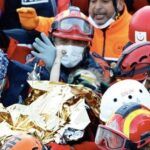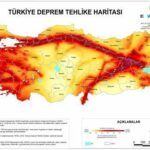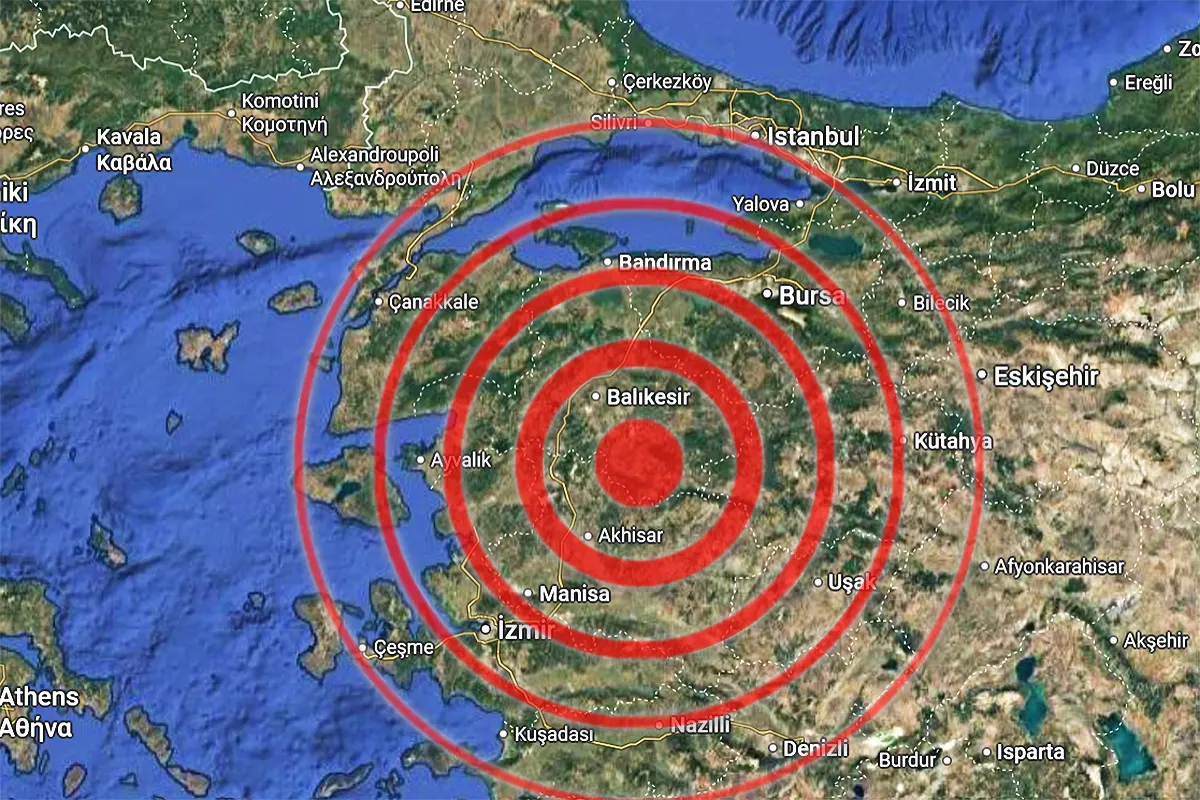
Four consecutive earthquakes shook the Sındırgı district of northwestern Turkey’s Balıkesir province in the early hours of 13 November, rekindling concern in an area that has been subjected to continuous tremors for months now due to what experts call a seismic swarm: an abnormal activity that has scientists worried.
A seismic swarm is a series of earthquakes of low or moderate magnitude that occur in the same area and in a short period of time, without there being a main earthquake that triggers them. Unlike aftershocks, these tremors usually have multiple nearby epicentres and irregular activity that can last for days or even months. Experts consider them an indication of accumulated stresses in the earth’s crust, and they sometimes precede a major earthquake.
As reported by Turkish media citing data provided by the Disaster and Emergency Management Agency (AFAD), a first 4.7 earthquake was recorded at 6:16 local time (4:16 CET) with its epicentre in Sındırgı. This was followed by two earthquakes of magnitude 4.2 at 6:20 and 6:21. The initial quake occurred at a depth of 12.31 kilometres, while the other two were located at 7 and 7.89 kilometres respectively.
Following these tremors, a fourth earthquake, this time measuring 4.0, was recorded at 7.45 a.m. at a depth of 7.01 kilometres. The tremors were felt in several nearby provinces, including Istanbul, although no casualties or major damage have been reported.
Over 16,000 earthquakes in just 3 months
These new events follow months of seismic activity in this region of northwestern Turkey, since a 6.1 earthquake struck the area on 10 August killing one person and injuring dozens of others, as well as damaging numerous buildings. Another strong earthquake of the same magnitude hit the same district again on 27 October, prompting the authorities to declare the area a disaster zone.
Since August, Sındırgı has recorded more than 16,000 earthquakes – equivalent to 60% of all seismic activity in Turkey, some above magnitude 4 – raising fears among the population and intriguing experts, who still do not have a clear explanation for this unusual phenomenon.
VOTE

EDITORIAL TEAM
🧿 About us
.
Edited and reviewed by:

Pablo Gómez is a specialist in Turkey and has been editor-in-chief of Hispanatolia since 2011. He has been analysing current affairs and geopolitics in Turkey and the surrounding region since 2006.
…
📣 Your ADVERTISING on Hispanatolia
.
🤗 HELP US WITH A DONATION:
💗 Paypal