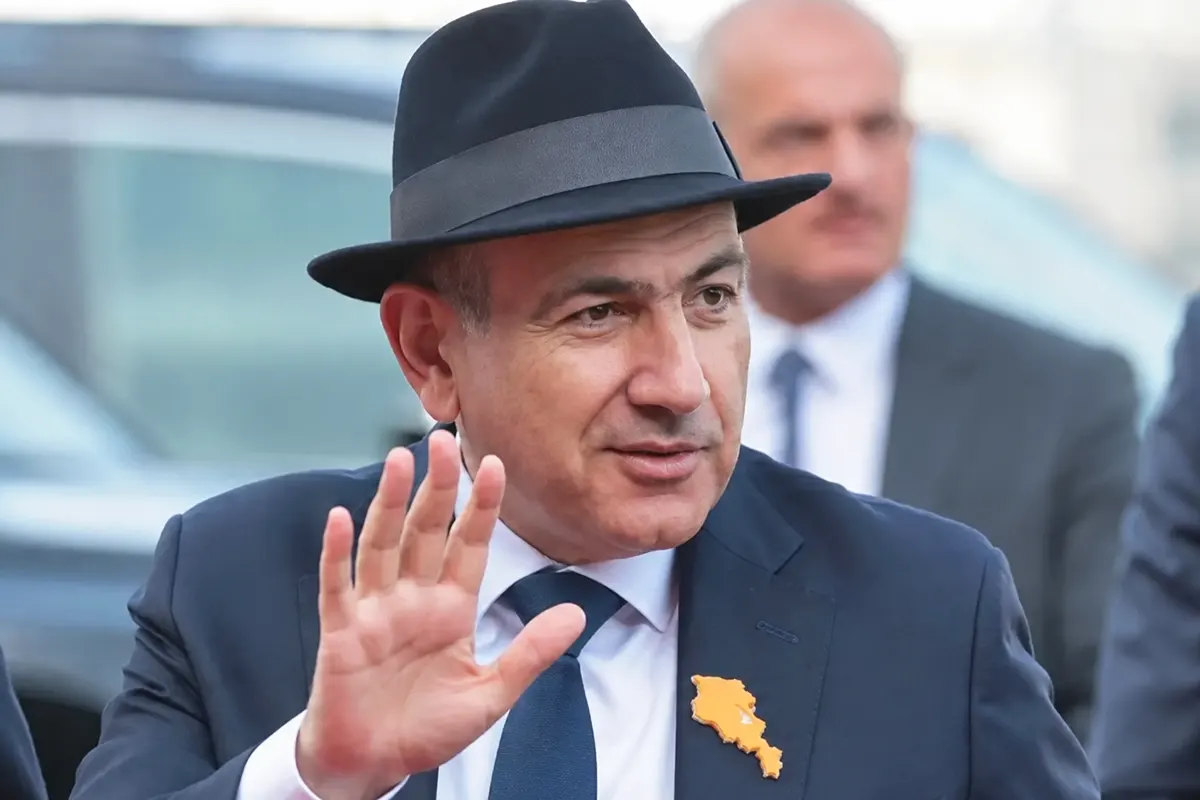
The Prime Minister of Armenia, Nikol Pashinyan, has stated that his country does not consider it necessary to respond to the Israeli government’s recognition of the Armenian genocide, pointing out that the “weaponization” of the deaths of Armenians in 1915 in Anatolia runs counter to Yerevan’s interests.
During a press conference held late yesterday, Pashinyan emphasised that it is not in Armenia’s interest to take part in the inappropriate use of this issue: “We see no need to respond because we believe that refraining from entering into the issue of the weaponization of the Armenian Genocide is in the interests of the Republic of Armenia,” he said, as quoted by the Armenpress news agency, after the Israeli cabinet on Sunday approved a proposal by Israeli Foreign Minister Gideon Saar to classify the events of 1915 as genocide, although the measure still needs to be approved by the Knesset (parliament).
Shortly after Israel’s announcement, the Foreign Ministry of Turkey issued a statement denouncing the move by the Netanyahu government, claiming it was merely seeking to “cover up its own crimes” against the Palestinians and the civilian population in Gaza through a decision that Ankara described as politically motivated. Azerbaijan – a traditional ally of Israel in the Caucasus – also criticised the Israeli government’s decision and urged Israel to reconsider the move.
Turkey acknowledges the deaths of thousands of Armenians during the First World War but maintains that these occurred in the context of the conflict and the collapse of the Ottoman Empire, rejecting the notion that there was a deliberate plan of extermination and emphasising that an equal or greater number of Turks and Muslims died during the war. Armenia and its diaspora, by contrast, maintain that these were deliberate massacres and put the number of victims at 1.5 million. Ankara has for decades been proposing, without success, that an international and impartial commission of historians examine the archives and draw its own conclusions. For his part, Pashinyan has recently stated that international recognition of the genocide is no longer a priority for Yerevan.
The fact is that Israel and its parliament have for years refused to recognise the Armenian genocide, arguing that it was a historical issue that was too complex and politicised; however, following the deterioration of relations with Türkiye in the wake of the brutal Israeli offensive in Gaza in response to the Hamas attacks in October 2023, and the subsequent accusations of genocide levelled by Turkey against Netanyahu and his government, the current Israeli government has decided to take this step in an attempt to put pressure on Ankara at a time when the process of normalising relations between Turkey and Armenia has seen progress that would have been unthinkable just a few years ago.
VOTE

EDITORIAL TEAM
🧿 About us
.
Edited and reviewed by:

Pablo Gómez is a specialist in Turkey and has been editor-in-chief of Hispanatolia since 2011. He has been analysing current affairs and geopolitics in Turkey and the surrounding region since 2006.
…
📣 Your ADVERTISING on Hispanatolia
.
🤗 HELP US WITH A DONATION:
💗 Paypal