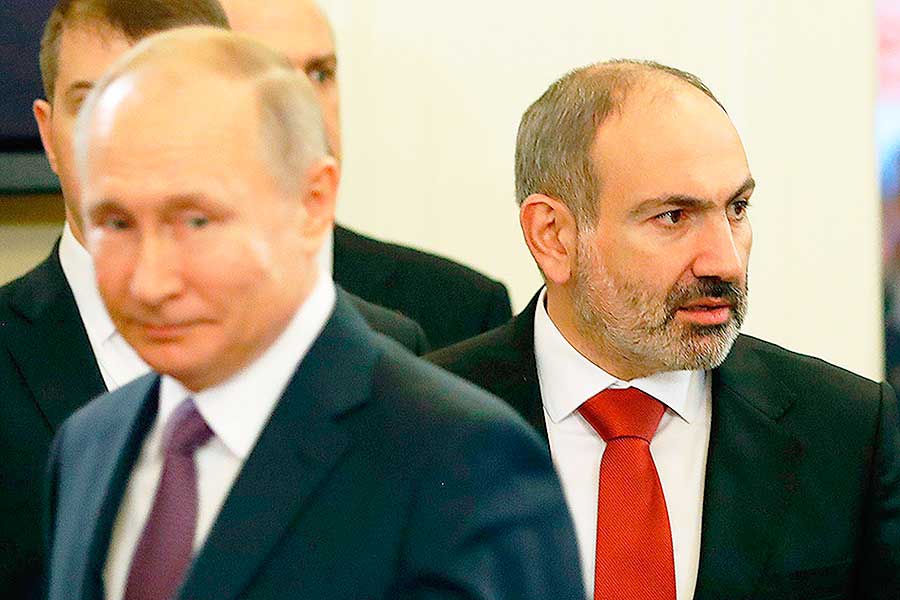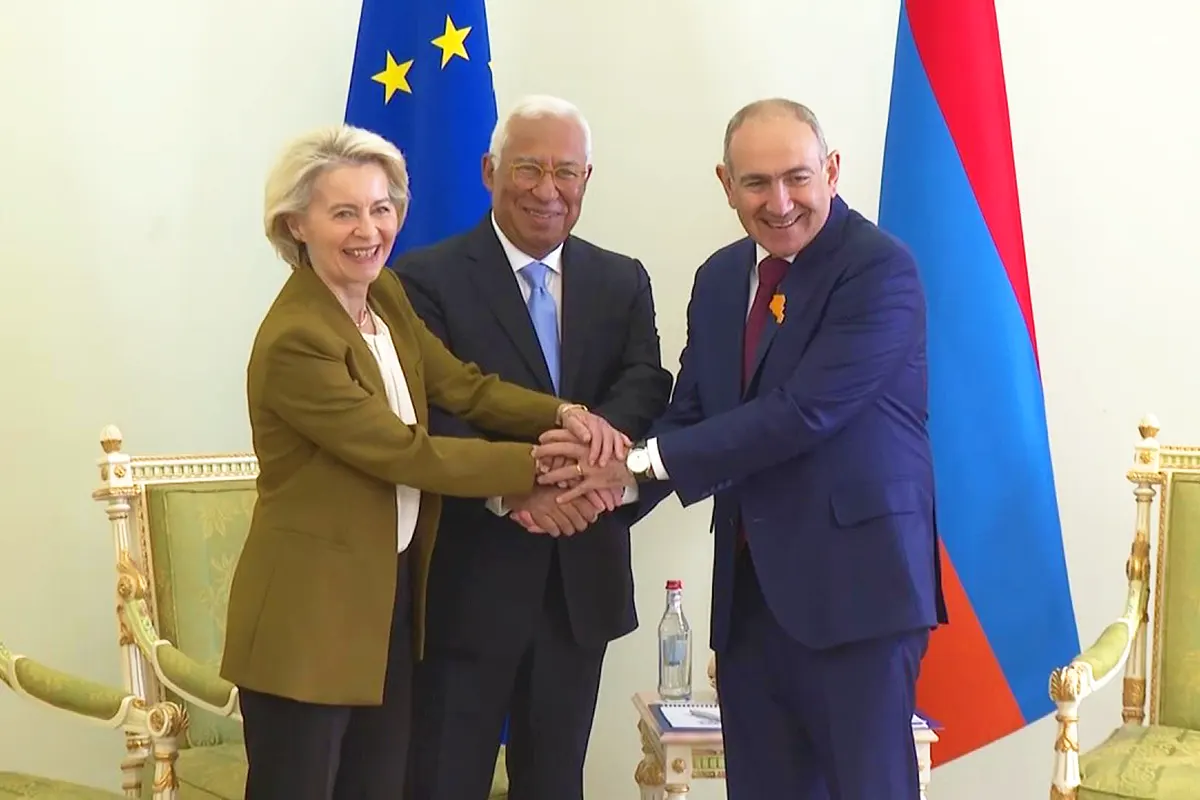
The Prime Minister of Armenia, Nikol Pashinyan, has stated that his country would be “delighted” to be admitted to the European Union following the first Armenia-EU summit held in Yerevan on 5 May 2026, in what analysts see as further evidence that the Caucasian country is seeking to distance itself from Russia’s sphere of influence and sever its ties with Moscow.
At a press conference following the meeting, the Armenian leader described the event as historic and recalled that last year the Armenian parliament passed a law, driven by civil society, seeking membership of the European bloc.
“I believe this is a good and additional incentive to give new impetus to democratic and institutional reforms in general, so that Armenia can achieve the status of a country that meets European standards as soon as possible. This is our main medium-term objective, as we understand that no country can become a full member of the EU without meeting those standards. If we are admitted as full members of the EU, we will be pleased and happy about it; and if not, in any case we will be in a winning position, as the Republic of Armenia will be a country meeting European standards,” the Armenian Prime Minister stated, as quoted by news agencies.
In remarks made last January, Pashinyan had already stated that Armenia undoubtedly wishes to become an EU member state: “Do we want to become a full member of the European Union? Yes, unequivocally and without question,” the Prime Minister said at the time, emphasising the importance of the bill passed by the Armenian National Assembly last year to give the green light to the country’s EU accession process.
Armenia will be “a modern state aligned with European standards”
On 26 March 2025, members of the Armenian parliament passed a bill in its second and final reading to initiate the republic’s accession process to the European Union. Pashinyan clarified, however, that this would not automatically trigger Yerevan’s accession process, as the final decision would require a referendum. Nevertheless, Armenian Foreign Minister Ararat Mirzoyan highlighted that the bill was the result of a citizen’s initiative that gathered thousands of signatures.
“Our strategy is as follows: we must proceed in a very firm and clear manner along the path of transforming Armenia into a country that meets EU standards,” Pashinyan stated during a security forum held in Yerevan in January. “When we meet the standards, we have two options: either we are accepted as an EU member, or we are not.” Pashinyan stressed, however, that even if the EU were to reject Armenia’s accession, Armenia would still become “a modern state aligned with European standards”.
However, in remarks made last March before the European Parliament, Pashinyan made it clear that “the biggest obstacle” to Armenia’s European integration at present is the stalemate in political dialogue between the European Union and Georgia – to which Brussels granted candidate country status in December 2023 – given that Georgia remains Yerevan’s main partner among its neighbours, following years of closure of its border with Turkey and Azerbaijan due to the conflict in Karabakh.
Reconciliation with Turkey and Azerbaijan
Armenia, however, has also taken significant steps towards reconciliation and the normalisation of relations with its neighbours Azerbaijan and Türkiye. As a symbol of the rapprochement between Ankara and Yerevan, both countries signed an agreement on Monday to reconstruct the historic Ani Bridge: a 10th-century structure – of which only the piers on both banks of the Arpaçay River remain today – situated on the border between Turkey and Armenia, next to the ruins of the ancient city of Ani.
Furthermore, the Turkish diplomat and special envoy for the normalisation of relations between Turkey and Armenia, Serdar Kılıç, stated this week that preparations to reopen the shared border between Turkey and Armenia, which has been closed for decades, are nearing completion.
During the signing of the agreement for the reconstruction of the symbolic Ani Bridge, several Turkish media outlets noted that Pashinyan was wearing a large pin on his jacket depicting a map of Armenia with its internationally recognised borders, with no reference to Mount Ararat – now part of Turkish territory – or to the motto “Armenia from sea to sea” – as depicted on the country’s coat of arms – and without including the Azerbaijani territory of Karabakh: this was seen as a clear gesture by the Armenian politician towards reconciliation with his two main neighbours.
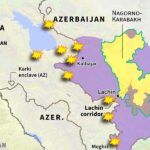
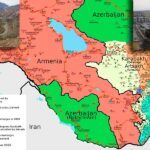
Pashinyan stated in April that he wants the new Armenian constitution to remove any reference to the Karabakh region in Azerbaijan, emphasising that, otherwise, “peace will not be possible”. “We must focus clearly and sincerely on ‘Real Armenia’. We must concentrate on the internationally recognised sovereign territory of the Republic of Armenia, and on ensuring the security and well-being of the citizens of Armenia,” the prime minister said at the time.
VOTE

EDITORIAL TEAM
🧿 About us
.
Edited and reviewed by:

Pablo Gómez is a specialist in Turkey and has been editor-in-chief of Hispanatolia since 2011. He has been analysing current affairs and geopolitics in Turkey and the surrounding region since 2006.
…
📣 Your ADVERTISING on Hispanatolia
.
🤗 HELP US WITH A DONATION:
💗 Paypal