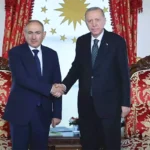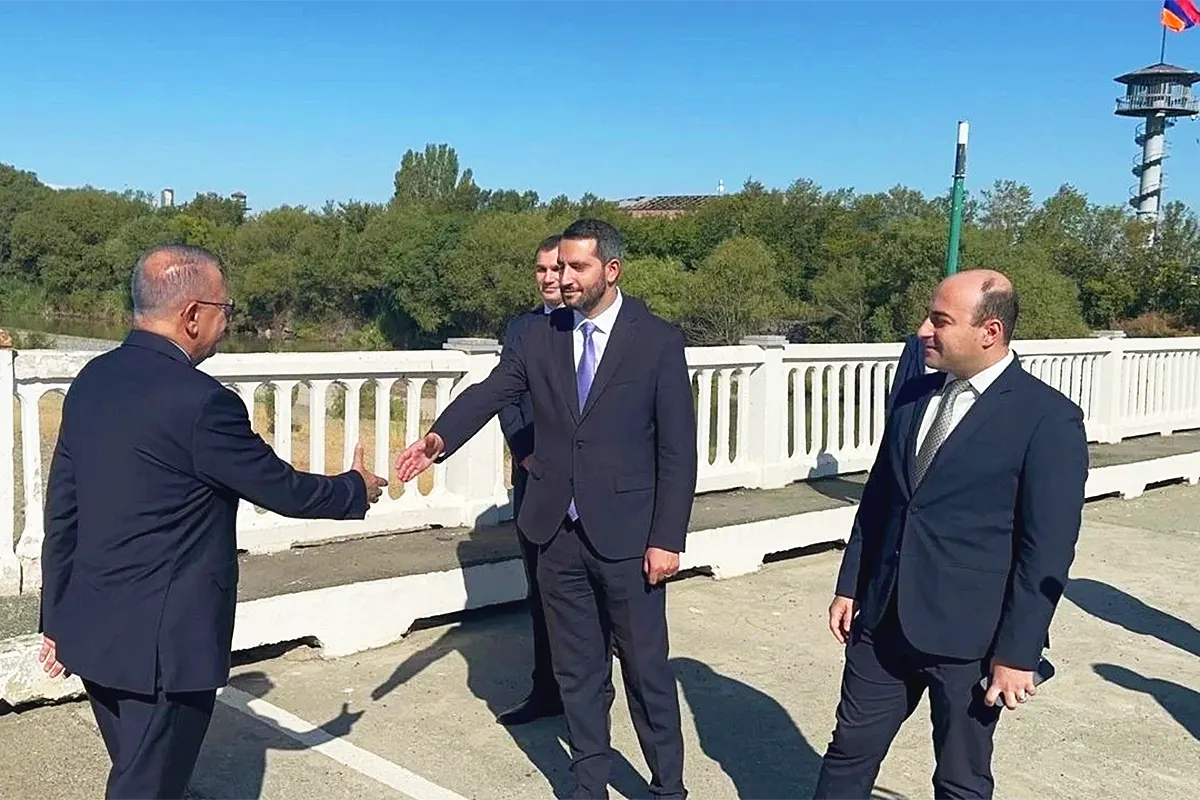
Turkey and Armenia took a new step towards the normalisation of their relations on 12 September with a historic gesture: a Turkish delegation led by Turkey’s ambassador and special representative Serdar Kılıç crossed the border with Armenia through the eastern province of Iğdır, the first time a Turkish diplomat has ever entered Armenian territory by crossing the land border.
Turkish media reported that the event took place at the Margara border crossing, right on the border between the two countries separated by the Aras River, where the Turkish diplomatic representative was received by the Armenian special representative for the normalisation of relations with Turkey, Ruben Rubinyan, who is also deputy speaker of Armenia’s parliament.
“I believe that we will make positive decisions for the benefit of both countries,” said Kılıç as he crossed the border, stressing that Armenia’s position is also favourable to the normalisation process: “Today they have made a statement saying that they are ready to reopen the border,” the Turkish representative assured, insisting that both countries maintain the same position and that there could be concrete steps in this direction once the technical studies are completed.
According to reports in the Turkish press, the talks in Yerevan focused on steps to strengthen cooperation and mutual trust between the Turkish and Armenian governments, after Turkish President Erdoğan and Armenian Prime Minister Pashinyan met on 1 September in the framework of the Shanghai Cooperation Organisation summit in China.
Armenian government press office sources reported that the two leaders stressed the importance of taking steps to strengthen trust between the two governments, dialogue and bilateral communication, and to ensure the stability in the South Caucasus region.
Pashinyan’s pragmatism
Turkey closed its border with Armenia in 1993 in solidarity with Azerbaijan in the wake of the first Karabakh war and the Armenian occupation of Nagorno-Karabakh. A previous attempt to normalise their relations initiated in 2008 – the so-called “football diplomacy” – finally culminated in failure in 2015 when the government of Serzh Sargsyan bowed to pressure from nationalists and the Armenian diaspora, and reversed the process.
However, Pashinyan – with a more practical approach to foreign relations and regarding the recognising by Türkiye of the WWI Armenian deaths as a genocide against Armenians – has pursued a very different policy that seeks to end Armenia’s isolation in the region – exacerbated when Putin supported Azerbaijan during the second Karabakh war – and, in 2021, he launched a new process of normalisation of relations with Turkey. However, this policy of openness has put him at odds with the army and the most ultranationalist sectors of the Armenian opposition.
VOTE

EDITORIAL TEAM
🧿 About us
.
Edited and reviewed by:

Pablo Gómez is a specialist in Turkey and has been editor-in-chief of Hispanatolia since 2011. He has been analysing current affairs and geopolitics in Turkey and the surrounding region since 2006.
…
📣 Your ADVERTISING on Hispanatolia
.
🤗 HELP US WITH A DONATION:
💗 Paypal