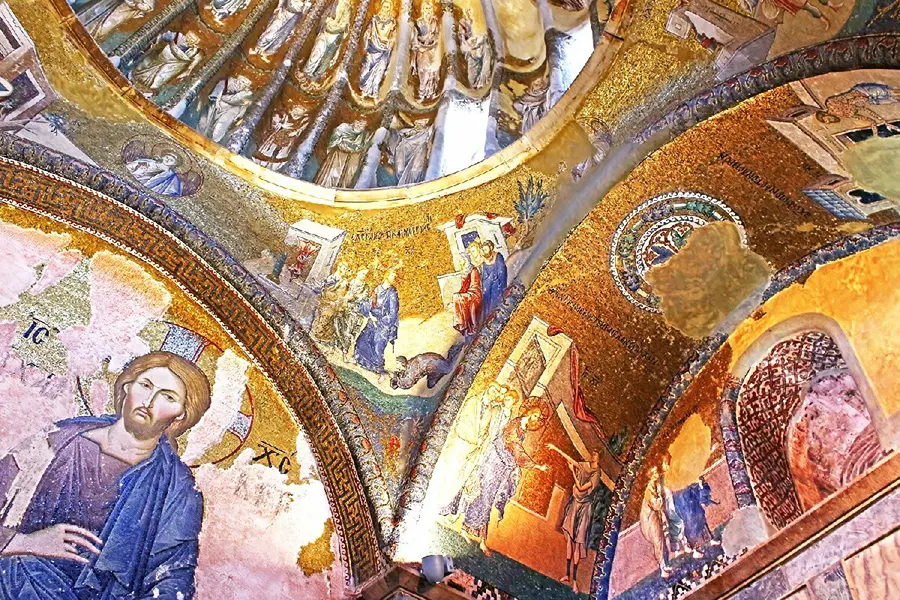
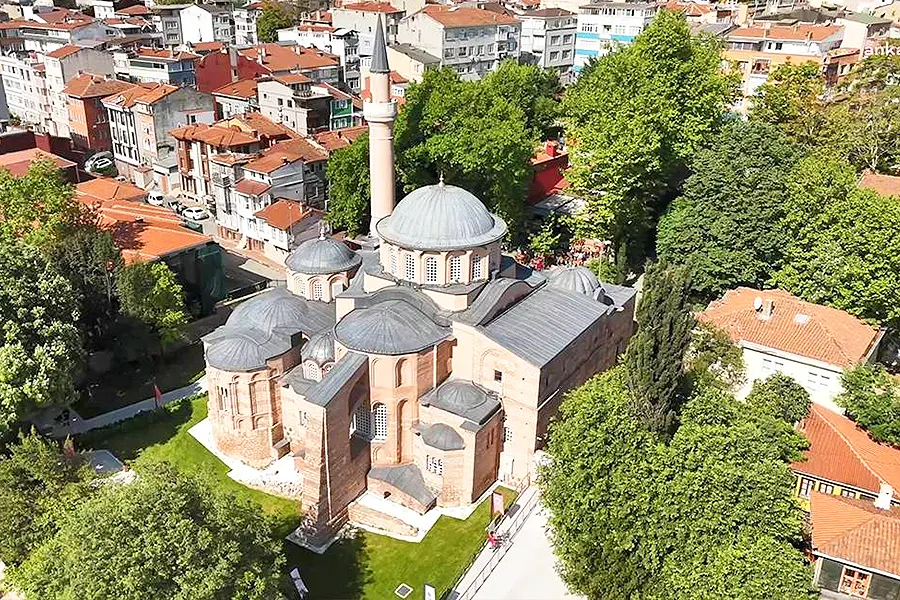
From 19 August, tourists wishing to visit Istanbul‘s Kariye Museum, a former Byzantine church – the Chora Church – converted into a mosque and known for the impressive mosaics and frescoes that decorate its interior, will have to pay an entrance fee as part of measures announced by the Turkish Ministry of Culture and Tourism to prevent a massive influx of visitors.
‘The ‘Visitor Management Plan for Conservation’ will be implemented at the Kariye Mosque (from 19 August),’ announced the General Directorate of Foundations under the Ministry of Culture and Tourism. Turkish media reported that tourists who want to visit the ancient church, which functioned as a museum from 1958 until it was restored to its former function as a mosque in 2020, will have to pay an entrance fee of 20 euros.
As part of the new plan to manage visits, which had soared since 2020 due to free access to the mosque, the site will be closed to tourist visits on Fridays, and only Muslim worshippers who come to pray will be able to enter. ‘Those who come to pray will have free access to the mosque,’ said Culture and Tourism Minister Mehmet Nuri Ersoy.
Regarding the opening hours for visiting the Kariye Museum on other days of the week, the minister explained that ‘15 minutes before the daily prayers, tourist visits will be suspended, and (Turkish) citizens and foreign Muslims who come to pray, will be able to enter the mosque free of charge’.
The Kariye Museum was originally the Chora Church, built as a monastery in the 4th century on an acropolis on the site where the relics of the martyred bishop of Antioch, St Babylon, were found. Originally built ‘in the fields’ (en tē Chōra in Greek, Latinised as ‘Chora’), outside the original walls built by Constantine, when Theodosius’ walls were erected in the 5th century the church was left within the walled enclosure of the city. After the fall of Constantinople in 1453, the Ottomans converted it into a mosque in 1511, a function it retained until 1958, when, after extensive restoration, it was transformed into a museum and opened to tourists.
VOTE

EDITORIAL TEAM
🧿 About us
.
Edited and reviewed by:

Pablo Gómez is a specialist in Turkey and has been editor-in-chief of Hispanatolia since 2011. He has been analysing current affairs and geopolitics in Turkey and the surrounding region since 2006.
…
📣 Your ADVERTISING on Hispanatolia
.
🤗 HELP US WITH A DONATION:
💗 Paypal