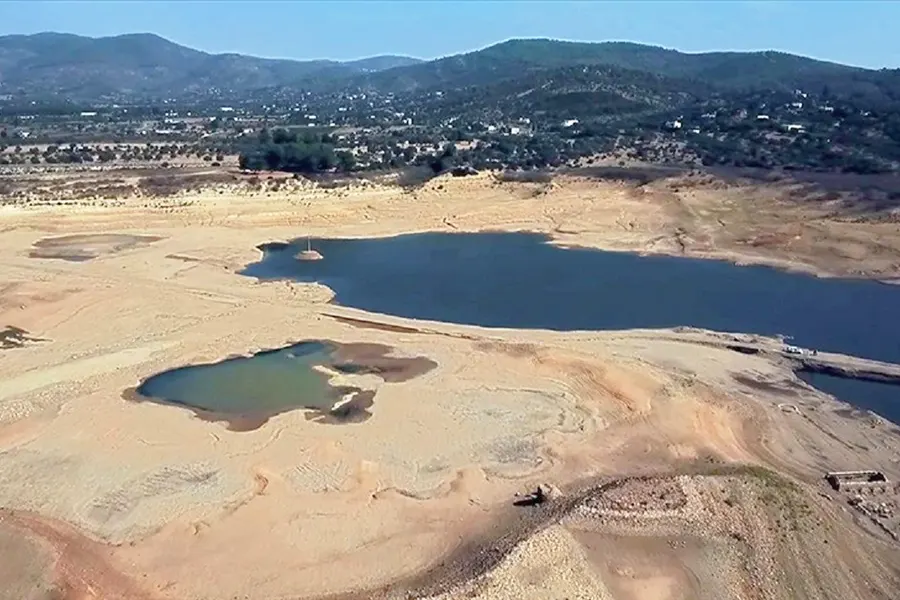
Authorities in Bodrum, one of the main tourist destinations on Turkey’s Aegean coast, are considering desalination plants to draw water from the sea and other solutions to try to alleviate the chronic water shortages the city has been suffering from for years, even though experts and environmentalists warn of the significant environmental consequences of such measures.
With the level of some of the region’s reservoirs at only 15% of their capacity, Turkish media reported that the Water Administration of Muğla (MUSKİ) – the province where Bodrum is located – has announced plans for now to open up to six wells in the Turgutreis area – outside Bodrum – to extract water for treatment; plans also include the construction of a desalination plant that would produce 10,000 cubic metres of drinking water per day in a first phase and 20,000 cubic metres in a second phase, enough to supply some 100,000 people.
Bodrum could lose its water table forever
Experts such as Professor Ceyhun Özçelik warn, however, of the serious environmental risks of extracting water from the region’s wells if safety levels are exceeded. As Özçelik explained, due to the drought, the level of the aquifers in Turgutreis has risen in recent years from a depth of only 5-10 metres to 30-40 metres. “Drawing water from wells instead of treating seawater will lead to a complete salinisation of the region and a permanent loss of the water table,” the expert warned.
Özçelik explained that as water problems worsen, solutions become more complex and involve more risks. In this sense, while in the current situation the use of desalination plants seems to be the least risky option, seawater desalination also generates problems, he stressed: “Seawater desalination systems are very expensive. During desalination, seawater is passed through membranes. The amount of energy needed to push the seawater up to 600 or 800 metres is considerable, it is a big cost that will be reflected in our bills.”
The use of desalination plants also poses other dangers to the environment, such as the production of dozens of tonnes of waste – the so-called brine – with extremely high salinity and containing heavy metals: “If dumped into the sea it will cause serious marine pollution, and if stored on land it will generate a lot of truck traffic,” the professor said.
Özçelik also pointed out that the aim in Bodrum should not only be to find solutions to obtain drinking water, but above all to improve the reliability and maintenance of the supply systems, which over the years and due to lack of maintenance suffer leaks and frequent ruptures, causing major damage to the infrastructure.
VOTE

EDITORIAL TEAM
🧿 About us
.
Edited and reviewed by:

Pablo Gómez is a specialist in Turkey and has been editor-in-chief of Hispanatolia since 2011. He has been analysing current affairs and geopolitics in Turkey and the surrounding region since 2006.
…
📣 Your ADVERTISING on Hispanatolia
.
🤗 HELP US WITH A DONATION:
💗 Paypal