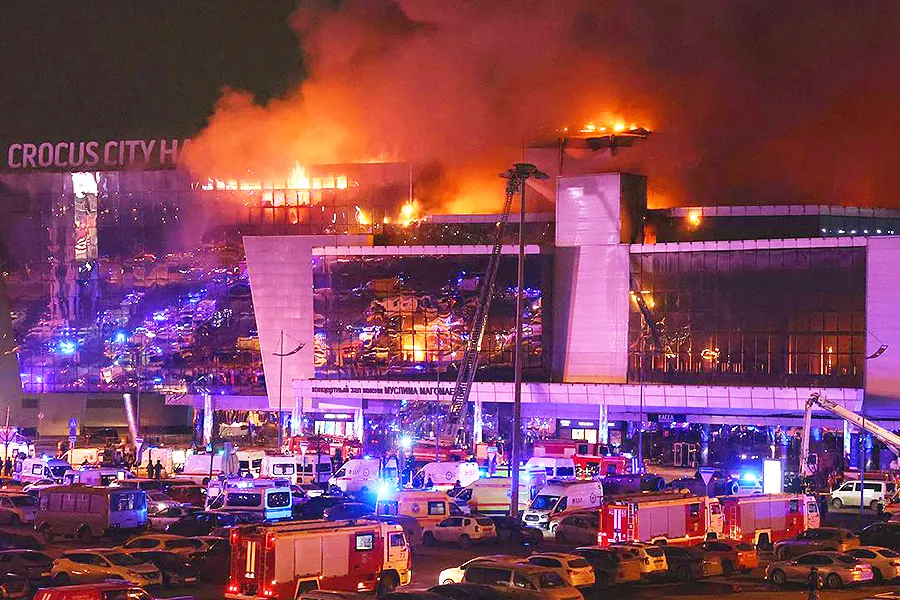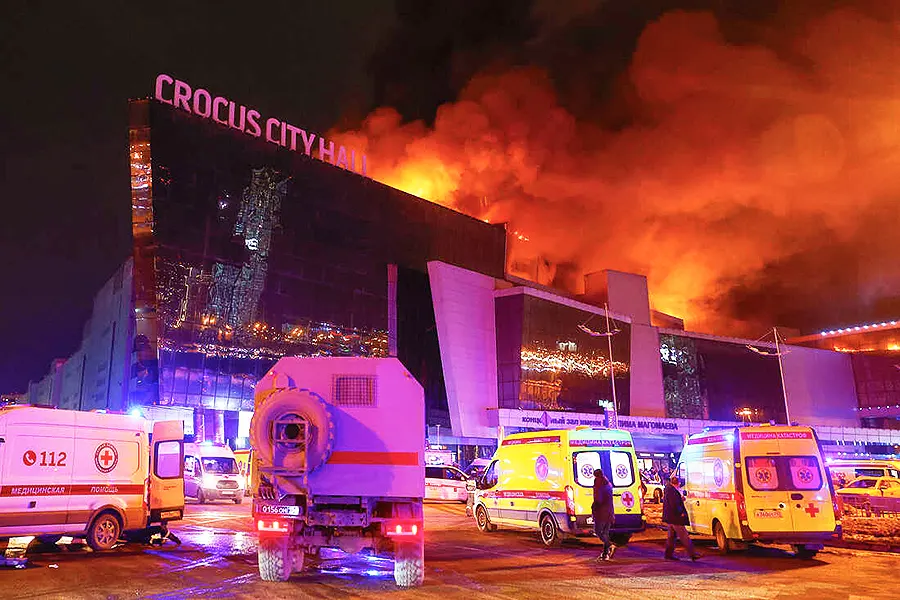
Two of the terrorists who carried out the attack on Moscow’s Crocus City Hall claimed by Daesh, in which at least 139 people were killed and 180 injured, travelled to Istanbul but were not radicalised in Turkey, according to security sources in Ankara, who believe that the time they spent on Turkish soil was too short.
According to these sources, Saidakram Rajabalizoda and Shamsidin Fariduni, both citizens of Tajikistan, spent a few weeks in Istanbul shortly before committing the attacks in the Russian capital; Rajabalizoda arrived in Istanbul on 5 January, and then travelled to Moscow on 2 March on the same plane with Fariduni, who had arrived in the Turkish metropolis at the end of January. The two stayed separately in hotels in Istanbul.
After he was captured following the attack, Fariduni told Russian authorities that he spent time in Istanbul only because his visa for Russia had expired. “It has been assessed that these two people were radicalised in Russia,” said security sources quoted by the Turkish press, stressing that the time they spent in Turkey was not long enough. Both suspects lacked an arrest warrant in both Russia and Turkey, so they were able to travel freely.
The same sources in Ankara highlighted the fact that all the perpetrators of the terrorist attack in Moscow lived for long periods in Russia, so everything points to the fact that it was in Russia that they came into contact with the self-proclaimed Islamic State of Khorasan (ISIS-K), an offshoot of ISIS (Daesh) created in 2015 and active in Afghanistan, Pakistan and Iran. Considered to be one of the world’s deadliest terrorist groups, Russia and also Turkey are among the other countries targeted by ISIS-K. Before the attack in Moscow, the bloodiest action of this Daesh branch had been an attack in 2021 next to Kabul airport that killed 183 people, including 13 US servicemen, during the chaotic evacuation of Afghanistan.
VOTE

EDITORIAL TEAM
🧿 About us
.
Edited and reviewed by:

Pablo Gómez is a specialist in Turkey and has been editor-in-chief of Hispanatolia since 2011. He has been analysing current affairs and geopolitics in Turkey and the surrounding region since 2006.
…
📣 Your ADVERTISING on Hispanatolia
.
🤗 HELP US WITH A DONATION:
💗 Paypal