A forensic analysis of the remains of Kaşif Kozinoğlu, a former Turkish intelligence officer who was found dead in prison in 2011 in circumstances officially attributed to a heart attack, has detected potentially lethal concentrations of toxic substances. It so happens that his death occurred just before he was due to give evidence in the investigation into the Ergenekon case, an alleged coup plot by the so-called “deep state” involving senior officials and members of the army with the aim of overthrowing the Erdoğan government, although years later, in 2016, the Turkish Supreme Court ruled that the plot had never existed and that the evidence of its existence had been fabricated by officials linked to the movement of Fethullah Gülen.
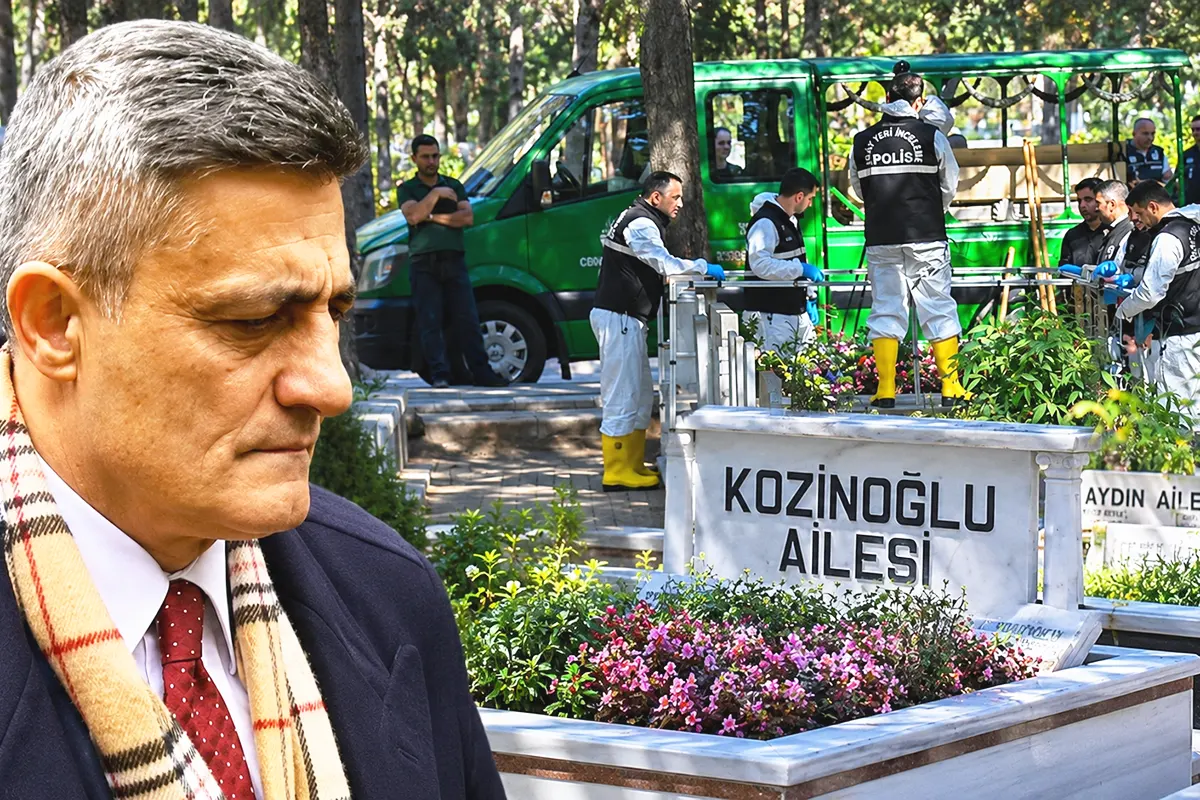
The mystery surrounding the death of Kozinoğlu, the former head of the Asia region for the National Intelligence Organisation (MİT), who died in prison on 12 November 2011, is beginning to be unravelled 15 years later. On the orders of the Chief Public Prosecutor’s Office in Silivri (Istanbul), his remains were exhumed on 12 September and subjected to various tests, the results of which have now been published in the Turkish press.
The official account of the agent’s death, which was originally attributed to a heart attack, has been overturned following the release of the final report from the Institute of Forensic Medicine, drawn up on 19 October; according to a report today in the Turkish newspaper Sabah, the biological and chemical analyses carried out on the human remains – exhumed on 12 September and in an advanced state of decomposition – have confirmed, through DNA testing and with 99.99% certainty, that the remains belong to Kozinoğlu, and have revealed important clues regarding his death.
The analyses detected lethal concentrations of heavy metals in the body
The exhaustive analyses carried out by the Toxicology Division of the Department of Specialised Chemistry on 36 different samples from the body, including hair, nails, tissue, bones and the shroud, detected antimony, a substance not naturally found in grave soil. Whilst the toxicological analyses have not identified the presence of substances such as cyanide or narcotics, they have revealed extremely high and potentially lethal concentrations of antimony and other heavy metals, including arsenic, lead and nickel, in parts of the body such as the hair and nails.
The report specifies in this regard that no antimony was found in any of the seven different soil samples collected from the grave. However, this substance was found in the fingernails, at a concentration of 7.002 ng/g; it was also found in the hair, at 548 ng/g, in the saponified tissues (720 ng/g) and in the bones, at 175 ng/g.
Antimony, whose chemical properties are very similar to those of arsenic, is an extremely dangerous metalloid capable of causing serious damage at a cellular level, as well as heart attacks, liver and kidney failure and cardiogenic shock.
It is suspected that the poison was administered in the coffee
The details contained in the court file, according to which Kozinoğlu had drunk coffee shortly before his death in prison, have now taken on a new dimension following the release of the toxicology report’s findings. It is well known in forensic toxicology that coffee is a highly effective vehicle for concealing heavy metals, as its intense flavour and pungent smell can mask the presence of these substances to the sense of taste and smell, making them more difficult to detect.
To date, 30 people are under investigation and nine suspects have been arrested following the reopening of the case into Kozinoğlu’s death in prison; among them are Ali İşgören, who at the time held the post of chief prosecutor in Silivri, and Enver Altaylı, another former agent of the National Intelligence Organisation (MİT), as well as prison officials and emergency medical staff.
The link between Kozinoğlu’s death and the Turkish series “Valley of the Wolves”
One of the most striking aspects of the investigation into this case relates to the popular television series Kurtlar Vadisi: Pusu (“Valley of the Wolves: Ambush”). In mid-September, the public prosecutor’s office launched a parallel investigation after noting the numerous similarities between an episode of this Turkish series – which depicts the death of a “traitor” named Kazım Kaşifoğlu – and the real-life death shortly afterwards of Kaşif Kozinoğlu himself whilst he was in prison.
It is particularly striking that the fictional character’s surname, Kaşifoğlu, is a curious combination of the first name and surname of the former intelligence officer whose mysterious death in prison is now under investigation. The Turkish series is also said to feature several hidden messages, including a number of vehicles with number plates beginning with ‘FG’ (the initials of Fethullah Gülen), which is why the series’ producers are now under investigation.
In light of these findings, the investigation into the death of Kaşif Kozinoğlu has taken a new turn, whilst the public prosecutor’s office is also investigating whether there was tampering with evidence and whether he was denied adequate medical care. Furthermore, in the last few hours, security camera footage has come to light revealing Kozinoğlu’s final minutes alive in prison: it shows one of his cellmates, Hasan Atilla Uğur, turning off the light in the common room where he later drank his coffee and tampering with something; furthermore, after Kozinoğlu fell ill and was taken to hospital, his two cellmates immediately washed the cup from which he had drunk.
VOTE

EDITORIAL TEAM
🧿 About us
.
Edited and reviewed by:

Pablo Gómez is a specialist in Turkey and has been editor-in-chief of Hispanatolia since 2011. He has been analysing current affairs and geopolitics in Turkey and the surrounding region since 2006.
…
📣 Your ADVERTISING on Hispanatolia
.
🤗 HELP US WITH A DONATION:
💗 Paypal