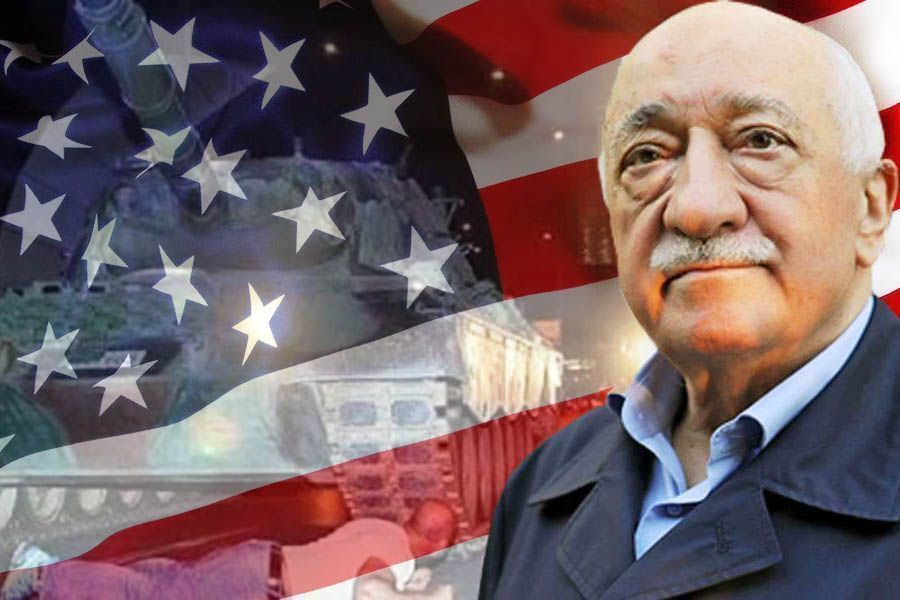
Fethullah Gülen, the self-exiled in the United States religious leader whom Turkey accuses of being behind the coup attempt that left 252 people dead and more than 2,700 injured in 2016, has died at the age of 83 in Pennsylvania (USA), Turkish intelligence services as well as organisations and members close to the religious movement he led have confirmed, indicating that he passed away due to heart problems.
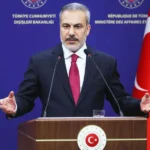
During a press appearance in Ankara with his Ukrainian counterpart Andrii Sybiha, Turkish Foreign Minister Hakan Fidan confirmed the death of Gülen, leader of the religious movement that called itself Hizmet (Service) but has been referred to by Turkish authorities since the failed coup as FETÖ (Fethullah Terrorist Group).
‘The leader of this obscure organisation has died,’ Fidan said in statements reported by Turkish media. ‘This organisation has been a rare source of threat in the history of our country. It has recruited thousands of our young people into its ranks under the pretext of serving sacred values, and turned them into a machine of betrayal of their own homeland, their people and their values,’ added the Turkish minister, who recalled that FETÖ members had become instruments of foreign intelligence services to act against Turkey. Fidan also stressed that Gülen’s death will not relax the Turkish authorities’ persecution of the sectarian organisation.
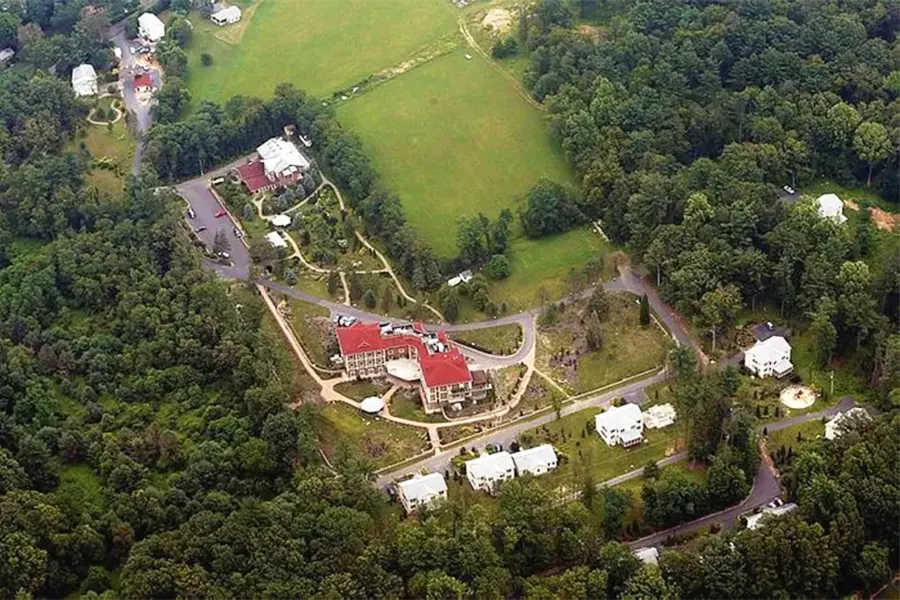
Gülen, who had lived on a luxury ranch in Pennsylvania since 1999, had moved earlier this year to a new, more modest residence amid what some sources said was an internal struggle within the organisation’s leadership to take financial control of the movement in the face of his possible death, and amid rumours that he was suffering from senile dementia. The decision – taken last April – to leave the Chestnut Retreat Center mansion and move Gülen to another location was reportedly led by Mustafa Özcan and Cevdet Türkyolu, two key figures within FETÖ, and was made without the consent of either Gülen himself or his family. Indeed, family members have in recent months accused powerful circles within the sect of trying to kill Gülen himself, whose succession is now expected to spark a fierce internal war within the organisation, which still controls substantial funds and has a large number of followers.
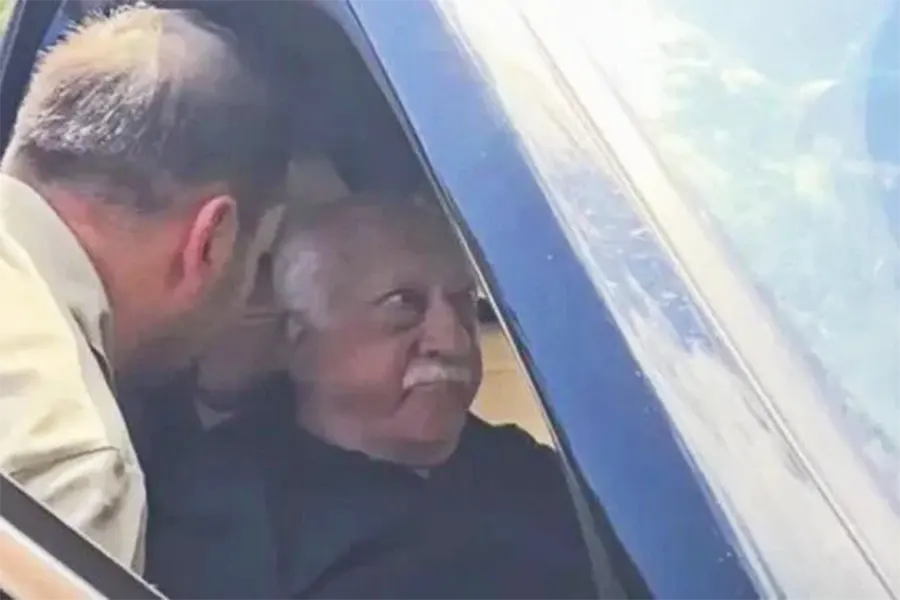
A reporter from the Turkish news agency Anatolia reportedly captured on Sunday the last images of Gülen, who was travelling in the passenger seat of a luxury SUV as he left his new residence, a house of about 300 square metres – much smaller and more modest than his previous residence in Chestnut – located in the middle of a forest at 260 Kennel Road, about 10 minutes’ drive from Saylorsburg.
An uneducated imam who built an influential network around the world
Born on 27 April 1941 in Erzurum in eastern Turkey, it is believed that it was in 1966 – at the age of 25 – that Fethullah Gülen decided to found his religious movement after being appointed imam of the western province of Izmir. Nurettin Veren, who helped Gülen to found in 1966 the foundations of the organisation that he later left in 1996 because it had become a ‘personal cult’ with ‘deep ties to the US secret services’, would later say that ‘Gülen came to Izmir from Edirne as a man who had not even finished primary school; his diploma had been forged so that he could be appointed imam as a state official. He used to frequent a small mosque, and it was there that our paths crossed’.
From his new position, and amidst the persecution against communism in the Cold War climate of the time, Gülen eventually found protection for his activities within the ranks of the army thanks to his strong anti-communist rhetoric. After the 1980 coup d’état led by General Kenan Evren that deposed Turkey’s elected prime minister, Süleyman Demirel, Gülen praised publicly the military intervention and the harsh political persecutions initiated by the coup leaders, a line he would follow in all interventions of the armed forces in Turkish politics.
Under this protective umbrella, Gülen was able to grow his movement and expand its activities, which between the late 1980s and early 1990s expanded to include the media and various businesses, notably private education, gradually infiltrating its members into key positions in the civil service and public administration in order to gain influence. In 1986 it launched the influential daily Zaman – which would become the most widely distributed newspaper in Turkey – and in 1993 the Samanyolu TV station began broadcasting.
Using their influence and the media, Gülen and his followers got rid of their critics and opponents while placing their members in important positions in the police, the military, the judiciary and other key state structures. In order to infiltrate the armed forces, where a strong secular sentiment prevailed and any religious ties would have been rejected, Gülen instructed his followers to follow the doctrine of taqiyya: the denial or concealment of one’s religious beliefs in order to achieve a greater goal.
‘You have to wait for the right moment to seize all the power’
Having established a personal cult (his followers considered him a mahdi, a messenger of God), in a video released in the early 1990s Gülen delivered a sermon in which he encouraged his followers to infiltrate all state structures: ‘You have to penetrate the arteries of the system without being discovered… You have to wait for the right moment, until you have seized all the power of the state,’ he said.
Much of his structure and his plans to infiltrate the structures of power were based on the network of hundreds of public schools he founded around the world, which became not only the main source of funding for the religious movement, but also the main source for recruiting new members. The Gülen movement recruited new followers in these schools and, through the members already infiltrated into the state structures, made them gain access to key positions in politics, the judiciary or the army.
However, this infiltration also ended up arousing suspicions, especially because the taqiyya doctrine ended up raising doubts about their true intentions and about the image they tried to convey to the public of being a simple ‘philosophical’ movement that disseminated values based on Islam and carried out great charitable and educational works (with which they attracted new followers).
Exile to the US and coup
In 1999, amid mounting accusations against him and his movement of trying to overthrow Turkey’s secular, constitutional regime, Fethullah Gülen decided to leave Turkey and go into exile on a luxurious ranch in Pennsylvania (USA) to continue pulling from there the strings of his network, whose tentacles stretched not only across Turkey but to many other countries around the world. ‘We are the state’, his followers used to claim.
As the infiltration of his acolytes into Turkish state structures grew, his movement became increasingly suspicious and his real intentions more difficult to conceal; from 2010, but especially from 2012 onwards, Gülen used his contacts in the police and judiciary to try to eliminate his rivals and those trying to expose his religious sect, also relying on his influential media, including newspapers and TV networks.
Amid mounting pressure and finding himself increasingly cornered, it was in 2016 that he attempted to strike the final blow – that ‘right moment’ he had spoken of to his faithful years earlier – by instigating a military uprising that failed: partly because of the resounding opposition of the Turkish population across all political spectrum, but also because of a lack of support within the army itself, where his followers were still a minority – important and influential, but a minority nonetheless – except probably in the air force, where the level of infiltration his movement had achieved was remarkable.
Nor should it be forgotten that, for years, many conservative politicians since the 1980s wanted to use the influence of Gülen’s movement during a very turbulent time in Turkish politics; Tayyip Erdoğan himself had to apologise publicly in 2016 for having trusted Gülen: ‘Before Turgut Özal, before Süleyman Demirel, before Bülent Ecevit… And even us, we helped this structure with good will. I also helped them because we had things in common, although there were many things they did that I did not agree with,’ Erdoğan confessed at the time.
Since the failed 2016 coup, Fethullah Gülen had become in fact the most wanted man in Turkey, whose government has demanded his extradition to the United States to stand trial for his crimes up to 7 times, without success. Despite the Turkish authorities handing over thousands of pages of documentation containing proof and evidence of Gülen’s involvement in the military uprising and other crimes, Washington never authorised his extradition, further fuelling suspicions that the US supported him – and may even have been behind the failed coup – and that he was even a key instrument of US intelligence services such as the CIA.
VOTE

As a history lover, Pablo Gómez was captivated by Turkey from the first day he visited it in 2006: he got married there, has a house there… and has since become an expert on Turkey’s current affairs. With a long experience in media, he has been at the helm of hispanatolia.com since 2011.