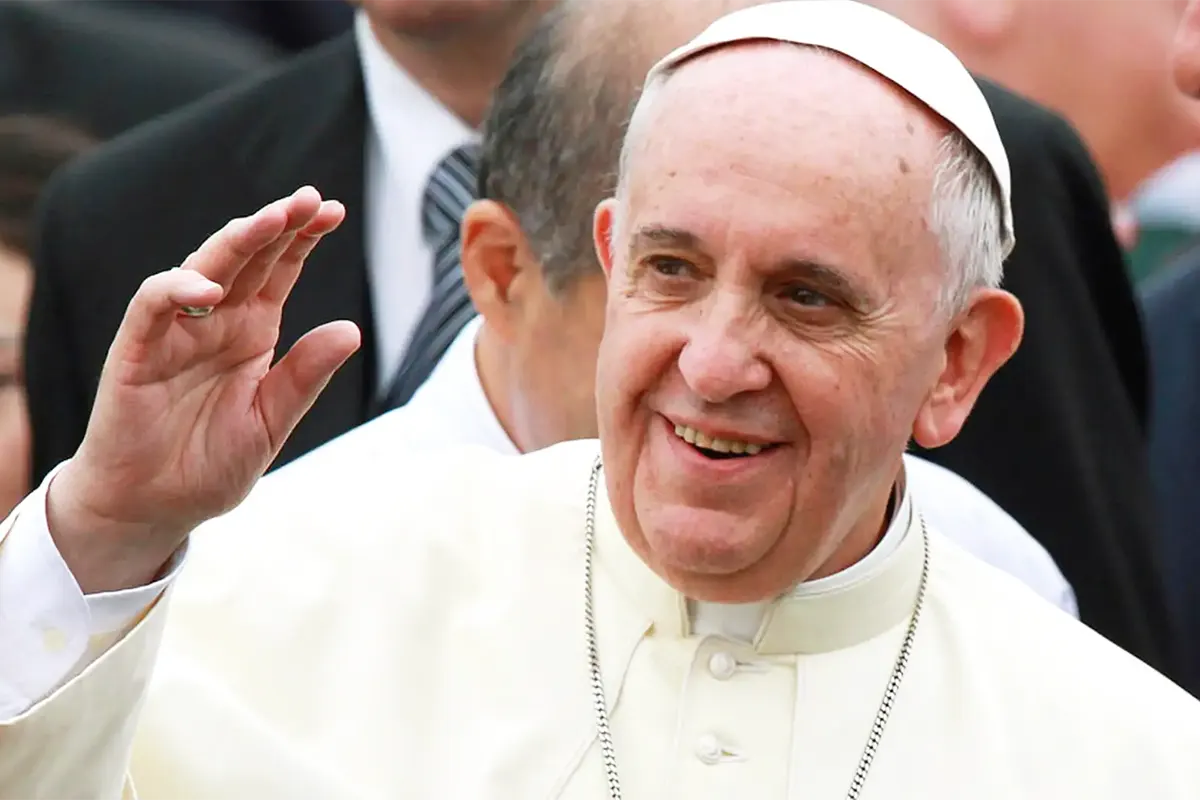
Pope Francis died unexpectedly on Monday at the age of 88, less than 24 hours after congratulating the faithful on Easter Sunday during a brief appearance before tens of thousands of people gathered yesterday in St. Peter’s Square in the Vatican.
‘Dear brothers and sisters, with deep sorrow I must announce the death of our Holy Father Francis,’ Cardinal Kevin Farrell announced in an official statement, according to official sources at the Vatican. ‘This morning, at 7:35 a.m., the Bishop of Rome, Francis, has returned to the Father’s house. His entire life has been dedicated to the service of the Lord and his Church,’ he added.
Farrell, a 77-year-old cardinal from Dublin who is close to Francis, will take charge of the Vatican until the election of the new pope, given that since 2019 he has held the title of camarlengo: that is, in addition to being responsible for certifying the death of the Supreme Pontiff, he is the one who ensures that his apartments are sealed and must convene the College of Cardinals and organise the Conclave to elect St. Peter’s successor. Furthermore, during the period of Sede Vacante (from the death of the Pope until the election of his successor), he is responsible for administering the temporal goods of the Vatican.
Francis’ health problems
Francis, elected leader of the Catholic Church in March 2013, had recently spent 38 days in Rome’s Gemelli Hospital, where he was discharged on 23 March after undergoing a complicated treatment for a bilateral pneumonia. The Pontiff, who had part of a lung removed when he was young, had shown worrying signs of breathing difficulties in the days leading up to his admission, in addition to other significant health problems he had been suffering from in the last years of his pontificate.
In March 2023, he had already been hospitalised for a respiratory infection, and that same year he had to undergo hernia surgery, following another colon operation two years earlier. In recent years, he also suffered from severe knee pain that had forced him to use a wheelchair to get around. This lack of exercise and the use of corticosteroids to combat joint pain had in turn caused him to gain a significant amount of weight, which had become evident in the last three years and had led to back pain and sciatica.
Following today’s tragic outcome, many are now wondering whether the Pope, famous for his stubbornness, should have been admitted to hospital earlier. Even after being discharged, Francis had ignored doctors’ orders to rest for two months and had resumed his activities and public appearances. Despite his growing health problems in recent years, last September he undertook a gruelling 12-day tour of several Asian countries, and it had been announced that he would visit Turkey for the second time at the end of next May to mark the 1,700th anniversary of the historic Christian council of Nicaea, nowadays the Turkish city of İznik.
Aware of his health problems, Francis himself had left open the possibility of resigning if his ailments prevented him from carrying out his duties; but until now, despite his busy schedule, he had insisted on continuing, even going so far as to receive the US Vice President, J.D. Vance, in Rome yesterday.
Shortly after this meeting, and in his last public appearance, the Roman Pontiff greeted the faithful in St. Peter’s Square yesterday and, in a text that had to be read by Archbishop Diego Ravelli, spoke out against wars ‘in the face of the cruelty of conflicts that affect defenceless civilians and attack schools, hospitals and humanitarian workers,’ referring to the conflicts in Gaza, Ukraine, Yemen, Congo and Sudan, among others.
The first Jesuit and American Pope
Francis, whose real name was Jorge Bergoglio, made history from the moment he was elected, becoming the first Jesuit to be chosen to lead the Catholic Church and also the first Pope from the Americas. His election came at a time of serious crisis in the Catholic Church, rocked by allegations of abuse and scandals that forced an exhausted Pope Benedict XVI to resign, the first pontiff to do so since the Middle Ages.
Former archbishop of Buenos Aires and – like any good Argentine – a football fan, Francis showed from the outset a very different disposition from his predecessors. With an understanding attitude, even towards groups reviled by the Church such as homosexuals and divorcees, he was very open with the faithful, always seeking contact with them.
He was a staunch defender of social justice and the rights of the most disadvantaged, and promoted an austere lifestyle, renouncing many of the luxuries and privileges associated with his office; for example by refusing to use the popes’ luxurious official car and choosing to live in the modest Casa Santa Marta, a residence much more humble than the Apostolic Palace in the Vatican.
These differences that marked his pontificate are evident even after his death, as, according to his wishes, he will not be buried in St. Peter’s Basilica, but in the Basilica of Santa Maria Maggiore in Rome, making him the first Pope in more than a century whose remains will rest outside the Vatican. He also rejected the tradition of using three coffins during his funeral, choosing to be buried in a single wooden coffin and with a less pompous ritual, in order to reflect the funeral of ‘a shepherd and disciple of Christ, and not that of a powerful man of this world’.
Enemies within the Church
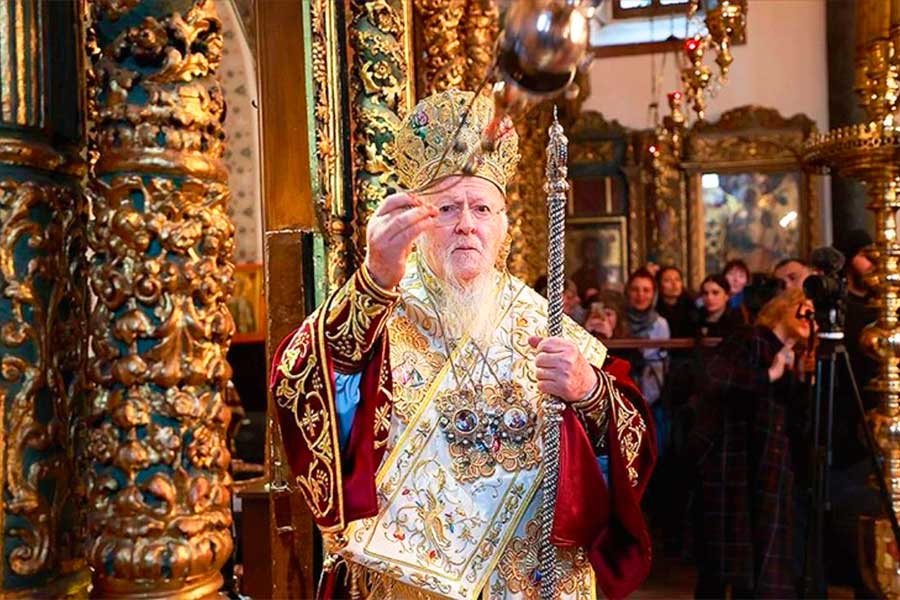
But Pope Francis has also had his detractors. His own origins, his new ways and attitudes, his reforms and especially his words have earned him many enemies, especially within the Church itself, where the most conservative sectors have accused him of deviating from traditional Catholic doctrine on issues such as abortion, divorce and homosexuality, to name but a few examples, even going so far as to label him an ‘antipope’.
In the final months of his pontificate, some of the most powerful figures in the Catholic Church had openly criticised Pope Francis, led by US Cardinal Raymond Burke, who had also criticised his defence of immigrants. Francis, always willing to turn the other cheek, had said of these attacks: ‘All I ask is that criticism be made to my face, because that way we all grow.’
VOTE

EDITORIAL TEAM
🧿 About us
.
Edited and reviewed by:

Pablo Gómez is a specialist in Turkey and has been editor-in-chief of Hispanatolia since 2011. He has been analysing current affairs and geopolitics in Turkey and the surrounding region since 2006.
…
📣 Your ADVERTISING on Hispanatolia
.
🤗 HELP US WITH A DONATION:
💗 Paypal