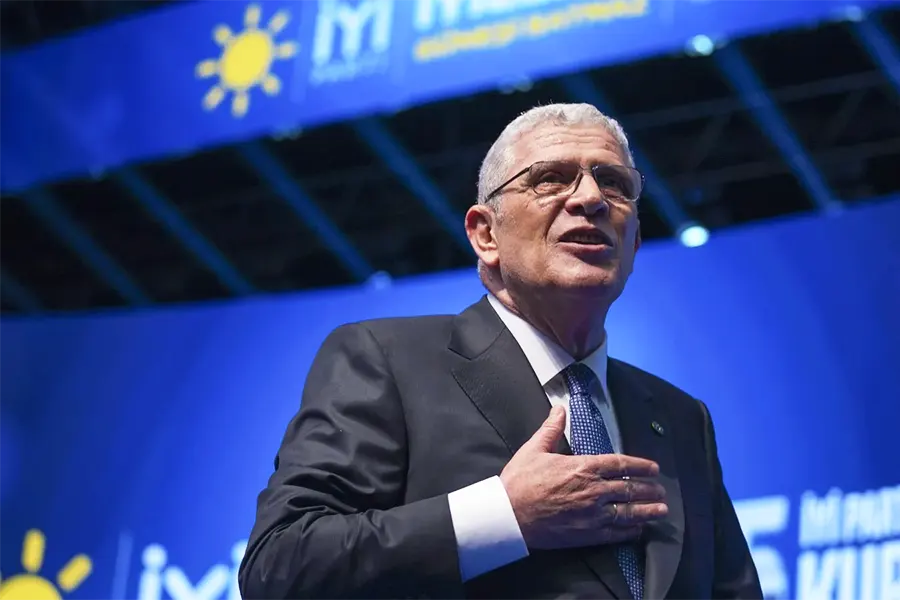
Müsavat Dervişoğlu has been elected as the new president of the Turkish nationalist İYİ Parti during the extraordinary congress held over the weekend following the serious debacle suffered in Turkey’s last municipal elections, in which the political formation lost half of its votes and only won the mayoralty of one provincial capital.
Dervişoğlu, who until now had served as deputy chairman of the İYİ Parti’s parliamentary group being a deputy in the Turkish National Assembly for Izmir, was elected at the extraordinary congress with the support of 611 delegates in a third round of voting in which his main rival, parliamentary group chairman Koray Aydın, managed to gain 548 votes. “From today, we will embrace each other and heal our wounds,” Dervişoğlu declared after his election, assuring that a new stage is opening in a party that he said will seek to “occupy a central position in politics and embrace all segments of society”.
Born in Ankara in 1960, Dervişoğlu held various positions in the historic National Movement Party (MHP), even becoming chairman of the ultra-nationalist organisation known as the Grey Wolves. In 2017 he finally left the MHP and was one of the founders of the İYİ Parti along with Koray Aydın and Meral Akşener herself, its hitherto president, who in her last words asked to ensure the unity of the party, which has been shaken in the last year by serious internal dissensions and resignations.
The election of a new president of the İYİ Parti came after Akşener announced that she would not stand as a candidate in the extraordinary congress called after the hard blow to the party in the last elections, in which Akşener herself had decided not to repeat the coalition with the CHP – the main opposition party in Turkey – which many key figures in the party considered a mistake: an analysis that was ultimately found to be true, after the party went from 7.3% of votes in 2019 to only 3.77% in last March elections, aggravating an internal and identity crisis that ultimately triggered Akşener’s resignation.
VOTE

EDITORIAL TEAM
🧿 About us
.
Edited and reviewed by:

Pablo Gómez is a specialist in Turkey and has been editor-in-chief of Hispanatolia since 2011. He has been analysing current affairs and geopolitics in Turkey and the surrounding region since 2006.
…
📣 Your ADVERTISING on Hispanatolia
.
🤗 HELP US WITH A DONATION:
💗 Paypal