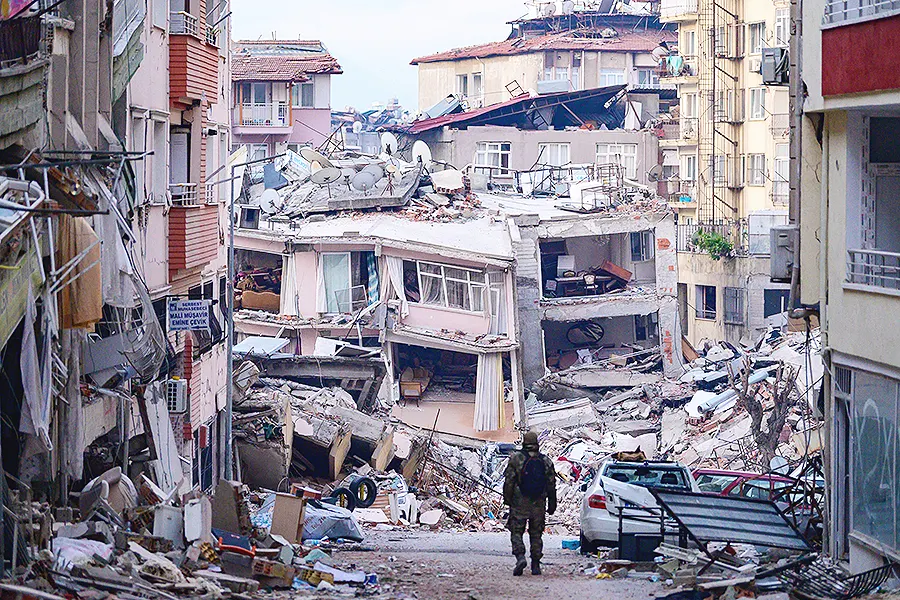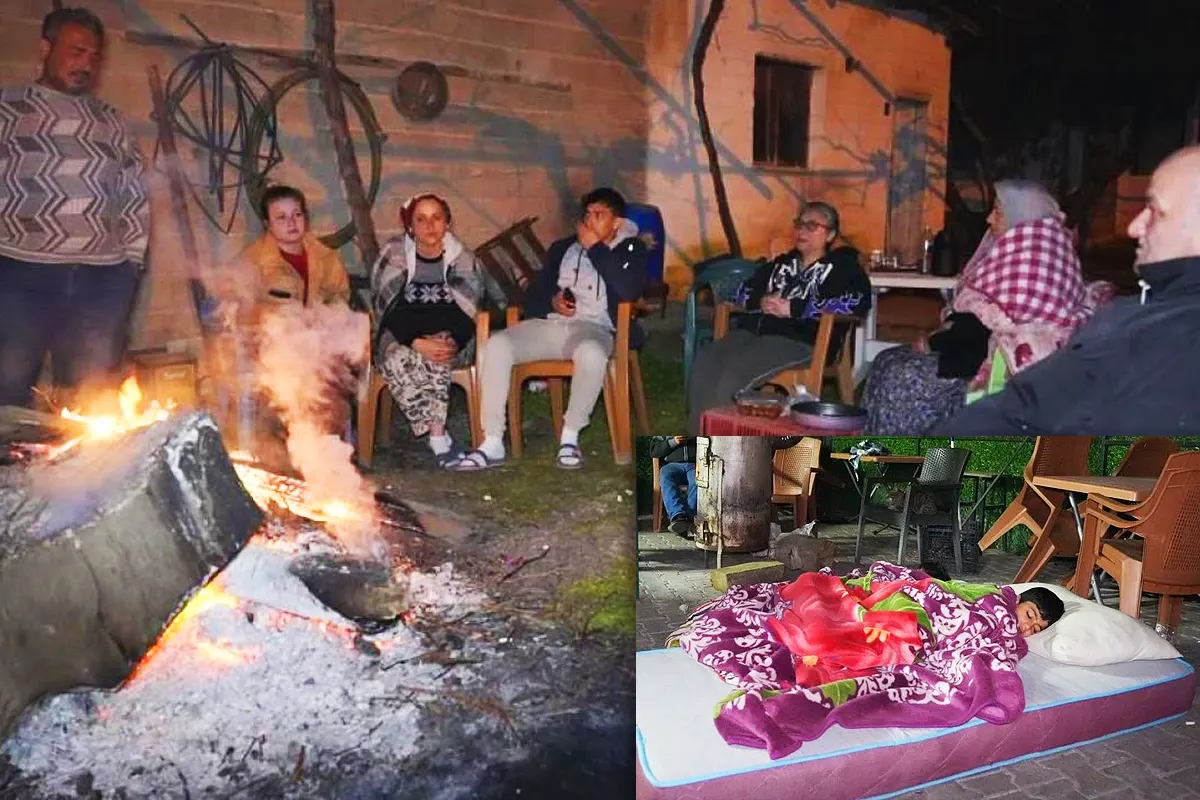
Hundreds of Turkish residents in and around the Buldan district have spent the night on the streets in fear of continuing aftershocks following yesterday’s 5.1 magnitude earthquake in Denizli province in western Turkey, where more than 150 tremors of up to 4.5 magnitude have been recorded following the main quake.
Yesterday’s quake, which had its epicentre in the municipality of Yenicekent, was felt particularly strongly in the morning and triggered panic among local residents, who rushed into the streets. But after the main quake, continuous aftershocks have kept the local population on alert.
After the earthquake in Denizli and due to the continuous tremors, many local residents have sought refuge in places they considered safer; some have left the cities and moved to their country houses, while others have sought protection in prefabricated structures installed in the gardens of their homes, in the case of those who have them. Unable to return to their homes for fear of further shocks, many others have spent the night in parks and squares or inside their vehicles, waiting for dawn to break, Turkish media report.
The succession of aftershocks has kept people in this region of western Türkiye on constant alert and anxious. During the night, some residents resorted to lighting bonfires in front of their homes to try to protect themselves from the cold, seeking to stay in open spaces, considered safer in the event of an earthquake for fear of collapsing buildings and structures. Even so, many residents remained awake throughout the night, unable to sleep because of the continuous seismic movements that continue to be recorded in the area.
Seismologists warn that the tremors will continue
Seismic aftershocks after the main quake are expected to be around 4.0 magnitude and could continue for several days, experts say. Yesterday’s quake was triggered by the so-called Pamukkale fault, an active tectonic fault running through the region; it is a geological system consisting of five segments with a total length of 50 kilometres, which seismologists say has the potential to generate earthquakes of magnitude 6 to 6.5 on the Richter scale.
Turkey is one of the most seismically active countries in the world and experiences frequent earthquakes. According to recent studies, Türkiye experiences an earthquake with a magnitude of 4 or more approximately every ten days and an earthquake with a magnitude of 6.5 or more approximately every two years. In recent decades, the 1999 Marmara earthquake, the 2010 Van earthquake and the 2023 Kahramanmaraş earthquake – which devastated southeastern Anatolia – have together killed more than 71,000 people.
VOTE

EDITORIAL TEAM
🧿 About us
.
Edited and reviewed by:

Pablo Gómez is a specialist in Turkey and has been editor-in-chief of Hispanatolia since 2011. He has been analysing current affairs and geopolitics in Turkey and the surrounding region since 2006.
…
📣 Your ADVERTISING on Hispanatolia
.
🤗 HELP US WITH A DONATION:
💗 Paypal