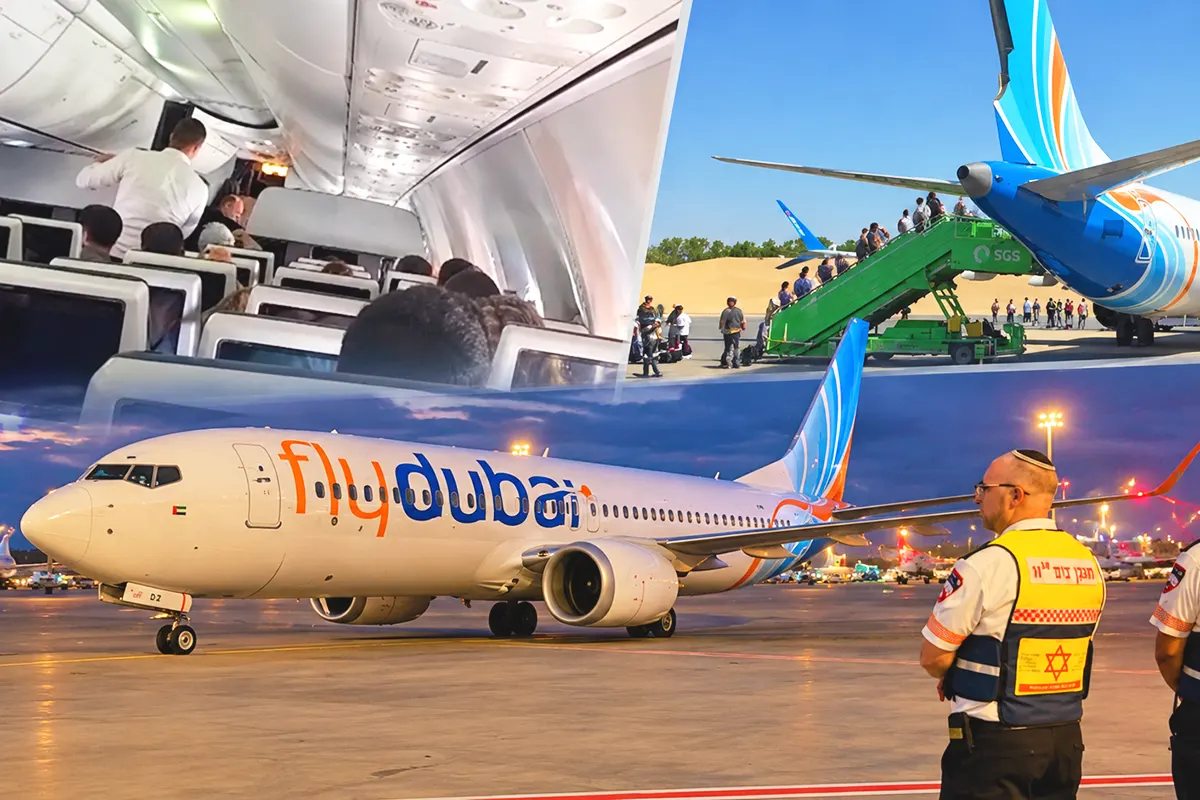
The attack that took place on board Flydubai flight FZ1073 between Dubai and Tel Aviv remains shrouded in mystery. The main question is also the most difficult to answer: why did a co-pilot attack his own captain and apparently attempt to seize control of the aircraft… in order to crash it?
At present, the authorities involved have not officially established the motive. The United Arab Emirates (UAE) has launched an investigation to determine the circumstances of the incident, its causes and whether there was any link to terrorist activities, prior planning or possible external direction.
What does seem clear is that this was not simply a fight between two crew members, as initial reports on the incident suggested. According to the Israeli authorities and passenger accounts, the co-pilot stabbed the Indian captain Smit Machchhar in the cockpit whilst the aircraft was in the middle of flight and, during the confrontation, the aircraft began an extremely steep vertical descent at high speed which jeopardised the very structural integrity of the Boeing 737 MAX.
Did he really try to crash the plane?
The available evidence suggests that the co-pilot attempted to seize control of the aircraft, although the exact intention will have to be determined by the investigation. The flight was carrying 174 passengers and was at an altitude of around 10,000 metres when the incident began.
Tracking data shows that it lost more than 4,000 metres in altitude in less than 30 seconds, representing a descent at a tremendous speed for which a commercial passenger aircraft is not designed. The captain was seriously injured after being stabbed repeatedly, but managed to open the cockpit door, allowing several passengers and crew members to enter and subdue the attacker.
The Israeli Government itself has described the incident as an attempt to bring down the aircraft. The Israeli Defence Minister, Israel Katz, initially went so far as to describe it as an alleged terrorist attack and claimed that the attacker’s intention was to crash the aircraft with all its occupants on board. However, the official position of the UAE is that the incident is still under investigation and the Emirati authorities have not confirmed this claim.
The truth is that there is a significant difference between this preliminary assessment by Netanyahu’s government and the established facts. There is still no official conclusion regarding the purpose of the attack. The UAE public prosecutor’s office is investigating precisely whether there was a terrorist motive and whether the incident was premeditated, but all this remains to be determined.
What is known from witness accounts is that, after being subdued, the co-pilot shouted “kill me, kill me”, as Israeli Prime Minister Benjamin Netanyahu later stated; he has interpreted this behaviour as a clear sign that the man was a suicide terrorist. This is, however, a political statement based on information that Israel claims to have obtained during the initial investigations, not a psychiatric diagnosis or a conclusion drawn from intelligence or investigative data.
Was the co-pilot radicalised?
This is where the most significant clues emerge, but it is also where it is important to carefully distinguish facts from claims that have not yet been verified.
Netanyahu stated on Thursday, as reported by agencies such as Reuters, that the co-pilot had undergone “radical Islamist indoctrination” and that this conclusion was based on personal information gathered by the Israeli authorities. The Israeli Prime Minister, however, did not make public the documents or specific evidence on which he bases this claim, and he himself acknowledged that no definitive conclusions had yet been drawn.
Furthermore, some reports indicate that a Flydubai pilot who knew the suspect stated, on condition of anonymity, that the man had displayed religious behaviour which he considered extremist. According to the testimony, reported by the Israeli media, he prayed very frequently and refused to shake hands with women; the same testimony reportedly stated that he had been working for Flydubai for less than a year, although this detail has not yet been publicly confirmed by the company and is based solely on statements by Israeli officials.
Such behaviour could point to an extremist profile or a radicalised individual, but it must be emphasised that, on its own, it does not prove that the co-pilot was an extremist, nor does it explain why he attacked the captain. Religious practice, even when following the strictest precepts, does not in itself constitute evidence of violent radicalisation such as that which characterises jihadism.
Nor has any medical record been published to date that would allow us to conclude that he suffered from a mental illness. References to him being “suicidal” stem primarily from Netanyahu’s statements and the interpretation of his behaviour during the incident. There is as yet no public confirmation of a previous psychiatric diagnosis.
How was he able to get past the checks?
This is one of the key questions the investigation will need to answer. Flydubai operates under the supervision of the General Civil Aviation Authority (GCAA) of the United Arab Emirates. To work as a commercial pilot, the regulations require, amongst other things, a professional licence, the relevant aircraft rating, flying experience, proficiency in English and a Class 1 medical certificate.
Medical checks are not limited to physical health; GCAA regulations also provide for the assessment of mental health, as well as checks relating to substance use. Significant psychiatric issues may require additional assessments before a pilot is deemed fit to fly.
However, the existence of an assessment process does not mean that the authorities can automatically detect future violent behaviour caused by a psychiatric disorder. A pilot may pass a medical examination and subsequently develop or exhibit behaviours that had not been previously detected, before undergoing a new assessment.
Precisely for this reason, aviation experts consulted by Al Jazeera warn that such assessments are a “snapshot” of the pilot’s condition at a given moment, and cannot rule out problems that may develop later. However, no evidence has yet been published to show that Flydubai was aware in advance of a security threat posed by the co-pilot and yet decided to keep him on duty.
What was the attacker’s background?
Very little personal information has been officially confirmed about the perpetrator of the attack, according to reports in the United Arab Emirates’ own press. Israel has identified him as an Omani citizen, but his name has not been officially released. The Saudi authorities are holding him in custody whilst investigations continue. Nor have his flight hours, medical history, full employment record or any possible criminal record been officially disclosed.
Apart from the anonymous account of a colleague mentioned earlier, who described him as very religious, there is no confirmation that he had previously made threats against Israel, attempted to contact terrorist organisations or been involved in acts of violence.
Some reports published on Thursday, again by Israeli officials, claim that the attacker’s social media accounts contained comments about killing Jews. However, these claims originate solely from Israeli government sources and have not been backed up by evidence that would allow them to be independently verified.
Is Iran involved in the incident?
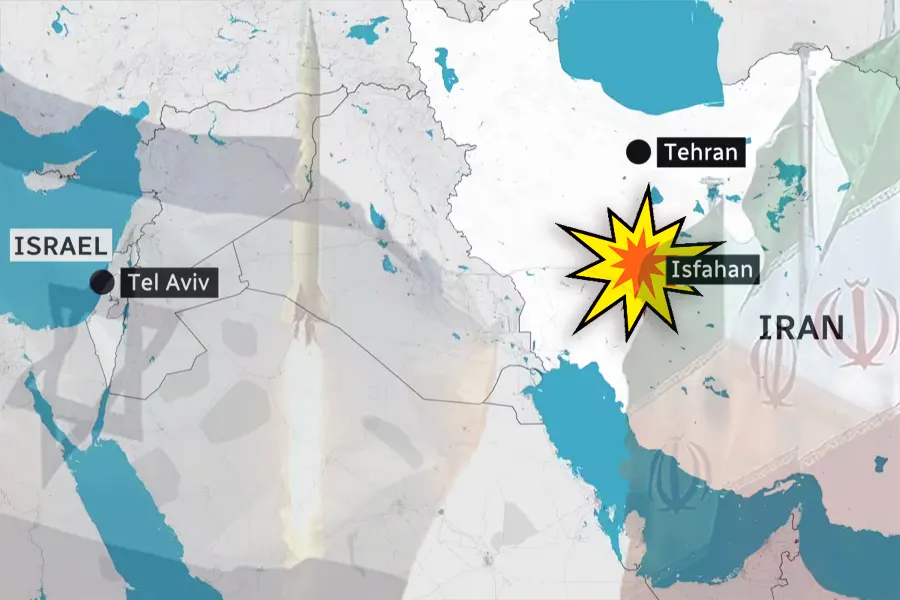
There has also been speculation about a possible Iranian connection, but there is no public evidence to confirm this. Even Netanyahu himself has expressly acknowledged that it is too early to determine whether Iran played any role in the incident.
Two Israeli security officials quoted by news agencies also indicated that Israel had not, as yet, identified any Iranian involvement in the incident. Therefore, for the time being, this line of inquiry appears to be rather flimsy and has only been the subject of speculation in certain media outlets and in comments on social media.
Was there a breach of Israeli security controls?
Another contentious issue is how an Omani national could have been part of the crew on a flight bound for Israel, given that the two countries do not maintain diplomatic relations.
Netanyahu has confirmed that there are restrictions regarding pilots from countries that do not have diplomatic relations with Israel, and has therefore suggested that there may have been a breach of security checks.
The Israeli Transport Minister, Miri Regev, has also called for an investigation into whether FlyDubai complied with the restrictions applicable to such flights. However, there does not appear to be a consensus on whether FlyDubai was bound by such agreements and should have replaced the pilot.
What is known so far about the FlyDubai flight… And what is not
At this stage, there are several facts that can be taken as virtually established:
- flight FZ1073 suffered a violent incident in the cockpit
- captain Smit Machchhar was injured
- the aircraft rapidly lost altitude
- passengers and other crew members intervened to subdue the attacker
- the aircraft was diverted to Tabuk, Saudi Arabia, where it landed safely
FlyDubai has officially confirmed the incident – in addition to all the passenger accounts that corroborate it – and also that all passengers and crew members survived. It has also been confirmed that the UAE authorities have launched an investigation to determine what happened and what the motive was.
However, it cannot yet be taken as fact that the attack was a jihadist attack, that the co-pilot suffered from a mental illness, that he was acting on the orders of a terrorist organisation, or that there was a connection between the perpetrator and Iran or any other foreign power.
Nor have many of the details circulating on social media been confirmed; in recent hours, videos manipulated using artificial intelligence, false information about the pilots’ nationalities and theories presenting the incident as an operation organised by Israel itself have been shared there. All of this is without any evidence to support these claims beyond the conspiracy theories put forward by certain individuals.
What we can say for now is this: a co-pilot violently attacked the captain during a commercial flight and apparently attempted to seize control of the aeroplane; but investigations have yet to determine why he did so and whether there was a terrorist motive.
The investigation into the attack on Flydubai flight FZ1073 must now clarify whether the signs of possible radicalisation that have emerged since the attack were known to the airline, whether there was any medical or security history that should have prevented him from flying and, above all, whether the co-pilot’s behaviour stemmed from a premeditated ideological decision, a psychiatric condition or some other cause that has not yet come to light. Until these key points are clarified, all we can do is wait; and in the meantime, the media, the public and governments should avoid engaging in any form of speculation.
VOTE

EDITORIAL TEAM
🧿 About us
.
Edited and reviewed by:

Pablo Gómez is a specialist in Turkey and has been editor-in-chief of Hispanatolia since 2011. He has been analysing current affairs and geopolitics in Turkey and the surrounding region since 2006.
…
📣 Your ADVERTISING on Hispanatolia
.
🤗 HELP US WITH A DONATION:
💗 Paypal