In a dramatic turn of events that underscores growing public frustration with political corruption and economic policy, Prime Minister Rosen Zhelyazkov announced the resignation of his government on Thursday, after weeks of ongoing mass demonstrations across Bulgaria, which is experiencing a severe political crisis.
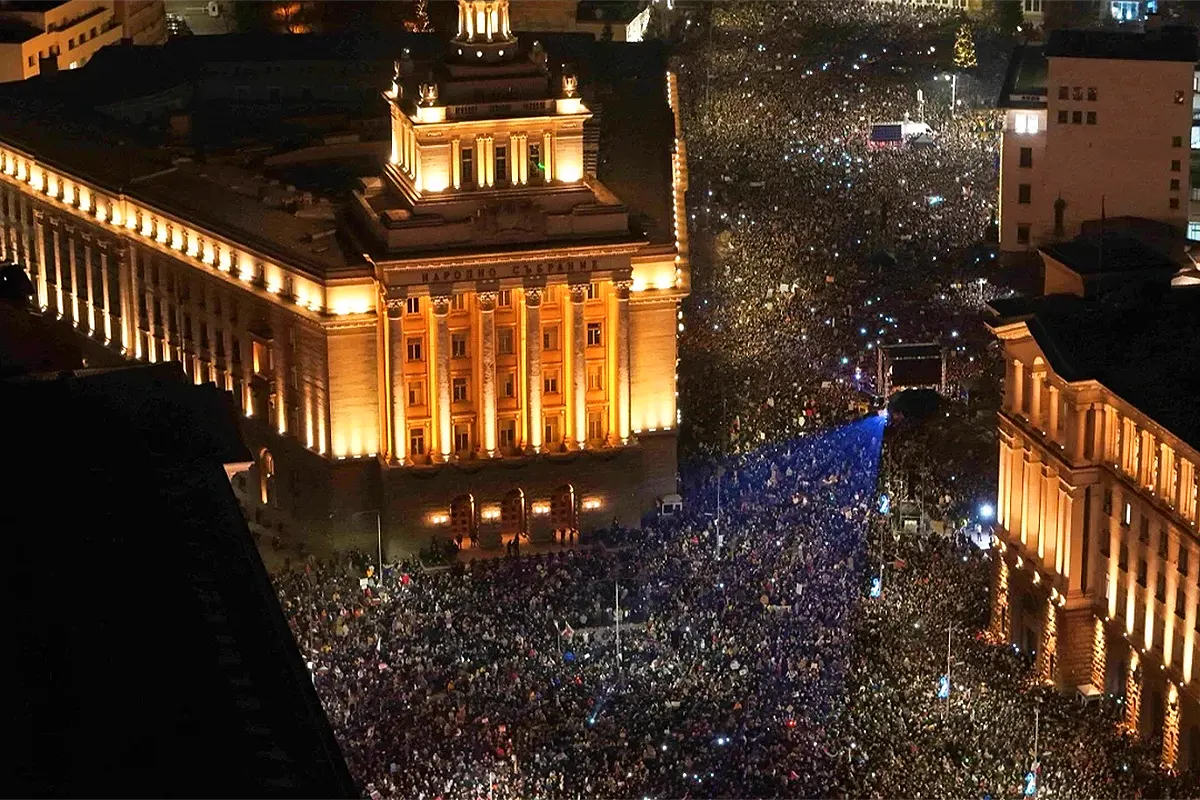
The announcement, which deepens Bulgaria’s political and institutional crisis, came just hours before a parliamentary vote of no confidence, which the ruling coalition had nevertheless survived on several previous occasions. Tens of thousands of Bulgarians had taken to the streets of Sofia and other cities, denouncing corruption and demanding the departure from power of the current cabinet, less than a year into its term.
“The government resigns today,” Zhelyazkov, who headed a minority coalition government dominated by the centre-right GERB party with the support of the Bulgarian Socialist Party and the populist ITN, announced in a televised speech quoted by several media, acknowledging the intensity of the protests and stressing that “power derives from the voice of the people”.
Mass mobilisations against corruption
The protests began in late November after the government presented a controversial draft budget for 2026 that would have increased social security contributions and doubled taxes on dividends, provoking a huge backlash from citizens, trade unions and business groups.
Even after the controversial budget was withdrawn, public outrage persisted, leading to broader demands against corruption. Observers described the demonstrations as among the largest in Bulgaria’s recent history, with a particularly significant participation of the younger generation.
Demonstrators chanted slogans demanding the resignation of political leaders and an end to entrenched corruption in the country, highlighting disillusionment with political elites, perceived as serving interests unrelated to the public good.
Zhelyazkov’s weakened government had previously faced six no-confidence motions during his term in office, reflecting the severe parliamentary instability facing the country. The last vote was scheduled for Thursday, but the prime minister’s resignation made the parliamentary procedure unnecessary.
Bulgaria on the verge of adopting the euro
The resignation of the Bulgarian government comes just weeks before Bulgaria is due to adopt the euro on 1 January 2026, a milestone in the country’s economic integration into the eurozone. While the authorities assure that the transition will take place as planned, analysts point out that the intense political turmoil plaguing Bulgaria could influence public confidence in the changeover to the new currency.
Following the resignation, Bulgarian President Rumen Radev is expected to start consultations to form a new cabinet or appoint a caretaker government until new elections can be organised, which would lead Bulgaria to undergo eight legislative elections in just four years.
Opposition figures have nonetheless welcomed the government’s resignation as a necessary step, arguing that the policies of Zhelyazkov’s executive aggravated public distrust, and that change is essential to address Bulgaria’s long-standing systemic problems of governance and corruption. Amid the political turmoil and on the eve of a key economic transition for the country, many analysts believe that the coming months will be decisive in determining Bulgaria’s future and its role in the European Union.
VOTE

EDITORIAL TEAM
🧿 About us
.
Edited and reviewed by:

Pablo Gómez is a specialist in Turkey and has been editor-in-chief of Hispanatolia since 2011. He has been analysing current affairs and geopolitics in Turkey and the surrounding region since 2006.
…
📣 Your ADVERTISING on Hispanatolia
.
🤗 HELP US WITH A DONATION:
💗 Paypal