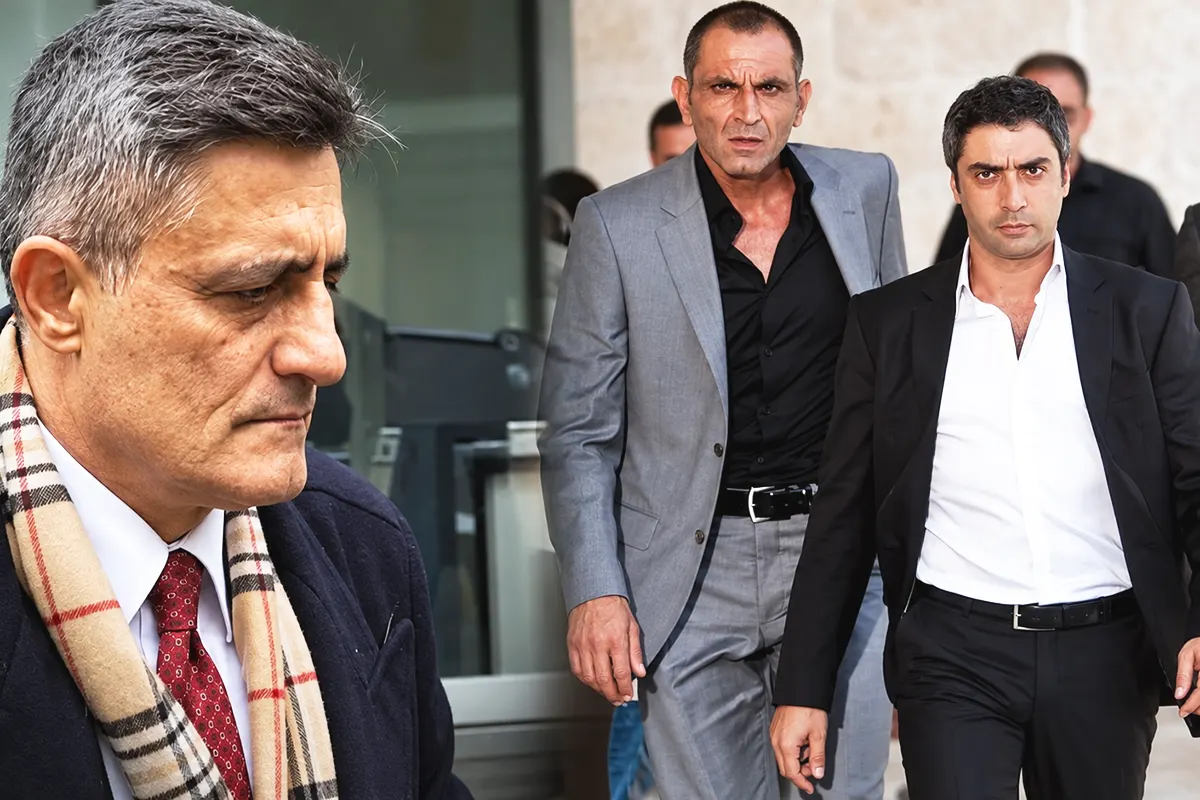
Kurtlar Vadisi Pusu, one of Turkey’s most popular Turkish television series, has found itself at the centre of a storm following an investigation launched by the Silivri (Istanbul) public prosecutor’s office into allegations that some of its content may have been used to spread propaganda for FETÖ, an acronym used by the Turkish authorities to refer to the religious sect led by Fethullah Gülen, which organised the failed coup d’état in 2016.
An investigation into the death of an intelligence officer in prison
The investigation is taking place in parallel with inquiries into the death in prison of a man named Kaşif Kozinoğlu. In a statement, the Silivri Chief Public Prosecutor’s Office noted that the investigation into Kozinoğlu’s death on 12 November 2011 at the prison where he was being held is continuing, according to reports in the Turkish media.
Kozinoğlu was a former intelligence officer who had been arrested that same year as part of the investigation into the so-called Ergenekon plot, a case which was later found to have been based on evidence and accusations fabricated by FETÖ with the aim of purging military officers by accusing them of conspiring to stage a coup d’état.
Kozinoğlu died in prison on 12 November 2011, coincidentally shortly before he was due to give evidence in the case. Officially, his death was attributed to a heart attack, although doubts subsequently arose as to whether he had received adequate and timely medical care. Allegations of possible poisoning also fuelled the controversy surrounding his strange death, into which an investigation has recently been reopened.
The statement from the public prosecutor’s office indicated that, following a joint assessment of the complaints received and the findings obtained during the investigation, it was decided that a committee of experts would analyse various issues relating to the aforementioned TV series. These include the portrayal in several episodes of the character Kazım Kaşifoğlu as a traitor and his subsequent death in the series, the use of vehicle number plates bearing the initials ‘FG’ (Fethullah Gülen) in certain scenes, and the possible presence in some episodes of propaganda, veiled messages, organisational instructions or references favourable to the so-called Fethullah Terrorist Organisation (FETÖ).
The statement emphasised that the expert examination aims to clarify these allegations and that the investigation is being conducted thoroughly. In particular, attention has been drawn to the fact that the series featured an intelligence officer with a very similar first and last name, who died in the fiction just a few weeks before Kozinoğlu’s actual death.
The series’ scriptwriters give evidence before the judge
At the request of the Silivri Public Prosecutor’s Office, an exhumation has also recently been carried out to take DNA samples as part of the proceedings aimed at determining the exact cause of Kozinoğlu’s death and establishing whether third parties were involved.
As part of the investigation, Raci Şaşmaz, Bahadır Özdener and Cüneyt Aysan, scriptwriters for the series Kurtlar Vadisi (Valley of the Wolves), were summoned to give evidence as “witnesses”. All three appeared in court and gave evidence before the prosecution on 14 September.
During his appearance, Şaşmaz rejected the allegations that the series had been used to attack critics of the Gülen movement, although he did acknowledge that there had been external pressure to alter the scripts and storylines of the series.
Kurtlar Vadisi is a Turkish television series that is very popular in the country, known precisely for its highly topical storylines, which often bore similarities to real-life events. Starring the famous Turkish actor Necati Şaşmaz in the role of the iconic Polat Alemdar, and produced by Pana Film, the series ran for 10 seasons and aired its final episode, number 300, on 16 June 2016, thus bringing the series to an end.
VOTE

EDITORIAL TEAM
🧿 About us
.
Edited and reviewed by:

Pablo Gómez is a specialist in Turkey and has been editor-in-chief of Hispanatolia since 2011. He has been analysing current affairs and geopolitics in Turkey and the surrounding region since 2006.
…
📣 Your ADVERTISING on Hispanatolia
.
🤗 HELP US WITH A DONATION:
💗 Paypal