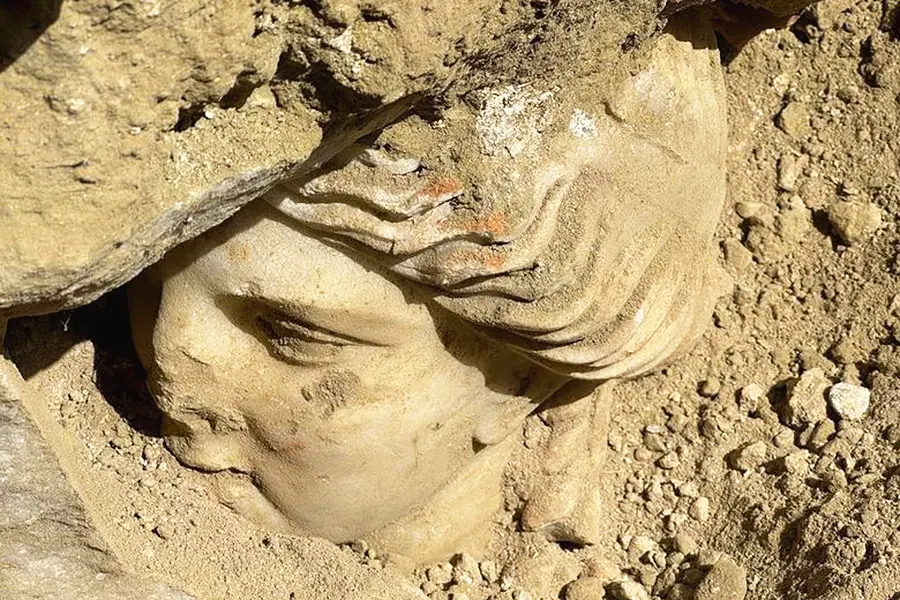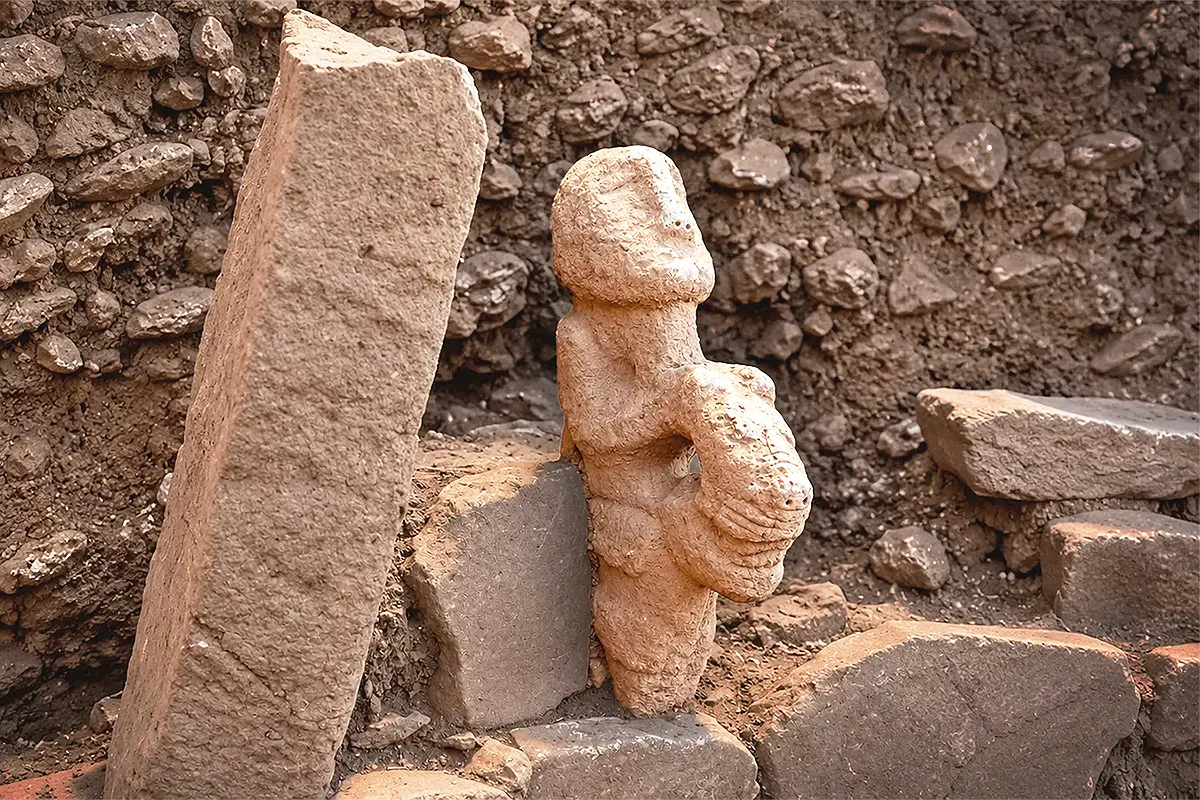
A group of archaeologists has discovered a stone sculpture in Karahantepe, in south-eastern Turkey, which is approximately 11,000 years old and depicts a human figure sitting on the back of a leopard. The artefact, considered a previously unknown and unique specimen, was unearthed during excavations at this Neolithic site, regarded as one of the oldest temples in human history.
Turkey’s Minister of Culture and Tourism, Mehmet Nuri Ersoy, announced this significant discovery via his social media accounts: “We have unearthed a unique 11,000-year-old sculpture at Karahantepe. During our 2026 excavations, carried out as part of our ‘Legacy for the Future’ project, we discovered a composite sculpture in a style never seen before. The sculpture, 70 centimetres tall and which has survived in the very spot where it was left some 11,000 years ago, depicts a human sitting on the back of a leopard,” he said, as quoted by the Turkish newspaper Hürriyet.
A discovery that raises new questions about human history
“This special artefact was found on a platform extending along the wall of a structure 3 metres in diameter, the floor of which was covered with flat stones. I believe this discovery, which opens the door to new questions about the earliest periods of human history, will have a far-reaching impact on the scientific community,” he said.
“I would like to thank the General Directorate of Cultural Heritage and Museums, our excavation team, our scientists and all the team members who worked tirelessly at the site,” the minister concluded.
A glimpse into human societies before the first cities
Karahantepe is a prehistoric settlement situated some 30 kilometres from Göbeklitepe and forms part of a group of more than a dozen sites located in the south-eastern region of Anatolia, collectively known as Taş Tepeler (“Stone Hills”, in Turkish).
These sites are characterised by dating back to the Neolithic period, more than 10,000 years ago, when human communities in the area were transitioning from ways of life based on mobile groups of hunter-gatherers towards more sedentary lifestyles. Its monumental structures, sculptures and other remains have provided evidence of the existence of complex social and ritual practices long before the emergence of the first cities and writing – something that, until a few years ago, was considered impossible.
Karahantepe has, in fact, become one of the region’s most important archaeological sites since excavations began in 2019. Archaeologists have discovered monumental structures there, as well as depictions of human faces and animals, in addition to other remains of early human settlements that roughly correspond to the same period as the remains found at Göbeklitepe.
VOTE

EDITORIAL TEAM
🧿 About us
.
Edited and reviewed by:

Pablo Gómez is a specialist in Turkey and has been editor-in-chief of Hispanatolia since 2011. He has been analysing current affairs and geopolitics in Turkey and the surrounding region since 2006.
…
📣 Your ADVERTISING on Hispanatolia
.
🤗 HELP US WITH A DONATION:
💗 Paypal