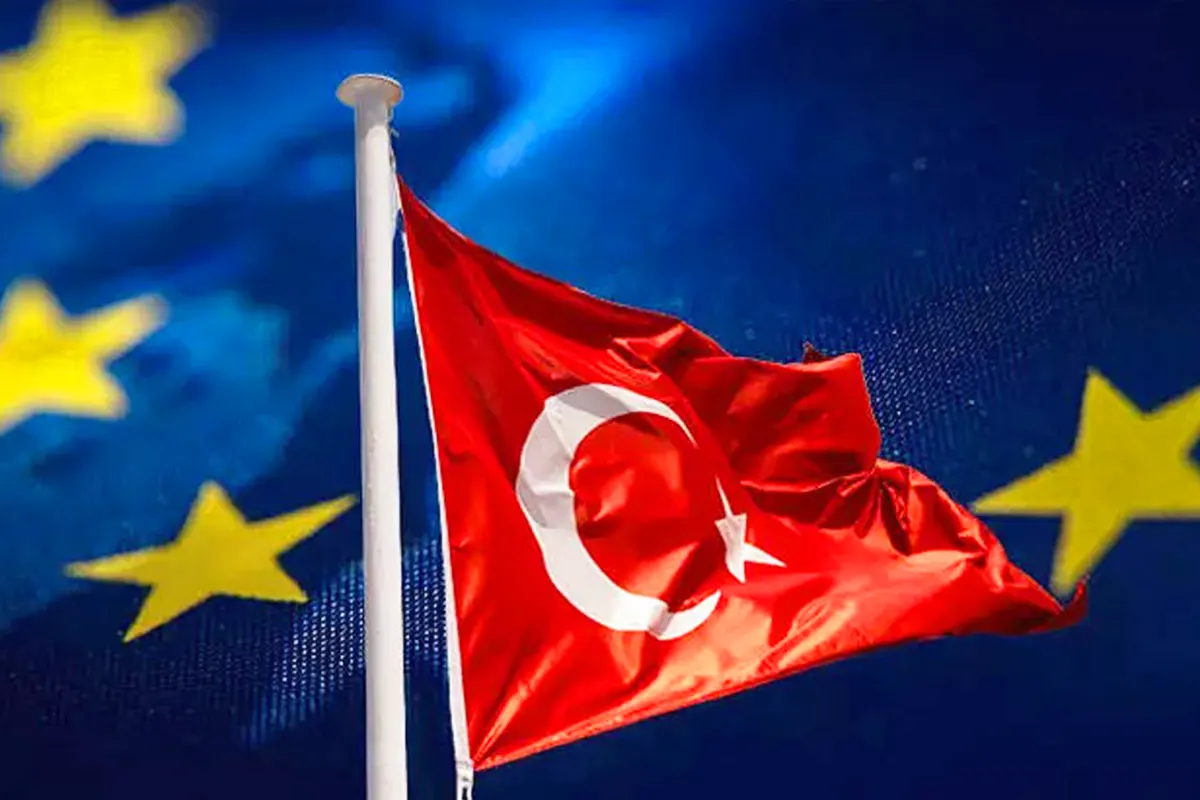
Turkey’s Foreign Ministry has sharply criticised the European Commission’s 2025 report as “biased, prejudiced and baseless” in its conclusions on the country’s judiciary, fundamental rights and domestic politics, despite the document’s recognition of Ankara’s progress in other areas and its strategic importance to the EU.
In an official statement, Ankara said that “the biased, prejudiced, and baseless allegations regarding the judiciary, fundamental rights, and domestic political developments in Türkiye Report issued today (4 November) by the European Commission are categorically rejected”, adding that the content is “not only incompatible with efforts to advance a positive agenda between Türkiye and the EU, but also runs counter to the long-term interests of both sides”.
The ministry stressed that the level of alignment with the EU acquis presented in the report, “despite the political and unjust obstacles we have faced in the accession process”, demonstrates Turkey’s commitment to its strategic goal of EU membership. It also welcomed with “satisfaction” that the document mentions “Türkiye’s constructive approach in the Eastern Mediterranean, the improvement in relations with Greece, and the increased dialogue with the EU”.
It also noted as “noteworthy” that the report recognises Turkey’s strategic importance to the EU in the face of regional and global challenges, and insisted on the need for functioning bilateral mechanisms and Turkey’s active inclusion in European defence and security programmes.
“Serious concerns” about democratic standards in Turkey
However, Ankara denounced that the document again includes “unrealistic, unlawful, and maximalist views of Greece and the Greek Cypriot side“, ignoring the “legitimate concerns” of Turkey and the Turkish Republic of Northern Cyprus. For the Turkish government, this again shows that Brussels “takes sides” on the Cyprus issue, and therefore cannot contribute to efforts to find a solution to the conflict.
The communiqué concludes that strengthening a “more institutionalized, and mutually trust-based cooperation” is in the interest of Turkey, Europe and the region as a whole, saying that Ankara will “resolutely” continue its efforts with this vision and expects “the same strategic will and constructive approach” from the EU.
The Commission’s report, published a day earlier, criticises the deteriorating human rights situation in Turkey, noting “serious concerns” about democratic standards, the rule of law, judicial independence and respect for fundamental freedoms, and adding that Turkey’s progress in areas essential for accession has fallen short of expectations.
Nevertheless, the report also acknowledges Turkey’s efforts to take in 2.7 million refugees, mainly Syrians, and highlights recent progress on economic policy, including firmer control of inflation; it also underlines Turkey’s strategic importance to the European Union, noting that despite criticism Ankara remains a vital partner for the EU.
Turkey formally applied for EU membership in 1987, obtaining candidate country status in 1999, although accession negotiations were not formally opened until 2005. The process, however, has been at a virtual standstill since 2018, and only 16 of the 35 chapters of the accession negotiations have been opened while one remains temporarily closed.
VOTE

EDITORIAL TEAM
🧿 About us
.
Edited and reviewed by:

Pablo Gómez is a specialist in Turkey and has been editor-in-chief of Hispanatolia since 2011. He has been analysing current affairs and geopolitics in Turkey and the surrounding region since 2006.
…
📣 Your ADVERTISING on Hispanatolia
.
🤗 HELP US WITH A DONATION:
💗 Paypal